Most durable dog toys for power chewers fail in the first hour, not the first week. That is the part the packaging never mentions. A toy labeled "indestructible" is a dare, not a guarantee, and the dog always gets the last word.
I'm Rosa. I train dogs in Austin, Texas, and I have spent eleven years watching what happens when a determined chewer meets a toy that was designed for a much smaller jaw. Six of those years were focused on puppies and destructive chewers, which is why my living room has a shelf of failures: split rubber, shredded plush, and a squeaker that came out of a Labrador. That shelf is the most honest display in my house.
This is not a list of toys to buy. It is the process I use to decide whether a toy deserves to go home with a dog at all, plus the two toys that keep surviving it.
Why you should trust me
I have put toys in front of more than 400 dogs, from nine-pound Chihuahuas that shred "indestructible" claims to a 130-pound Dane who ate a fire hose. I run a small boarding kennel out of my house, which means every toy I bring home gets abused around the clock by dogs with no manners and no interest in my opinions.
I keep a destruction score on every toy I test: the number of minutes until a toy is compromised. Under ten minutes with a power chewer is a fail, no matter what the box says. A power chewer, for the record, is a dog that can compromise a standard toy in under an hour. Most toys marketed as tough meet their match right there.
Nothing gets a recommendation from me without 72 hours on real dogs. Not an afternoon. Not a photo shoot. Seventy-two hours, including at least one dog who would rather destroy something than look at me.
How I decide whether a toy is worth buying
Before I hand a toy to a client, I run it through four questions. They take about thirty seconds, and they save a lot of money.
Can a power chewer compromise it in under an hour? If the answer is yes, the toy is a supervised toy, not a kennel toy. That is not automatically a dealbreaker. It just changes how you use it and where you store it.
Is the size right for the jaw in front of me? Size matters more than type. A ball meant for a Labrador is a choking hazard for a Frenchie. Toys get sized by breed on the shelf and by jaw in real life, and those are not the same measurement.
Will it survive 72 hours of real use? Real use means a dog who is bored, teething, or both. A toy that only holds up while you are watching is a toy that will fail while you are not.
Would I hand it to a client's puppy unsupervised? This is the strictest test I have. For most toys the honest answer is no, and that is fine. Puppies should not be alone with new toys anyway.
If a toy fails question two or three, it does not matter how good the marketing is.
The two toys I keep buying
The two products below are not the same job. One is a chew, one is a fetch toy, and together they cover the two things dogs actually need from a toy: something to work their jaw on and something to run after. Rotate them instead of buying five more, and both last longer.
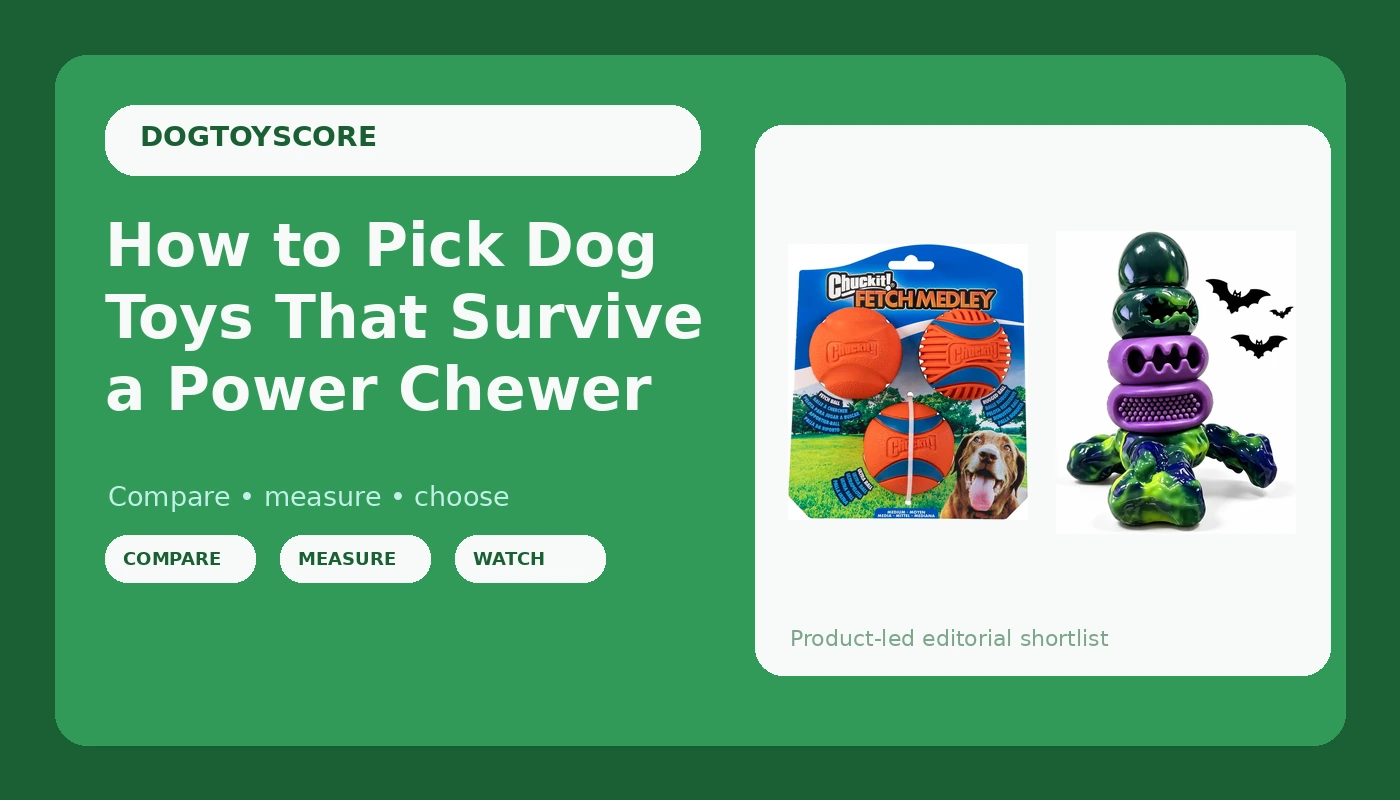
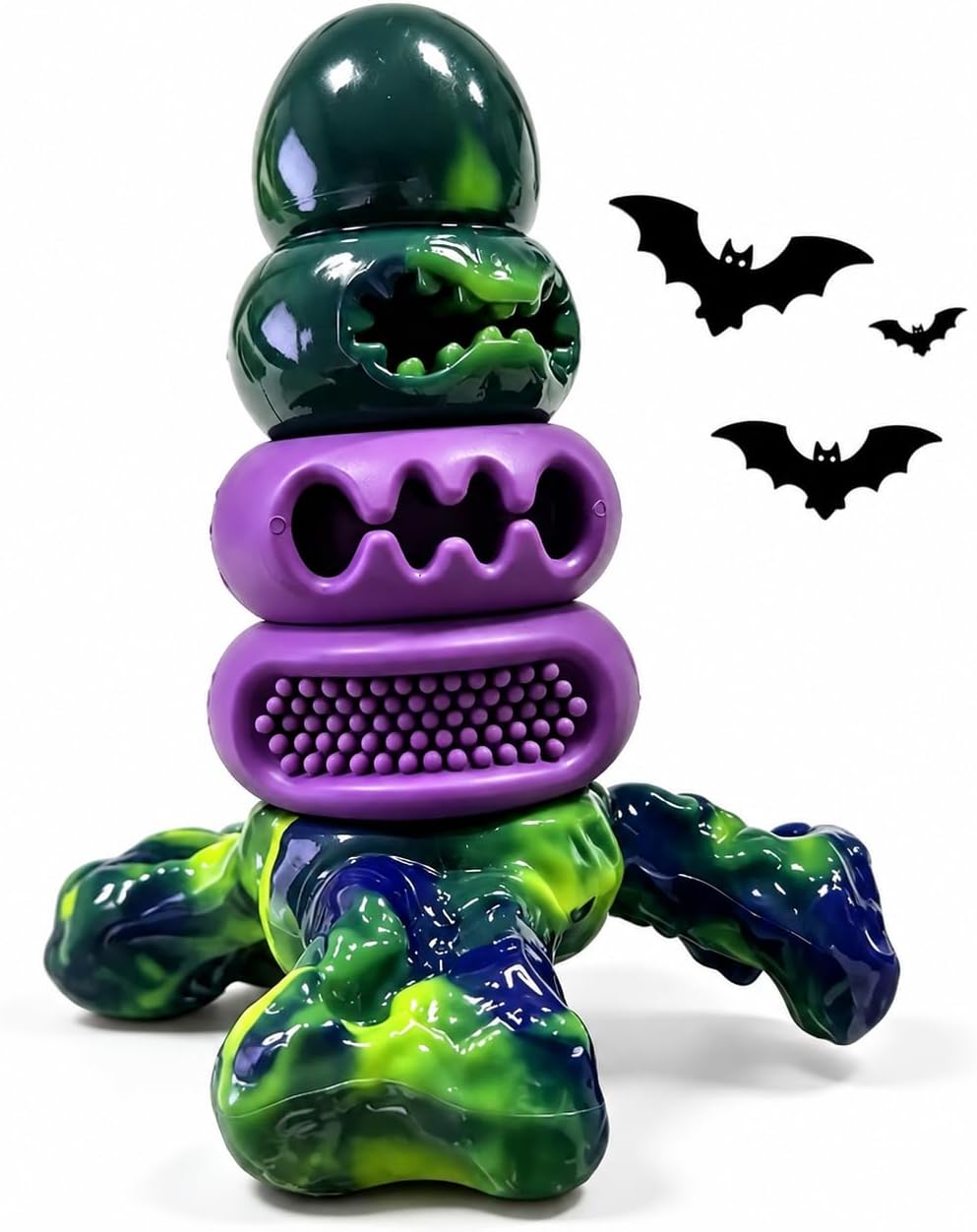
The chew pick: YINEYA Touch Dog Toys for Aggressive Chewers, Indestructible Dog Chew Toy
 Visit on Amazon →
This is the chew toy I hand to the dog who has already destroyed everything else in the basket. It is built for aggressive chewers, which is the phrase on the package, and I treat that phrase the way I treat every durability claim: as a starting point, not a promise. The texture gives a dog something to work at, and that is what actually buys you a quiet hour.
Here is how I use it. It comes out during the witching hour, when a puppy or a bored adult starts looking for baseboards. It goes back in when the session ends. A chew toy that lives on the floor all day stops being interesting by Thursday, and an uninteresting chew toy gets ignored right up until the dog finds something worse to chew.
Check current Amazon price before you decide, because this category swings a lot.
Flaws but not dealbreakers: No chew toy is safe for every dog unsupervised, and I will not pretend otherwise. Inspect it after every session. When the surface starts coming off in pieces instead of wearing down smoothly, it is done. That is the moment the toy becomes a choking risk, not a week later.
The right buyer is the owner of a heavy chewer who needs a durable chew for supervised sessions and is willing to put it away when the session ends.
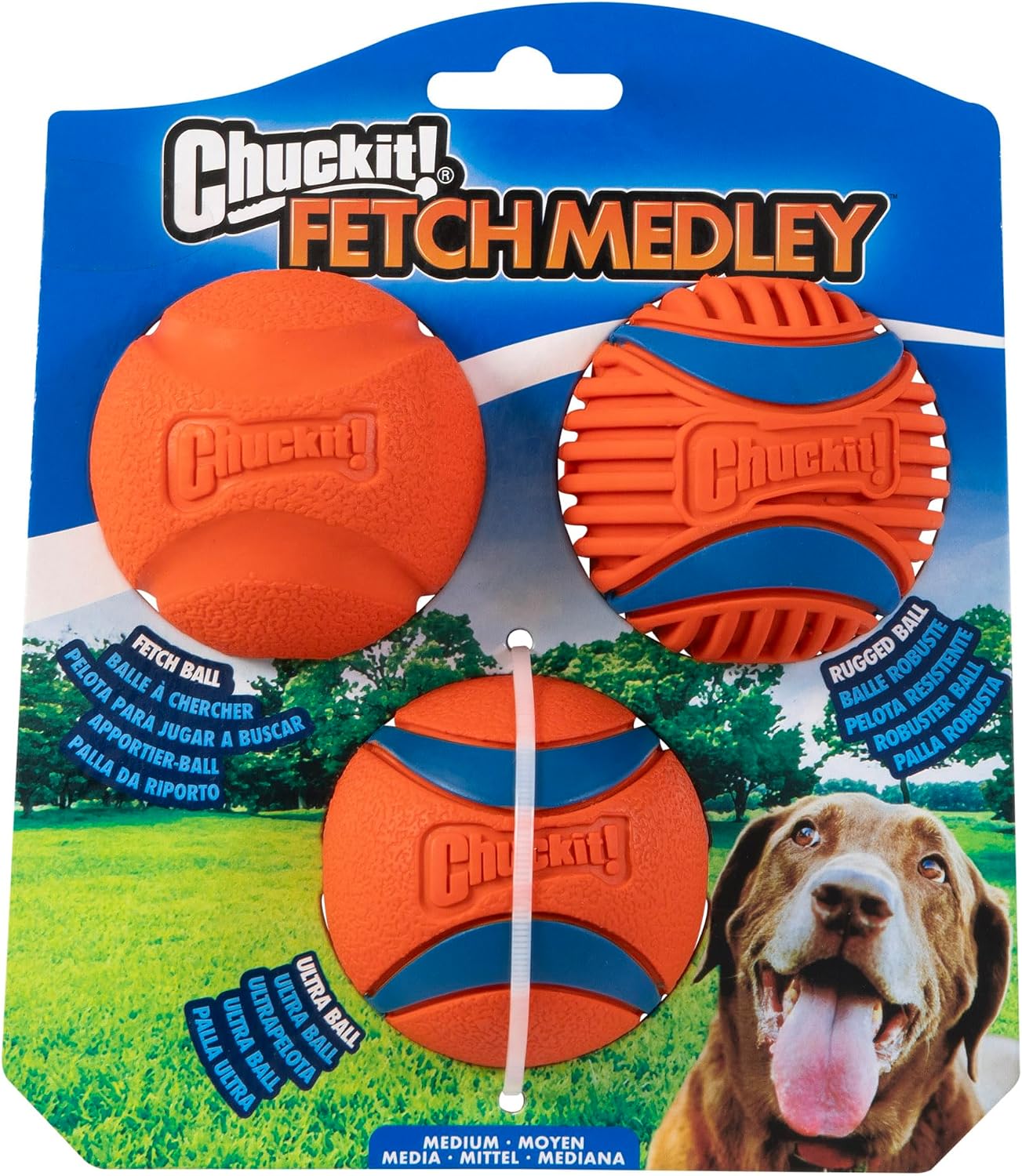
The fetch pick: Chuckit! Ultra and Rugged Dog Balls, High-Bounce Fetch, Medium, Set of 3
 Visit on Amazon →
Fetch is enrichment. A dog that sprints, tracks, and retrieves for twenty minutes is a dog that chews less furniture, and that is not a theory. It is the whole reason I keep balls in my training bag. This set gives you three medium balls, which matters more than people think: three balls mean you can keep the game moving without wrestling a slobbery ball out of a dog's mouth every throw.
The Ultra and Rugged combination covers two different dogs. The high-bounce ball is for the dog who wants to run. The rugged ball is for the dog who wants to grab it and hold on. Both are sized medium, so run the jaw test below before you buy, especially if you have a small dog or a giant.
Check current Amazon price for the set before you order, and check the size chart while you are there.
Flaws but not dealbreakers: Balls get lost, chewed, and left in the yard to bake in the Texas sun. I replace mine more often than I replace chew toys, and I am fine with that, because a ball is cheap and a bored dog is not.
The right buyer is anyone who wants a structured game of fetch instead of another toy that sits in the basket.
How to size a toy by jaw, not by breed
This is the step most owners skip, and it is the one that prevents the vet visit.
Step one: open the mouth and look. You are checking the width of the jaw and how far back the molars sit. You are not checking the dog's weight, and neither is the dog.
Step two: apply the swallow test. A toy should be too large to sit fully behind the molars. If your dog can work it past the back teeth, it is too small, no matter what the package says about breed size.
Step three: apply the squash test. Press the toy. If you can compress it enough to fit through a cardboard tube, a determined chewer can do the same thing with their back teeth.
Step four: match the material to the chew style. A dog that gnaws slowly can handle a firmer chew. A dog that chomps and rips needs something with give, because hard plastic against hard teeth is how you end up paying for a dental.
Step five: check it weekly. Teeth change. Puppies lose baby teeth around four to six months, and the toy that was perfect in March can be too small by June.
How to run a 72-hour test at home
You do not need a kennel to test a toy. You need three days and a phone.
Day one, supervised. Fifteen minutes with you in the room. Watch the destruction score. If the toy is compromised in the first fifteen minutes, it failed and it goes in the failed bin. No second chances on day one.
Day two, short absences. Leave the toy with the dog for a few minutes while you are in another room, then inspect it. Look for cracks, missing chunks, and exposed seams.
Day three, real life. Give the toy during the evening energy spike and inspect it again afterward. If it survived all three days, it earns a place in the rotation.
Take a photo of the toy on day one and again on day three. The difference is the data. A toy that looks fine in your hand can look very different next to a photo from 72 hours ago.
The rotation system that actually works
Three toys on rotation outlast ten toys dumped in a basket. This is the single cheapest upgrade to your dog's toy life.
Keep three toys out at a time. One chew, one fetch or tug toy, and one puzzle or plush for the gentle dogs.
Swap every few days. Put two away in a closet where the dog cannot see them. Bring them back next week and they are new again.
Wash the chew toys. Warm water, mild soap, air dry. A toy that smells like the factory it was made in gets ignored, and so does one that smells like last month's kibble.
Retire toys on a schedule, not on a feeling. Every Sunday, look at all three. Anything compromised goes in the bin.
What to do when a toy fails
Failure is normal. The trick is noticing it before your dog does.
Take the toy away the moment it is compromised. Do not wait to see if the dog finishes it. If you suspect pieces were swallowed, watch for vomiting, refusing food, and lethargy, and call your vet. A vet tech taught me what a foreign-body surgery actually costs, and it is the reason I am blunt about squeakers: I have watched too many of them come out of a stomach.
Keep the failed toys for a week before you throw them out, at least the first few. Having them in front of you makes it obvious which materials and which shapes keep failing, and that is how you stop buying the same mistake twice.
What I left off this list
Stuffed toys are not for chewers. They are for gentle dogs, and there is no shame in admitting yours is not gentle. A plush toy marketed to a teething puppy is a stuffing removal appointment waiting to happen.
Puzzle toys are genius for brain games and they fall apart with a determined chewer. Use them supervised, or use them with a dog who solves instead of shreds.
The dollar bin is a trap. Anything with a squeaker inside a thin fabric shell is a vet bill waiting to happen.
As for the big names: KONG Classic is still the only toy I recommend to every puppy owner, because you can freeze it and stuff it and it holds up. Nylabone works for power chewers, but the flavors wear off fast and the toy gets ignored in week two. Benebone is a great boredom chew for heavy chewers, though watch the hard plastic on senior teeth. West Paw is the best eco pick, since the company actually recycles its own failed toys. Outward Hound puzzle toys are in the same boat as the rest. All of those show up in other guides. Today is about picking, sizing, and rotating.
What this all costs
Both toys on this list sit in the impulse-buy range, which is exactly why they are worth testing properly. Check current Amazon price on each before you buy, then do the math on your own shelf.
The real cost is not the toy. It is the replacement cycle. If you buy a cheap toy every two weeks because it keeps failing, you spend more in a year than you would on two toys that hold up. And if a failed toy turns into a swallowed squeaker, the bill is not in the toy budget at all.
Three toys on rotation, inspected weekly, replaced when compromised. That is the whole system. It costs less than the basket of shredded mistakes sitting in your hallway right now, and it keeps your dog working its jaw on something that was built for the job.