I keep a shelf in my living room that I call the graveyard. It holds every toy that failed in my kennel: shredded plush, squeaker-less carcasses, "indestructible" rubber with a chunk missing. Eleven years as a trainer, six of those spent specializing in puppies and destructive chewers, and that shelf is still the most honest display in my house. So when someone asks me to compare dog chew toys, I do not start with brand loyalty or with a star rating. I start with what happens on hour 72, when the novelty is gone and the dog is bored.
The four toys in this comparison are not interchangeable. The Outward Hound Hide-A-Squirrel is a plush enrichment toy. The Cool Teething Stick is a freeze-and-soak chew for puppies in the teething window. The Nylabone Power Chew Wishbone is built for dogs that destroy things. The Dogwood Calming Stick comes in a two-pack, which makes it a rotation tool as much as a chew. I run a small boarding kennel out of my house in Austin, so toys here get used around the clock by dogs with no manners and nobody standing over them. Four different jobs, four different failure modes, and no single winner.
Related: Why Puppies Chew Baseboards and How to Redirect Them
Short answer: for a power chewer, the Nylabone Power Chew Wishbone is the one I would hand over first. For a puppy who is actively teething, the Cool Teething Stick is the cheapest genuinely useful toy in the group. The Hide-A-Squirrel is a great toy aimed at the wrong dog, and the Dogwood Calming Stick two-pack sits in the middle, which is where most households actually live.
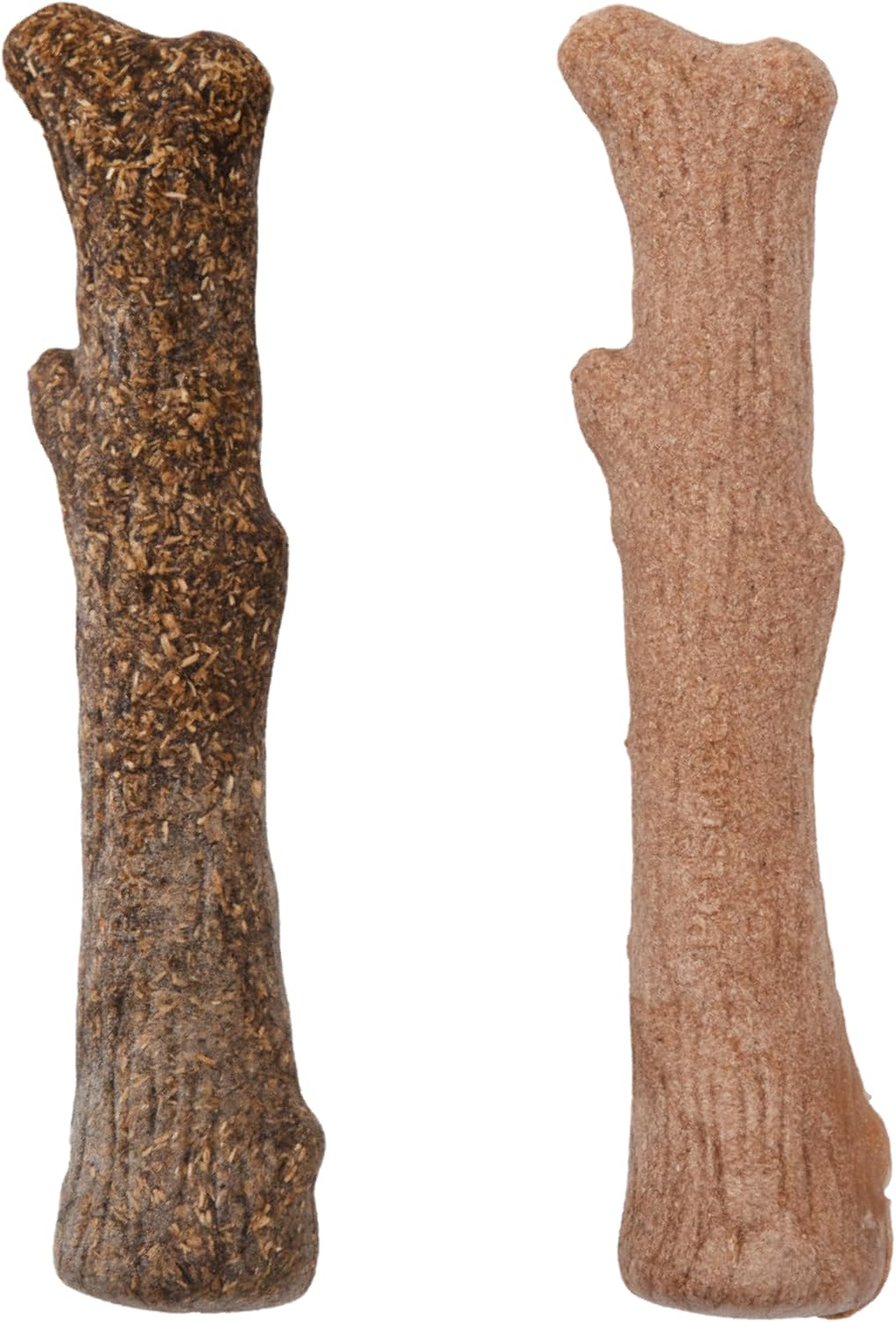
Dogwood Calming Stick Dog Chew Toy, Medium, 7.5", 2-Pack
Two sticks means one is always fresh for rotation, and the stick shape suits dogs that like to hold a chew between their paws
Medium sizing narrows the fit, and it is not built for the heaviest jaw in the room
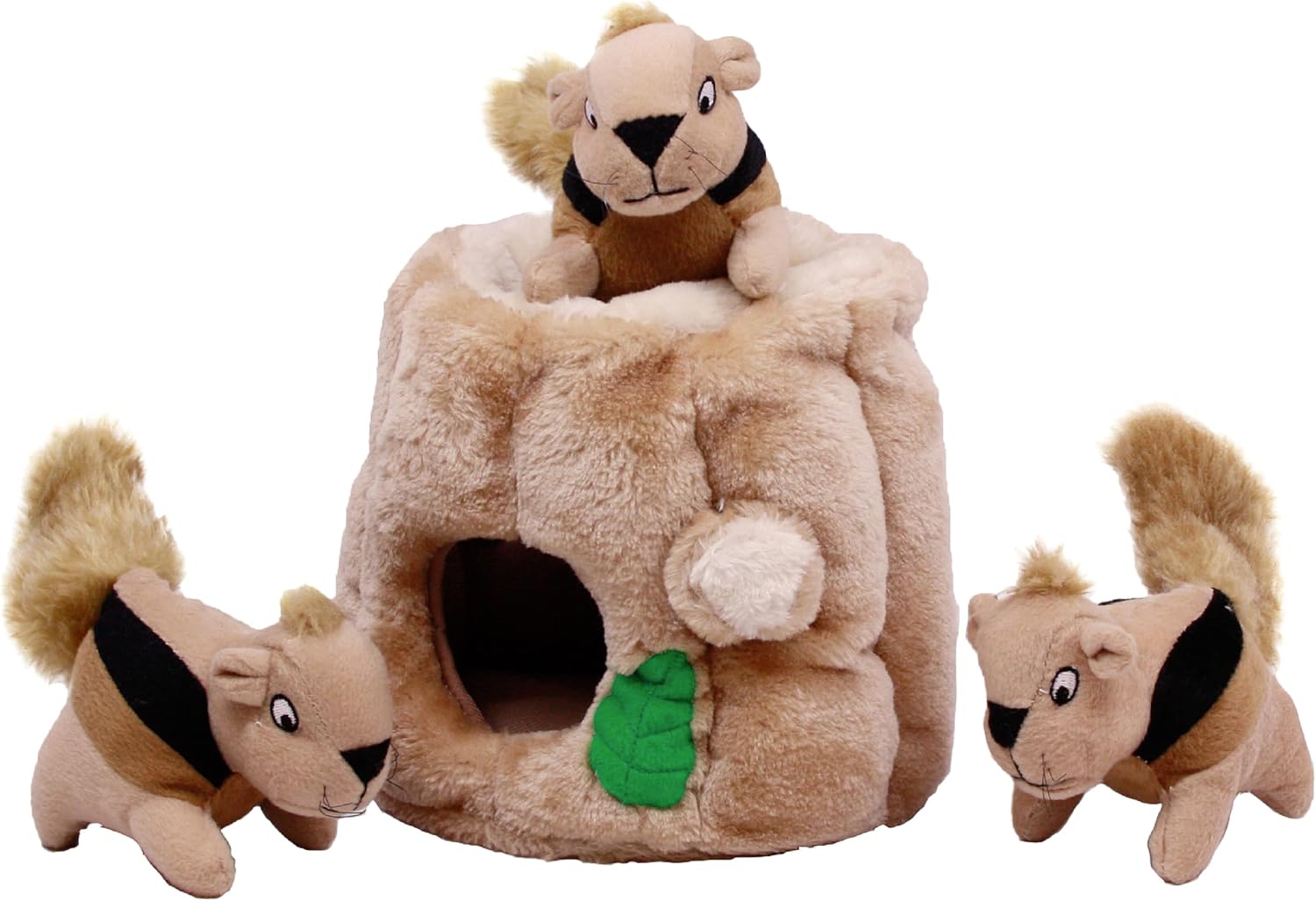
Outward Hound Hide-A-Squirrel Plush Squeaky Dog Toy, Medium, 6.5" x 6.5"
The best mental workout of the four: hiding and unstuffing the squirrels burns energy fast for gentle dogs
Plush plus squeakers is the wrong match for a chewer, and the squirrels are the first thing to go
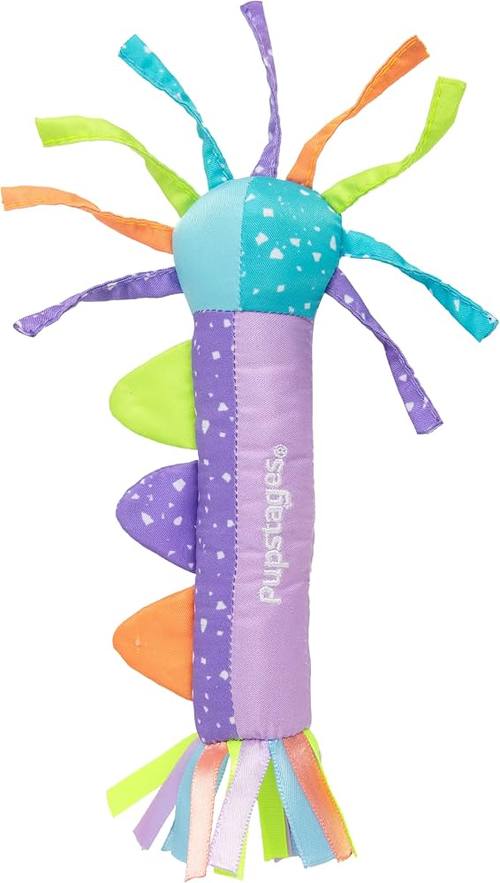
Cool Teething Stick Dental Dog Chew Toy, Soak & Freeze, 8.5"
The least expensive way to add cold relief to a teething puppy's day, and the textured surface does double duty on gums
The cold fades quickly, and it stops being interesting the moment the puppy's adult teeth settle in
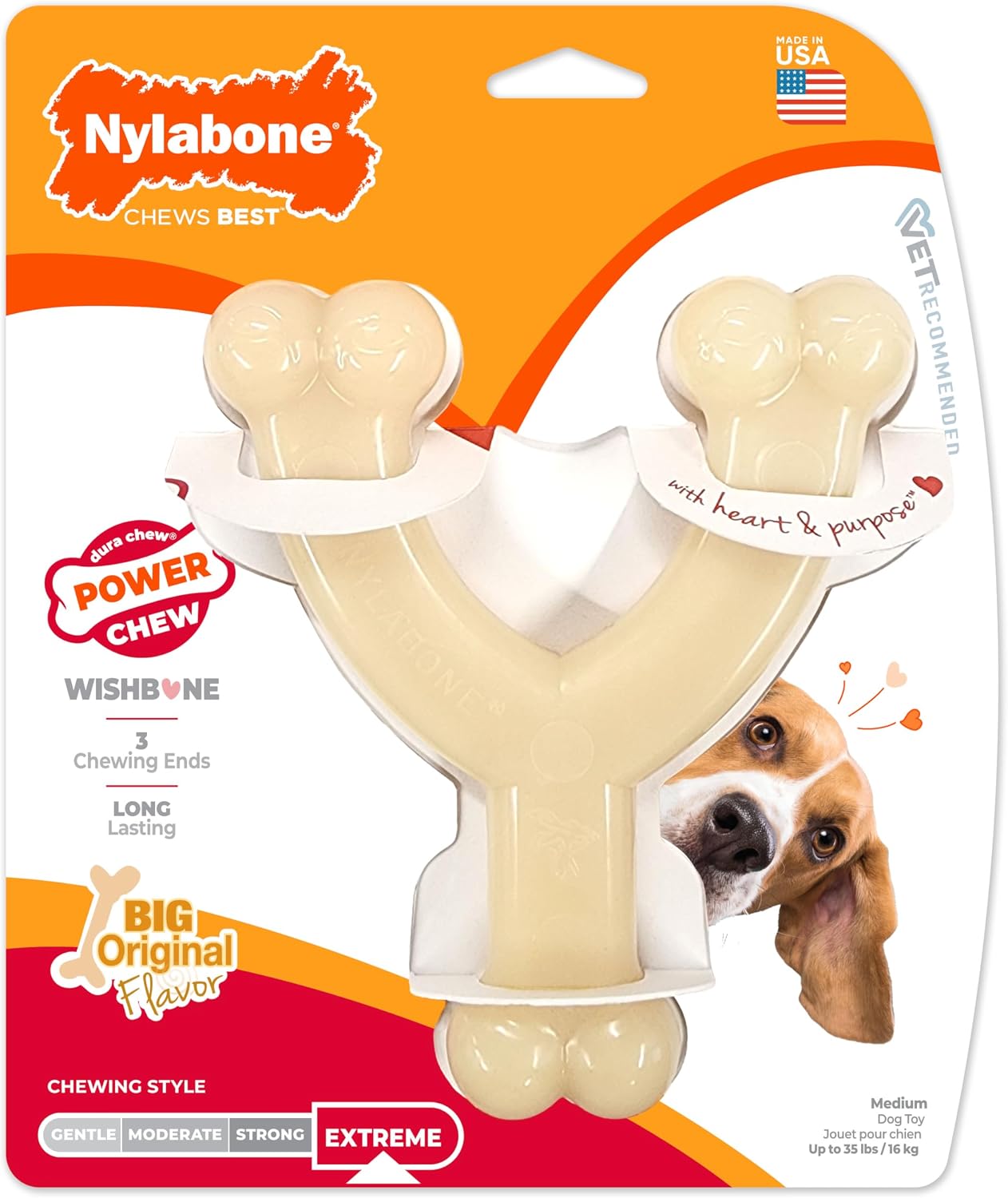
Nylabone Power Chew Wishbone Dog Chew Toy, Original Flavor, Medium
The most durable design here, made for dogs that compromise everything else in the basket
The original flavor fades fast, and the firm material is a poor fit for senior teeth
Prices and availability were captured from Amazon Creators API and may change.
How I judge a chew toy before it goes in a run
Four questions, in order. The order matters, because most people shop in the reverse one.
What is it made of, and how does that material behave when the dog wins? Every toy eventually loses. The question is whether it loses by fraying into strips, by snapping into chunks, or by slowly wearing down into a smooth nub. Strips and chunks are the ones that end up in a stomach. A material that wears down gradually gives you time to notice and retire it.
Is the size right for the jaw in front of me, not the breed on the label? A toy sized for a Lab is a choking hazard for a Frenchie, and a toy sized for a Frenchie disappears down a Lab's throat. Breed sizing is marketing shorthand. Jaw sizing is safety.
What happens if it fails? I want to know this before I buy, not after. If the answer is "the squeaker comes out in one piece and gets swallowed," that toy does not go in a kennel run, no matter how cute it is.
What does replacing it cost over a year? A cheap toy that dies in a week is more expensive than a durable one that lasts a season. This is the math that makes the Nylabone and the Dogwood two-pack look better than their shelf prices suggest.
I hold toys to a 72-hour standard before they earn a permanent spot in a run, because that is roughly when a determined chewer stops treating something as new and starts treating it as a problem to solve. For this comparison I am judging the four on construction, size range, and failure mode, plus what I have seen from these brands' other toys in the kennel over the years.
The four toys, and the dog each one actually fits
Outward Hound Hide-A-Squirrel: enrichment for gentle mouths
This is a plush tree stump with smaller plush squirrels tucked inside, and as a brain game it is genuinely good. A dog has to nose the squirrels out, one at a time, and that is real problem-solving work. Mental stimulation tires a dog faster than a walk, which is why enrichment toys earn their place in my rotation.
Here is the part the product page will not tell you: this is a toy for gentle dogs. Stuffed toys are not for chewers, and there is no shame in admitting yours is not gentle. If your dog's version of play is "grab, shake, and disembowel," the squirrels are gone in one sitting and the squeakers inside them are the exact thing I have watched a vet tech fish out of a stomach. Squeakers are a vet bill waiting to happen, and I have paid that bill with client dogs more than once.
Buy this for the dog who carries toys around, nudges them with a nose, and sleeps next to them. Buy it for the dog who needs a job on a rainy afternoon. Do not buy it for the dog who has already destroyed three "tough" plush toys this year.
Cool Teething Stick: a tool for one season
The Cool Teething Stick is a soak-and-freeze chew, 8.5 inches long, with a textured surface that works on gums. You wet it, freeze it, hand it over, and the cold does the numbing that a puppy's sore mouth is begging for.
Two things to understand before you buy. First, the cold is the active ingredient, and it does not last long. A frozen chew goes from soothing to room temperature in a short window, and once it warms up it is just another piece of plastic. Keep a second one in the freezer so the rotation never stops. Second, this is a teething tool, not a lifelong toy. Puppies chew because their mouths hurt and because they are exploring. When the adult teeth come in, the appeal drops off a cliff, and that is normal.
What I like about it is the price of entry and the fact that it targets a specific, temporary problem instead of pretending to be everything. Teething is temporary. The chew marks on your baseboards are forever, but temporary.
Nylabone Power Chew Wishbone: the durability pick
If I have to hand a chew to a dog that has already eaten through the "indestructible" aisle, this is the shape I reach for. The wishbone design gives a dog two ends to work and a natural place to grip with a paw, which matters more than people think. A chew that slides around the floor gets abandoned. A chew a dog can pin down gets used.
Nylabone's Power Chew line is my standard recommendation for power chewers, with one caveat I repeat to every client: the flavor wears off. By week two, a lot of dogs act like the toy insulted their family. The fix is not to buy a new one. The fix is rotation. Pull it out of the basket for a week, leave something else in its place, then bring it back. Most dogs greet it like it is brand new.
Two safety notes. Inspect the toy regularly for worn nubs or sharp edges, and retire it when the texture changes, because a compromised chew is how you end up at the emergency clinic. And if you have a senior dog, be honest about the firmness. Hard material on older teeth is a real risk, and a softer chew is the kinder call.
Dogwood Calming Stick two-pack: the rotation pick
The stick shape is the underrated part here. Some dogs do not want to gnaw a bone or wrestle a wishbone. They want to hold something long between their front paws and work one end, the way they would with a stick they found in the yard, minus the splinters and the vet visit. A calming stick leans into that behavior instead of fighting it.
The two-pack is what makes this a smart buy. Two identical chews means one can be in rotation while the other rests, and rotation is the single cheapest upgrade you can make to your dog's toy setup. It also means you have a spare when the first one starts showing wear, which is going to happen whether you plan for it or not.
The limits are real, though. This is a medium chew, so it fits a narrow band of jaws, and it is not the answer for the heaviest chewer in the neighborhood. If your dog has destroyed a Nylabone, do not expect a stick to hold up better.
The word "medium" is doing a lot of work
Three of these four toys are labeled medium, and that label means almost nothing across brands. A medium Nylabone, a medium plush squirrel, and a medium chew stick are three different sizes with three different risk profiles.
Measure your dog's mouth, not their weight. A toy should be wide enough that the dog cannot get it behind their molars and swallow it, and long enough that they can hold it without their paws slipping off. When in doubt, size up for a chewer and size down for a dog who is easily overwhelmed by a big object. If a toy is small enough to disappear, it eventually will.
Rotation beats buying more
Three toys on rotation outlast ten toys dumped in a basket. This is the part of my job that clients resist the most, because buying a new toy feels like doing something. In practice, the dog who sees the same three chews on a rotating schedule stays more engaged than the dog who has a mountain of options and gets bored of all of them.
Here is how I run it at the kennel. Every dog has three toys available at a time. Once a week, one goes away and one comes back. That is it. No schedule on the fridge, no spreadsheet. The Nylabone and the Dogwood two-pack fit this system better than the other two, because they are built to be reused, and the two-pack gives you a spare without a second order.
What I would buy for which dog
For a puppy in the thick of teething, start with the Cool Teething Stick. It is a short-term tool for a short-term problem, and it does the one job nothing else in this group does.
For a dog that has chewed through everything else, buy the Nylabone Power Chew Wishbone. Expect to rotate it, inspect it, and replace it when the texture goes. That is the deal with any chew that a power chewer actually respects.
For a gentle dog who needs mental work, the Hide-A-Squirrel is the pick, with the understanding that it is a puzzle, not a chew, and that it needs supervision around any dog with a shredding habit.
For the middle of the road, a moderate chewer who likes to hold something, the Dogwood Calming Stick two-pack is the value play, because you are getting two toys and a built-in rotation plan in one purchase.
The last thing I tell every client
No toy is a substitute for supervision, and no toy is safe for every dog. The graveyard shelf in my living room exists because I believed a label once or twice, and I would rather you learn from my shelf than from your own. Match the toy to the jaw, watch how it fails, retire it before it becomes a problem, and rotate what you have instead of buying more. Do that and the basket in your hallway stays small, and the shelf stays empty.