Related: How to Rotate Dog Toys Without Buying More
I keep a graveyard shelf in my living room. It holds every toy that has failed in my kennel, and it is the most honest piece of furniture I own. Eleven years as a trainer, six of those spent specializing in puppies and destructive chewers, and I still have to explain the same thing to every new client: "indestructible" on a package is a dare, not a guarantee. The only real test is 72 hours with a determined chewer, and most toys never get there. That is the lens I use for durable dog chew toys for aggressive chewers, and it is the lens for this guide.
I score toys with what I call a destruction score, which is simply the number of minutes until a toy is compromised. Under ten minutes with a power chewer is a fail. Most of the toys on that shelf failed in under five.
The four toys here split into two camps. The two Benebone chews are hard, flavored chews built for dogs who treat a toy like a job. The two Best Pet Supplies Crinkle Ducks are squeaky plush toys built for dogs who like to shake, carry, and fetch. Those are different jobs, and confusing them is how a squeaker ends up in a stomach. I have watched a vet tech walk an owner through the cost of foreign body surgery. I would rather you read this page instead.
One thing before the details: none of these toys is right for every dog. Size and chew style always matter, and no toy replaces supervision. If a toy fails, I want you to know what that failure looks like before it happens, not after.
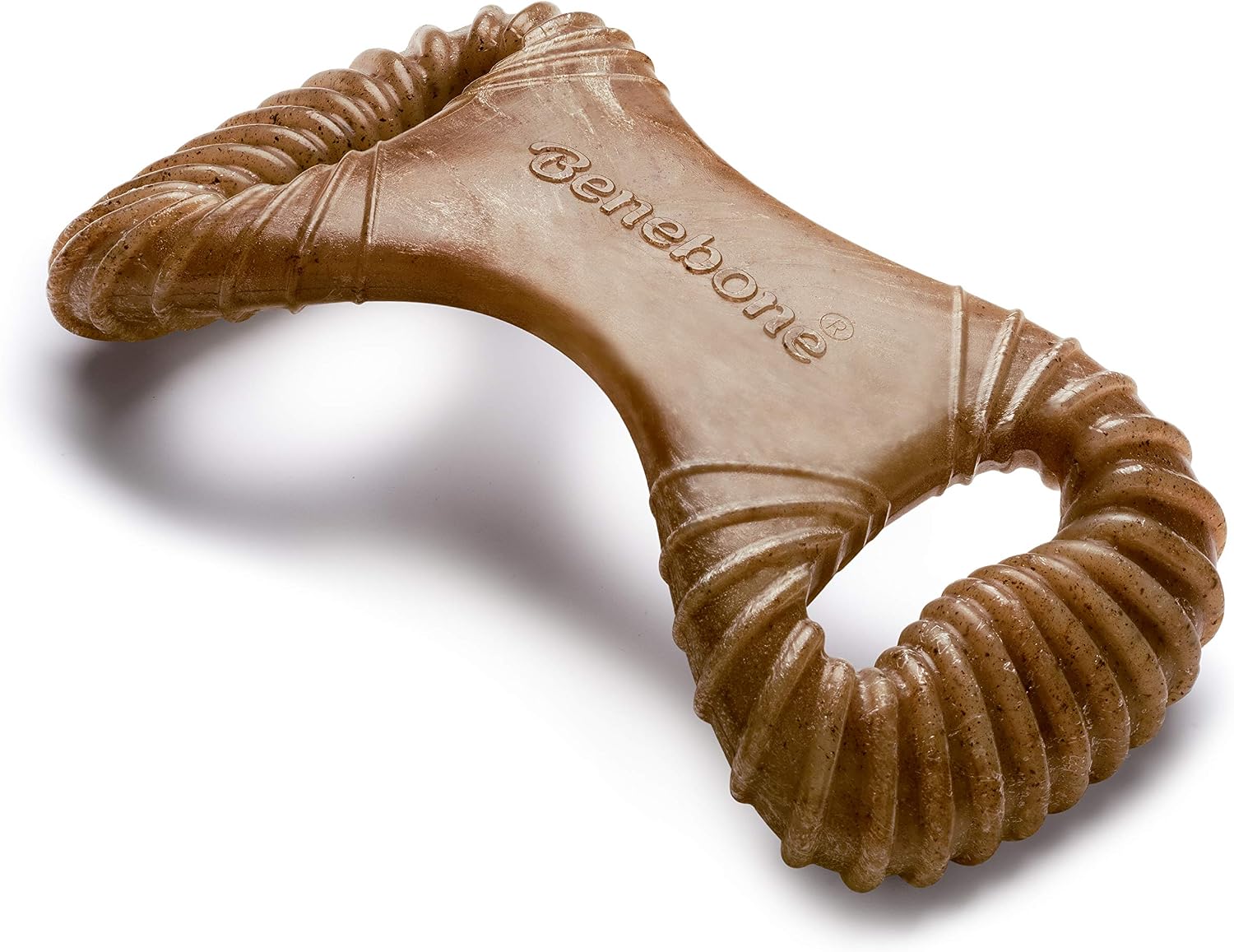
Best overall chew: Benebone Dental Dog Chew Toy for Aggressive Chewers, Real Bacon, Medium
If your dog has already destroyed three toys that claimed to be tough, start here. This is a hard chew built for aggressive chewers, and the shape is the interesting part. Instead of a plain stick, it has a profile that lets a dog work the sides and the back of the mouth, which is where chewing actually happens when a dog is bored rather than playful. The real bacon flavor is what gets it out of the basket in the first place. A chew that smells like nothing gets ignored, and an ignored chew redirects nothing.
Medium is a jaw size, not a suggestion. I have watched a hundred pound dog try to swallow a chew meant for a thirty pound dog, and I have watched a ten pound dog give up on a chew that was simply too big to hold. Match the chew to the mouth in front of you, not to the breed listed on the rescue paperwork.
Two cautions. Hard chews and senior teeth are a bad combination, so if your dog is older or has a history of dental work, talk to your vet before buying anything in this category. And flavored chews lose some of their pull after a week or two, which is an argument for rotation rather than replacement.
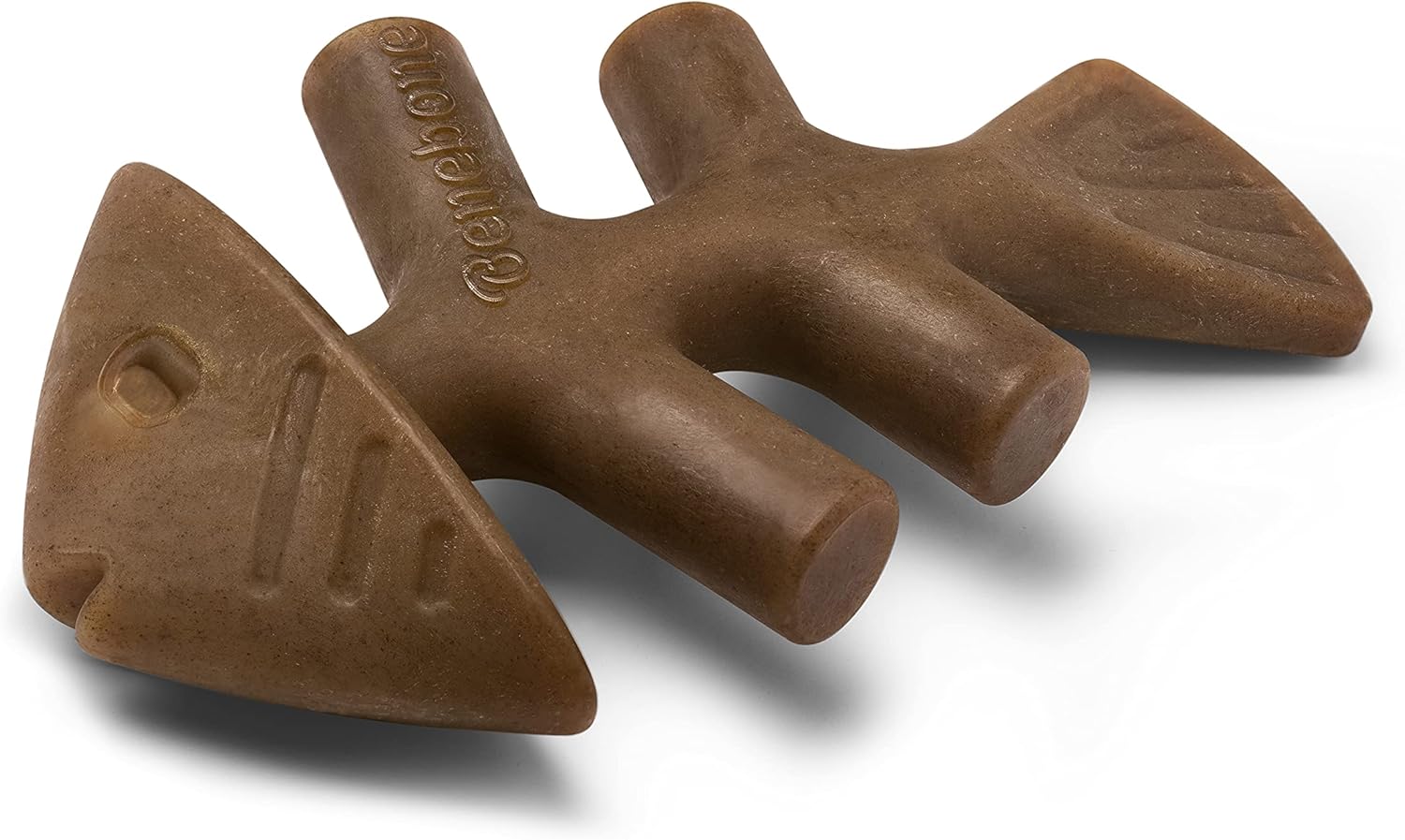
Best shape variety: Benebone Fishbone Durable Dog Chew Toy for Aggressive Chewers, Medium
The Fishbone is the same idea as the Dental chew in a different silhouette, and the difference is not cosmetic. A fishbone gives a dog several grip points instead of one, and plenty of dogs find it easier to pin down with a paw and settle into. If your dog likes to hold a chew steady while working an end, this shape tends to suit them better than a straight stick.
Here is where I will get on my soapbox for a minute. Rotation beats accumulation. Three toys that come and go outlast ten toys dumped in a basket, because a toy that disappears for a few days comes back interesting. Owning two Benebones in two different shapes is one of the easiest ways to rotate without buying a pile of junk. The dog experiences them as separate objects, and you get more mileage out of two purchases than you would from a bargain bin full of toys that fail the ten minute test.
Same hard chew rules apply: watch it for wear, retire it when the surface gets rough or pieces start to loosen, and keep it away from the senior dog with worn enamel.
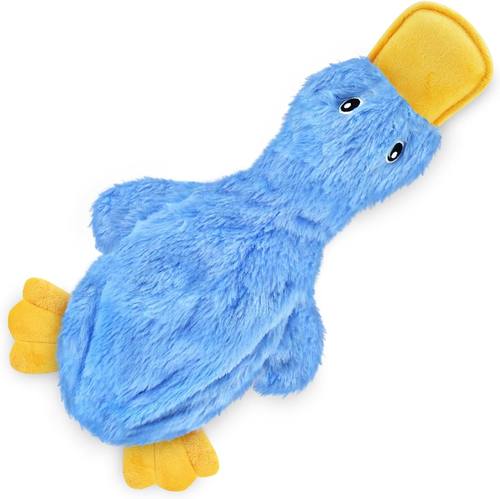
Best for gentle players: Best Pet Supplies Interactive Squeaky Dog Toy, Crinkle Duck, Blue
I am going to say the unpopular thing first. Stuffed toys are not for chewers. They are for gentle dogs, and there is no shame in admitting yours is not gentle. If your dog's hobby is extracting squeakers, this toy is not a challenge, it is a countdown, and I have watched too many of those end in surgery to pretend otherwise.
For the gentle ones, though, the Crinkle Duck does real work. The crinkle texture gives a dog something to mouth and nudge during quiet time, the squeaker rewards a soft bite, and the duck shape is easy to carry around the house. This is the toy for the dog who parades a stuffed animal like a pacifier, drops it at your feet, and stares at you until you throw it. It also works as a fetch reward for a dog who finds a ball too intense.
Supervise the play, put it away when you are done, and check the seams and the squeaker after every session. A loose squeaker is a vet bill, not a toy.
The Crinkle Duck in yellow: same toy, different color
The yellow version is the blue version with a different color, and I am listing it separately on purpose. Two identical toys in two colors is the cheapest rotation trick there is. One duck lives in the toy bin, one duck disappears for a week, and the dog greets the returning duck like a long lost friend. In a two dog house, two colors also cut down on the guarding that happens when there is only one duck and two opinions about whose turn it is.
Buy one if you just want a fetch toy. Buy both if your dog is the type who loses interest in a toy the moment it never leaves the floor.
How I judge a chew toy before it goes in a kennel run
Four questions, every time, and I do not skip them because a package has a nice photo on it.
First, can a power chewer compromise it in under an hour? If the answer is yes, it is a supervised toy, not a leave it in the crate toy. Second, is the size right for the jaw? Not the breed, the jaw. A toy meant for a Lab is a choking hazard for a Frenchie, and that is one of the few things in this hobby I will say without hedging.
Third, does it survive 72 hours of real use? Real use means a bored dog on a rainy afternoon, not a polite game of fetch. Fourth, would I hand it to a client's puppy unsupervised? Most toys fail that last one, and most of them deserve to.
That framework is why this guide has hard chews and plush toys in it and no puzzle toys or rope. Rope is a supervision only item in my house, and puzzles go straight to the shelf the moment a determined chewer decides the treat door is a chew toy too.
The dog toy reference table
This is the table I keep on the kennel clipboard, and it is the same one I use when a client asks what to order. Rotate every few days, supervise anything with a squeaker, and check every chew for wear before it goes back in the bin.
| Toy | Best for | Chew style | What to watch | Price |
|---|---|---|---|---|
 Visit on Amazon → Benebone Dental Dog Chew Toy, Real Bacon, Medium |
Heavy chewers who need a job | Hard chew | Senior teeth, jaw size | $12.19 |
 Visit on Amazon → Benebone Fishbone Durable Dog Chew Toy, Medium |
Dogs who pin a chew with a paw | Hard chew | Surface wear, retire when rough | $10.98 |
 Visit on Amazon → Best Pet Supplies Crinkle Duck, Blue |
Fetch, carry, and shake games | Plush with squeaker | Not for chewers, supervise | $5.99 |
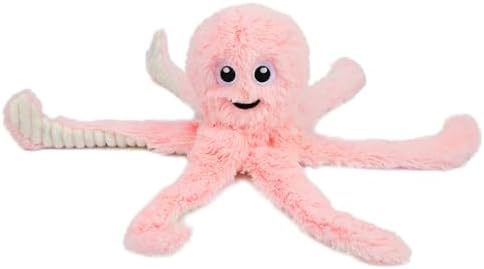 Visit on Amazon → Best Pet Supplies Crinkle Duck, Yellow |
Same as blue, plus rotation | Plush with squeaker | Seams and squeaker checks | $6.79 |
What the table does not tell you
The table gives you the shape of the decision. The rest is about the dog, and the dog is the part no chart can cover.
Size is the first thing people get wrong. Toys are sized by breed on the shelf, and that is close to useless. Two Labs can have completely different jaw sizes, and a dog who is a power chewer in a small body will wreck a toy that a bigger, gentler dog would never touch. Feel the toy in your hand and picture your dog's mouth around it. If you can imagine them working it down their throat, it is too small.
Teeth are the second thing. Hard chews are wonderful for a young dog with good enamel, and they are a genuine risk for a senior with worn or cracked teeth. I have seen a dog chip a tooth on a chew that was, technically, the right size. Ask your vet if your dog is past middle age or has had dental work.
Supervision is the third. Nothing on this list belongs in a crate with a dog who has not earned it. Plush toys with squeakers come out when you are in the room and go in the drawer when you are not. Hard chews can stay out longer, but they still need a look every day, because a chew that has started to break down is a different object than the one you bought.
And the last one, which nobody wants to hear: if your dog is chewing your furniture, the answer is not always a tougher toy. A tired brain chews less furniture. Rotate what you have, add a walk, and save the money on the fourth chew you were about to buy.
Should you buy the Benebone Dental Dog Chew Toy?
Yes, if you have a heavy chewer with a medium jaw and healthy teeth. It is a hard chew built for aggressive chewers, the dental shape keeps a dog working instead of gulping, and the real bacon flavor is what makes it interesting enough to pick up on a boring afternoon.
Skip it for seniors with worn teeth, and skip it for any dog who has cracked a tooth before. And remember that Medium is a jaw size, not a breed recommendation.
Should you buy the Benebone Fishbone?
Yes, if your dog likes to hold a chew down with a paw, and yes if you are trying to build a rotation instead of a basket. The fishbone shape is a genuinely different chewing experience from a straight stick, and two shapes in the same material family is the cheapest rotation setup I know.
Same hard chew cautions apply. Watch the surface, retire it when it gets rough, and keep it away from the dog with dental problems.
Should you buy the Crinkle Duck?
Yes, if your dog is gentle with plush and you are willing to supervise. It is a squeaky, crinkly toy for fetch, carry, and shake games, and for the dog who likes to parade a toy around the living room it earns its place. The blue and the yellow versions are the same toy, so buy whichever color you can find, or buy both and rotate.
If your dog disembowels stuffed toys, this is not the toy for them. That is not a failure, and it is not a moral failing either. It just means your dog needs the hard chews above and a supervised game of tug instead.
The bottom line
Two hard chews for the dog who treats a toy like a job, two plush ducks for the dog who treats a toy like a friend. That is the whole decision, and most of the trouble I see in my kennel comes from owners buying the wrong one of those two categories and then blaming the toy.
Match the size to the jaw, supervise the squeakers, check the hard chews for wear, and rotate what you own before you buy more. Do that and your graveyard shelf stays a lot emptier than mine.