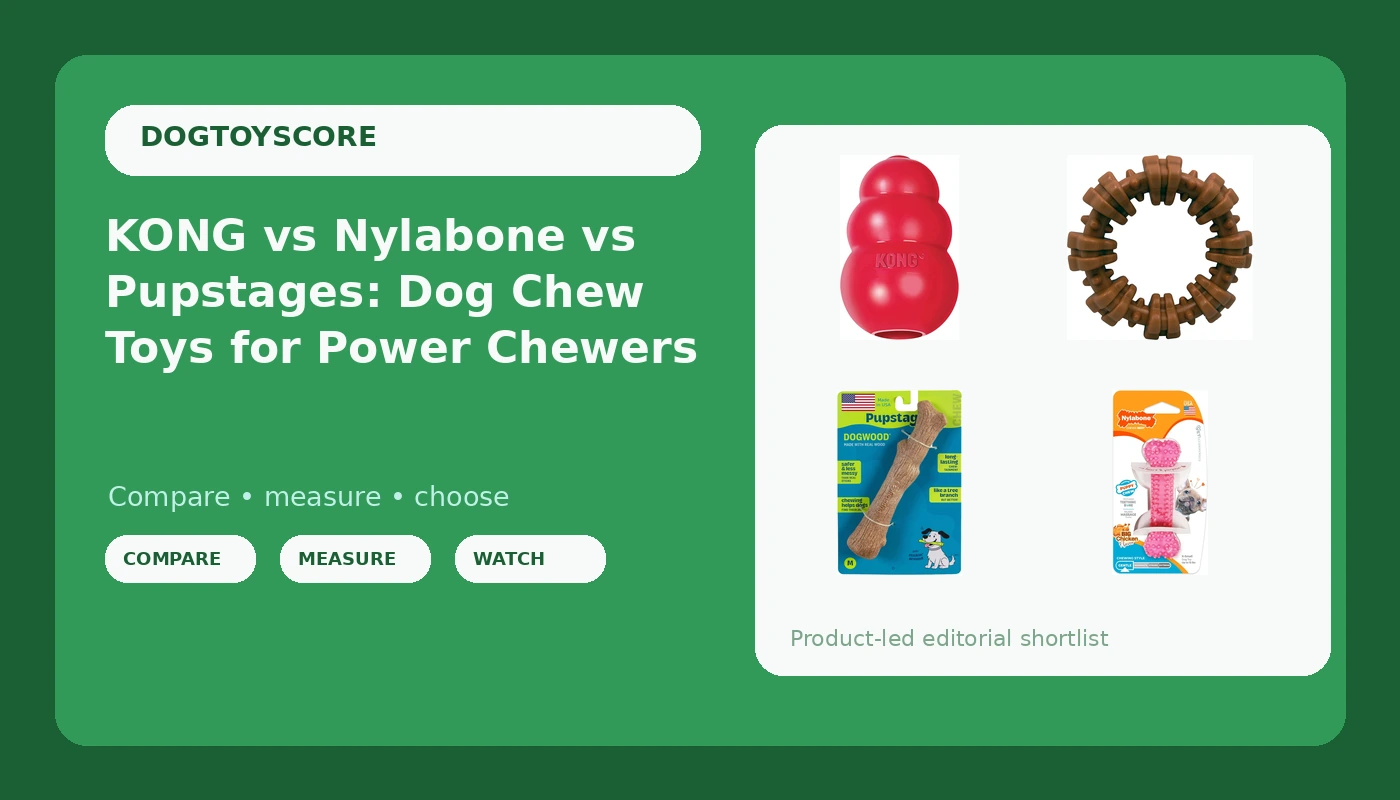
I keep a shelf in my living room that I call the graveyard. It holds every toy that lost. A fire hose remnant, three squeaker ducks with the squeakers surgically removed by a twenty-pound terrier, and a rope bone that lasted nine minutes with a boarder named Duke. Eleven years as a trainer, six of them focused on puppies and destructive chewers, and that shelf is still the most honest thing I own. When clients ask me to rank dog chew toys for power chewers, I do not reach for a catalog. I reach for the shelf, and then for the toys that never ended up on it.
The four toys below are the survivors. I have handed each one to real dogs in a boarding kennel that runs out of my house, which means they get chewed by dogs with no manners, at all hours, by dogs who are bored, anxious, or both. That is a much harder test than a showroom floor.
Related: How Toy Rotation Keeps a Chewer Interested
If you only buy one, buy the KONG Classic. It is the only toy on this list I recommend to every single puppy owner, because you can stuff it, freeze it, and change what it is without buying anything new. The other three earn their spot for specific jaws and specific jobs, and I will tell you exactly which dog each one is for. No toy here gets a pass on size, because size is the decision that matters most.
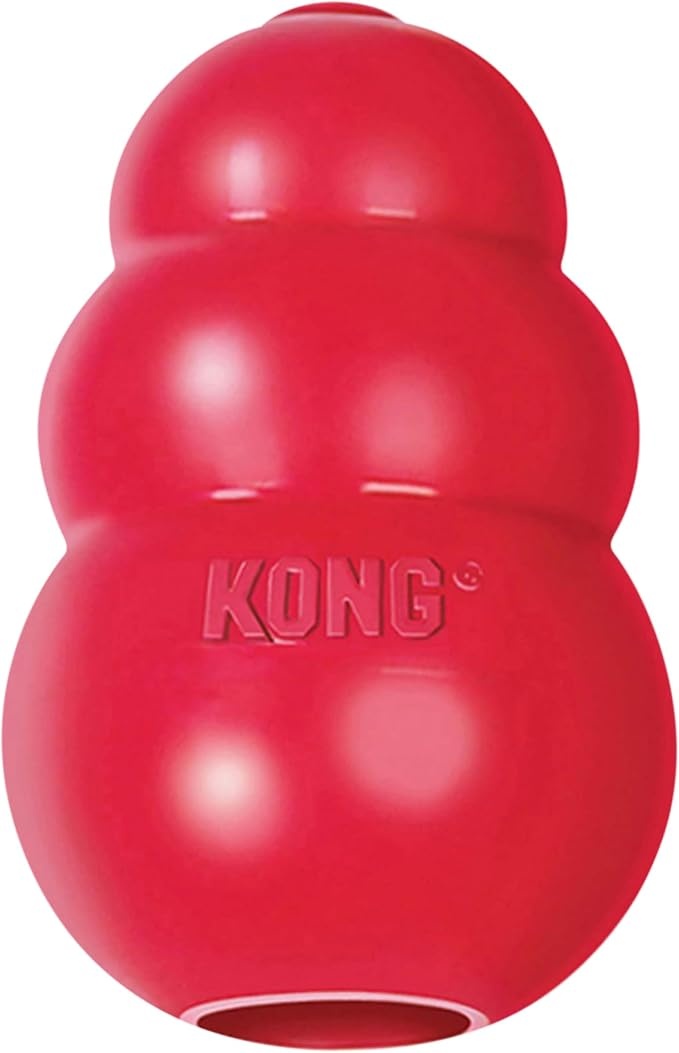
KONG Classic Stuffable Dog Toy, Natural Rubber Chew, for Large Dogs
Flexible rubber survives real chewing, and stuffing it turns one toy into a dozen activities
Not a chew-proof promise; a determined dog can eventually tear the rubber
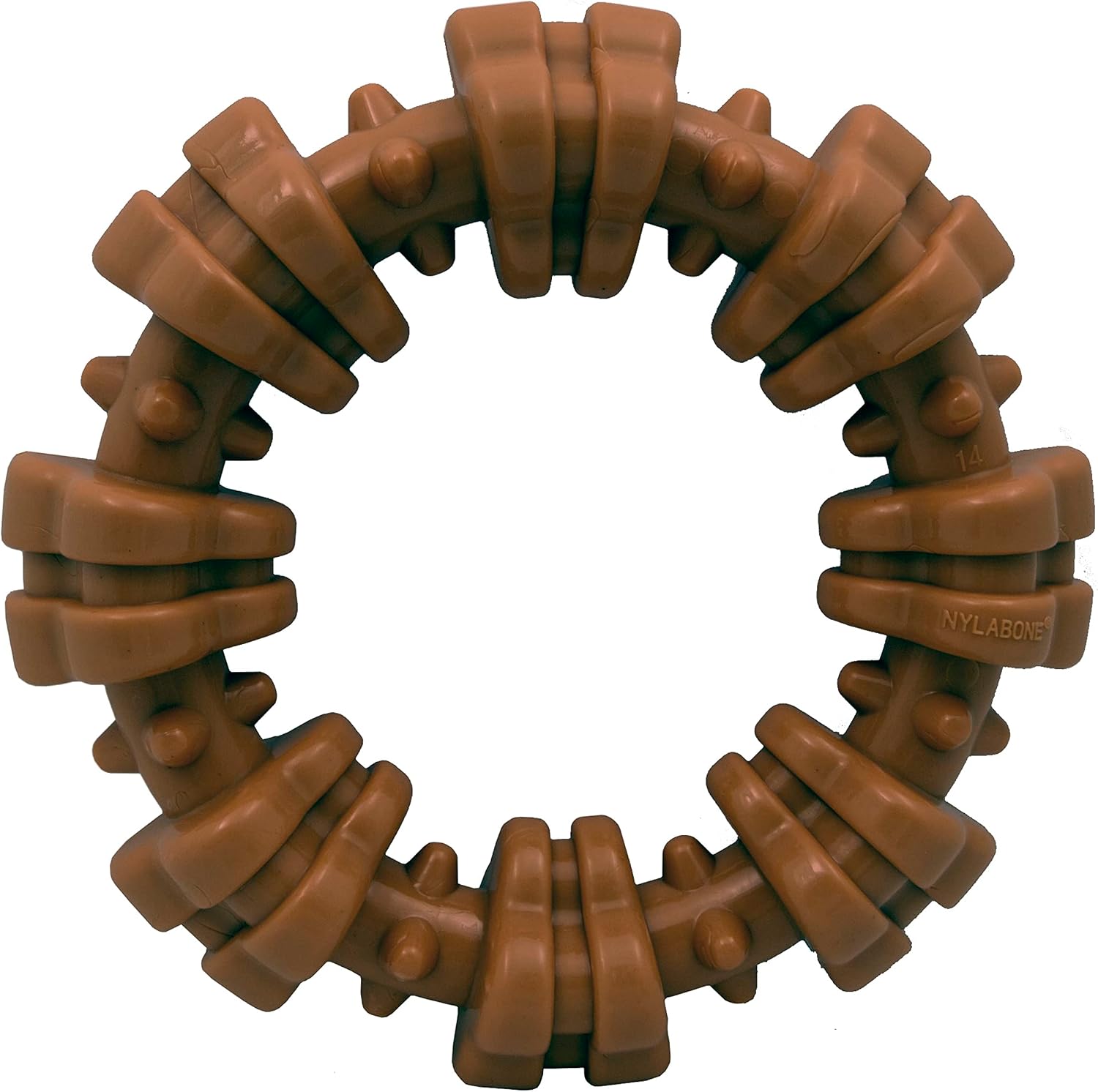
Nylabone Textured Ring Power Chew Toy for X-Large Dogs 50+ lbs
Built for the 50-plus-pound jaw, and the ring shape is easy for big paws to pin down
The flavor fades, and hard nylon is not a great fit for senior teeth
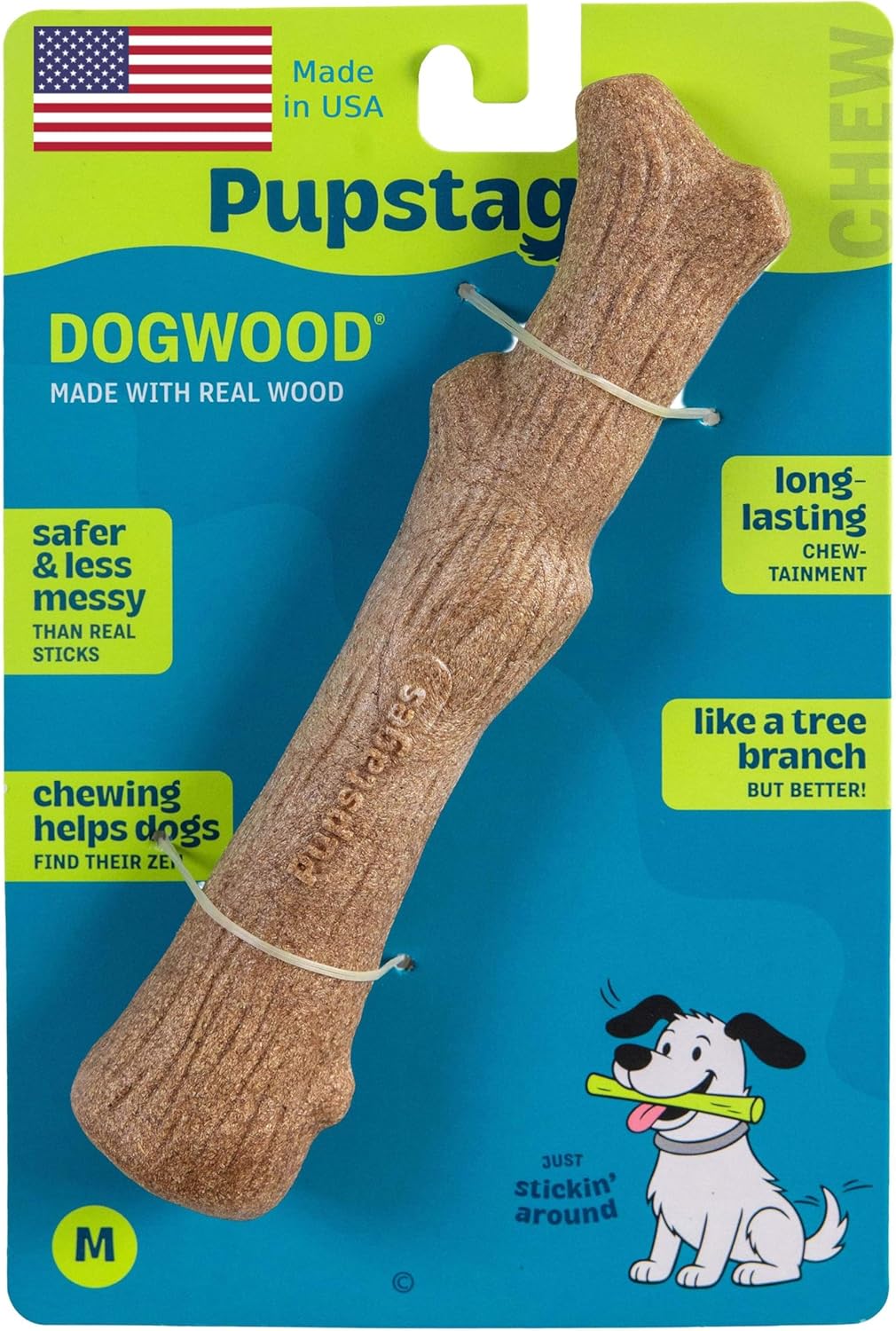
Pupstages Dogwood Stick Dog Chew Toy, Made in USA, Medium, 7.4"
A safer stand-in for the yard stick your dog keeps stealing
Medium size and moderate durability; not a toy for a heavy power chewer
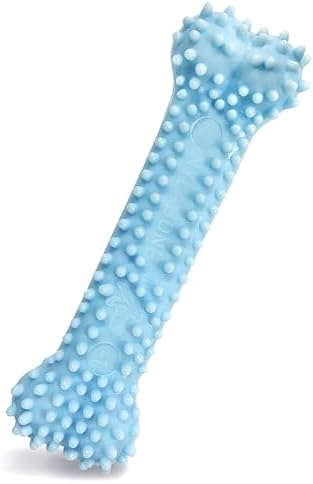
Nylabone Puppy Chew Pink Textured Teething Dog Bone, X-Small
Sized for tiny puppy jaws and built for the teething stage
X-Small means exactly that, so it is wrong for anything but a small puppy
Prices and availability were captured from Amazon Creators API and may change.
How I decide what survives
Every toy that comes through my door gets 72 hours with real dogs before it gets an opinion from me. Not 72 hours of gentle mouthing, either. My boarding kennel runs out of my house, so toys get used by dogs with no manners, at all hours, by dogs who are bored, anxious, or both. I log what I call a destruction score: the time it takes a determined chewer to compromise the toy in a way that makes it unsafe or uninteresting. Anything compromised fast with a power chewer gets pulled from the rotation, not relabeled as a challenge.
Two rules shape everything below. First, size matters more than type. A toy built for a Labrador jaw is a choking hazard in the mouth of a Frenchie, and a toy built for a Chihuahua disappears down a Dane's throat. Second, no toy is safe for all dogs. If someone tells you otherwise, they are selling something. The toy that works for your dog is the one sized to their jaw, matched to their chew style, and supervised for the first several sessions.
KONG Classic: the one I recommend first
The KONG Classic is natural rubber, and that is the whole trick. Rubber flexes instead of shattering, so the toy gives a little under a hard bite and springs back. It is also stuffable, which means a single purchase becomes a puzzle feeder, a frozen teething tool, and a boredom chew depending on what you put inside it and whether you freeze it. I have used the frozen version for puppies in the middle of teething, and I have used a plain stuffed version to keep an anxious boarder busy through a thunderstorm.
This is the Large version, so match it to your dog's jaw rather than to their breed label. A large rubber toy in a small dog's mouth is a problem, and no amount of good intentions fixes that. The honest downside: rubber is durable, not eternal. Dogs who work a toy every day will eventually tear it, and when the rubber splits, you retire the toy that day. The KONG Classic earns its reputation because it fails slowly and visibly, not because it never fails.
Nylabone Textured Ring: for the 50-plus-pound jaw
This one is for the dog who has already chewed through everything soft. The Textured Ring is made for X-Large dogs, 50-plus pounds, and the ring shape is genuinely useful, because big dogs can pin it with a paw and work it without chasing it across the floor. The texture gives a chewer something to grind against, which is what a lot of heavy chewers are actually looking for.
Two honest complaints. First, the flavor wears off. Nylabone is great for power chewers, but the flavor fades fast, and by week two a lot of dogs walk right past it. Rotating it out and bringing it back later helps more than buying a second one. Second, hard nylon is hard, and that matters for senior teeth. I hand nylon to young, healthy, powerful jaws. I do not hand it to a twelve-year-old dog with worn enamel. Check the surface as it ages, because nylon develops rough edges over time, and a toy that shreds into pieces is a toy that needs to go.
Pupstages Dogwood Stick: the wood chewer's stand-in
Some dogs are obsessed with sticks. Those dogs are also the reason I have seen splinters come out of a mouth, and the reason I keep a stick-shaped chew in my bag. The Pupstages Dogwood Stick is made in the United States, medium, and about 7.4 inches, which is a comfortable length for a mid-size dog to hold between the front paws.
This is not a toy for a heavy power chewer. It is a substitute for a bad habit. I hand it to the dog who steals branches from the yard, not to the dog who eats branches. If your dog is a serious chewer, the wood-style chew will not survive their enthusiasm, and that is not a flaw in the toy, it is a mismatch in the dog. For the moderate chewer with a stick habit, it redirects a genuinely dangerous behavior into something safer, and that is worth a lot. Supervise it, retire it when the ends get chewed down, and never leave it in a crate with a dog who likes to shred.
Nylabone Puppy Chew: the teething starter
Teething is temporary. The chew marks on your baseboards are forever, but temporary. This X-Small pink bone exists for the puppy stage, when the goal is not destruction resistance, it is giving sore gums something to do that is not your coffee table leg. The texture is meant for a puppy mouth, and the size is meant for a puppy jaw.
Read that size again, because it matters more than anything else in this section. X-Small is tiny. It suits a small-breed puppy or a very young puppy, and it is a poor choice for a big-breed puppy who will outgrow it in a matter of weeks, and a genuinely dangerous choice around adult dogs in the house. Puppies need supervision with every chew, no exceptions. Check the bone regularly and replace it once it is visibly worn down, because a chew that has been ground to a nub is a swallow risk. Used correctly, this is a cheap, sensible first chew for a teething puppy, and it buys you a quiet twenty minutes.
Size and supervision decide more than the label
Here is the pattern I see in client homes. Someone buys the toy labeled for their breed, the dog destroys it, and they conclude the brand lied. Usually the brand did not lie. The toy was the wrong size for the jaw in front of it, or the dog was a power chewer handed a moderate toy, or both. Breed labels are marketing shorthand. Jaw size, bite force, and chew style are the real specs, and you can only learn those by watching your dog.
Supervision is the other half. Every toy on this list can fail, and failure looks different depending on the material. Rubber tears. Nylon roughens and shreds. Wood-style chews wear down at the ends. None of those failures are emergencies if you are in the room and paying attention. All of them are emergencies if the toy has been in a crate overnight for a week. This is the part nobody wants to hear, and it is the part that keeps dogs out of surgery.
Rotation beats buying more
Three toys on rotation outlast ten toys dumped in a basket. That is not a theory, it is what I see in my own kennel every week. Novelty is the active ingredient. A toy that has been in the basket for a month is boring; the same toy pulled out after two weeks in a closet is new again. Rotate the KONG Classic in with the Nylabone Ring, swap the stick in when your dog starts ignoring both, and keep the puppy chew in the mix only while it still fits your dog's mouth.
Rotation also protects your wallet and your dog. When toys cycle, you notice wear earlier, because you handle each one when you put it away. You catch the split rubber and the rough nylon edge before your dog does. A basket is where toys go to hide their damage.
What I'm testing next
I am in the middle of a twelve-week teething study right now: six brands, forty puppies, and a destruction score logged for every single toy. The marketing says soothing. My stopwatch says otherwise, and I will have the numbers when the last puppy graduates. The early pattern is that size, not brand, predicts how long a teething toy lasts.
The other thing on my bench is a rotation schedule for kennel dogs, built around how long novelty actually holds before a boarder walks away. I suspect the answer is shorter than anyone wants to admit.
The short version
Buy the KONG Classic first, because stuffing and freezing make it the most flexible toy on this list and the one I recommend to every puppy owner. Add the Nylabone Textured Ring if you have a 50-plus-pound power chewer who needs something to grind on, and accept that you will need to rotate it when the flavor fades. Choose the Pupstages Dogwood Stick if your dog is a stick thief, not a stick eater. Start a small puppy on the Nylabone Puppy Chew, and move them up in size the moment their jaw outgrows it. Then supervise all of it, because no label on a package has ever watched your dog chew.