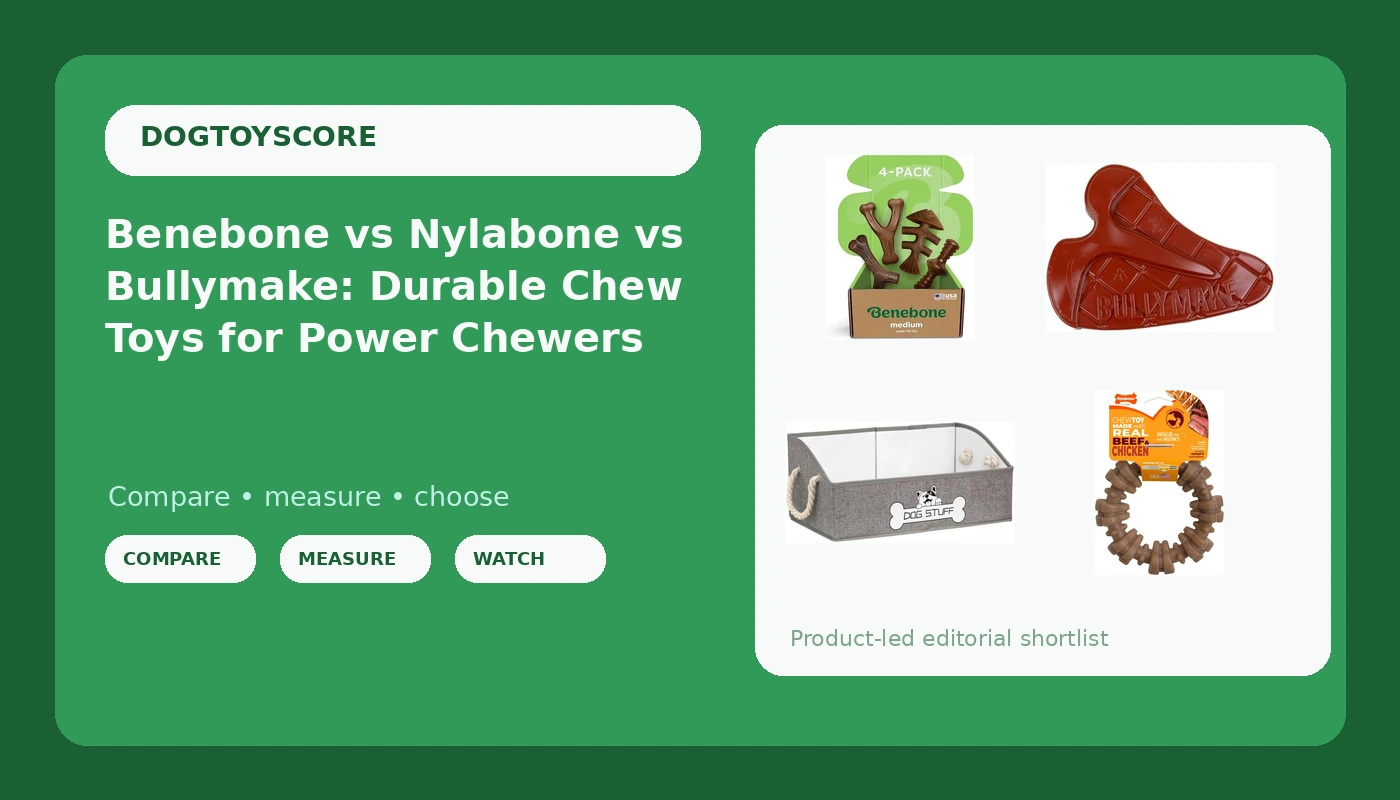
I have a shelf in my living room that clients find a little depressing. It holds every toy that failed in my kennel: split rubber, shredded plush, a squeaker that came out of a stomach instead of a toy. When people ask me for durable chew toys for power chewers, that shelf is why I answer the way I do. Eleven years as a trainer, six of them spent almost entirely with puppies and destructive chewers, plus a boarding kennel in Austin where toys get abused around the clock by dogs with no manners. This comparison covers the four things I keep in rotation for heavy chewers right now, including the boring one that makes the other three last longer.
Related: How To Match A Chew Toy To Your Dog's Jaw Size
The best chew toy for most power chewers is the Benebone Medium 4-Pack, because four boredom chews in different shapes get rotated instead of destroyed, and rotation is what actually saves you money. The Nylabone Strong Chew Ring is the better starter for a teething puppy, the BULLYMAKE Tough Chew Steak is the one I reach for with the biggest jaws, and the storage basket is the unglamorous purchase that keeps all three in play.
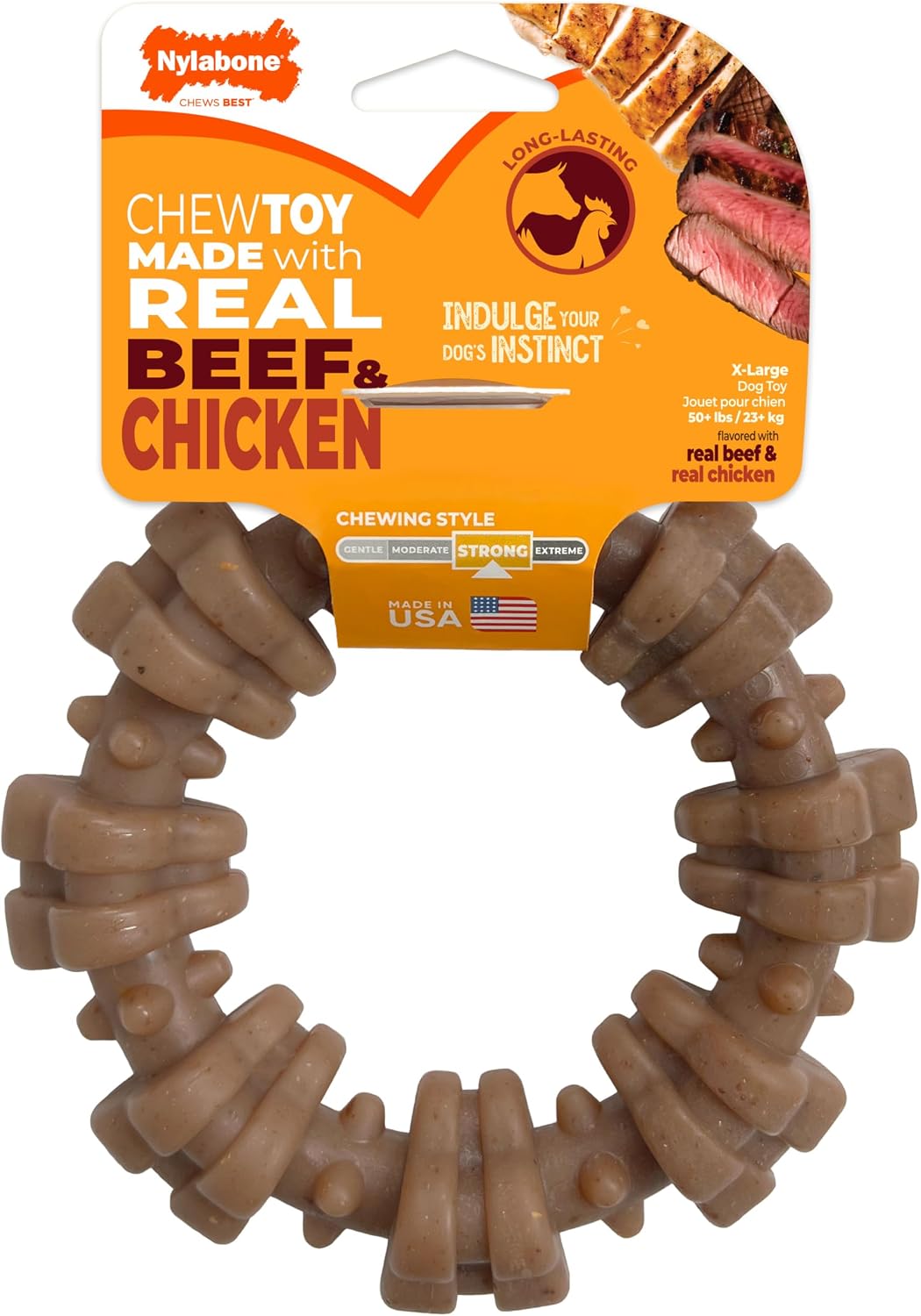
Nylabone Strong Chew Ring Dog Toy, Chew Toy Made with Real Beef & Chicken
Best entry point for teething puppies and moderate chewers, beef and chicken flavor gets interest fast
Flavor fades, and by week two a lot of dogs act like it is furniture
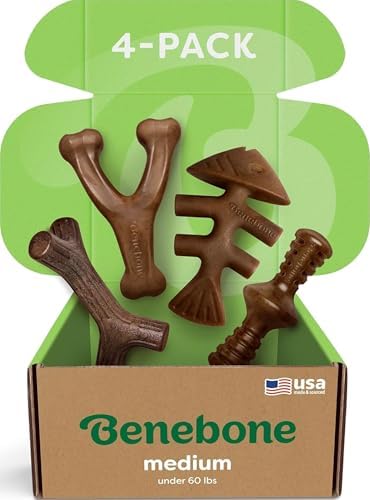
Benebone Medium 4-Pack Dog Toys for Aggressive Chewers, Under 60 lbs
Four shapes means a real rotation, and the textured surface keeps heavy chewers busy without food
Hard material, so senior teeth and worn molars need a look before you hand it over
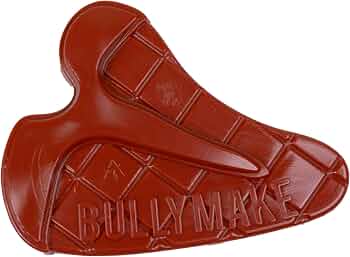
BULLYMAKE Tough Chew Steak Toy for Dogs, Durable Nylon, Aggressive Chewers
The pick for the dog who eats everything else, and the steak shape draws in dogs that ignore plain blocks
Nylon is nylon, so it is a supervised chew, not a leave-it-in-the-crate chew
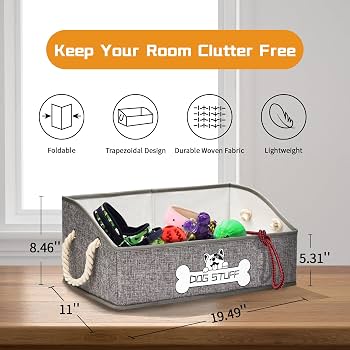
Dog Toy Basket, Storage Bin, Collapsible Box for Pet Accessories
Makes rotation possible instead of theoretical, collapses flat when you travel
It is a bin. It will not entertain your dog for a single minute
Prices and availability were captured from Amazon Creators API and may change.
How I test a chew toy, and what a destruction score means
A destruction score is minutes until a toy is compromised. Compromised means a chunk came loose, a piece is hanging by a thread, or the shape changed enough that a dog could wedge a molar in it. Under 10 minutes with a power chewer is a fail, and I write the score on the toy in permanent marker before it goes on the shelf.
Nothing gets a recommendation from me without 72 hours on real dogs. Not an afternoon with a gentle Lab. Three days, multiple dogs, multiple chew styles, including the ones who ignore a toy for six hours and then decide at 11 p.m. that tonight is the night. Running a boarding kennel gives me something most reviewers do not have: hours of monitored observation with dogs who are not mine and have no interest in being polite to a toy.
The failure mode matters more than the survival time. A toy that breaks into soft rubber crumbs is annoying. A toy that splits into a sharp shard is a vet bill. That is the standard, and it is why I am blunt about what each of these four picks can and cannot do.
Nylabone Strong Chew Ring: the flavor-forward starter
Nylabone has been in my rotation longer than any other brand, and the Strong Chew Ring with real beef and chicken flavor is the version I hand to puppy owners first. Puppies explore with their mouths, and a chew that smells like food gets picked up on purpose instead of by accident. For a dog in the middle of teething, that matters. You want the toy to be the more interesting option than the baseboard.
Where it falls short is the flavor itself. This is a long-running complaint of mine about Nylabone in general: the scent and taste wear off fast, and somewhere in week two the toy gets ignored in favor of something newer. My fix is rotation, not replacement. Pull it for four or five days, put a different texture down, then bring it back. It gets interesting again.
A few things I tell every client about this one. Check the ring for roughness at the edges, because a determined chewer will work the same spot for an hour and rough edges turn into ragged edges. Size it to the jaw, not the breed. And if your dog is a senior with worn enamel, talk to your vet before you hand over anything hard.
Benebone Medium 4-Pack: four shapes, one rotation
Benebone is the best boredom chew I know of for heavy chewers, and buying it as a four-pack is the part most people miss. One Benebone is a chew. Four Benebones in different shapes is a system. You keep two out, two away, and swap every few days. The dog gets novelty, you get a toy that does not get destroyed out of sheer familiarity.
The textured surface is what makes it work. It gives a power chewer something to work against without being food, so it functions as a pacifier for the dog who chews when bored rather than when hungry. That is a different job than a stuffed toy does, and it is the job most destructive dogs actually need filled.
The catch is the material. It is hard, and hard is the point, but it means senior dogs and dogs with existing dental wear should not be left alone with it. I have watched a 12-year-old Lab show real interest in one and then quit after two minutes because his mouth hurt. That is not a toy failure. That is a dog telling you the answer.
This pack is sized for dogs under 60 lbs. If your dog is bigger than that, do not stretch it. Move up a size.
BULLYMAKE Tough Chew Steak: for the dog who eats everything
Some dogs treat toys as a puzzle to be solved, and the solution is always "destroy it." For those dogs, the BULLYMAKE Tough Chew Steak is the shape I reach for. It is durable nylon built for aggressive chewers, and the steak silhouette does something a plain block does not: it gives the dog a target. Dogs that ignore a rectangle will often commit to something that reads as food.
Nylon is a legitimate material for heavy chewers, but it comes with rules. This is a supervised chew. It does not go in the crate, it does not get left in the yard, and it gets inspected every few days for deep gouges or sharp edges. When a nylon chew develops a rough, chewed-down area, that is your signal to retire it, not a challenge to see how much longer it lasts.
The other rule is water. A dog working a nylon chew hard for a long stretch should have water available, because that kind of chewing is work. If you have never watched a determined chewer go at a chew for 40 straight minutes, you have not seen how much effort is involved.
If your dog is a serious power chewer, this is the one I would pair with a Benebone rather than replace it with one. The nylon handles the hard chewing sessions. The Benebone handles the boredom sessions. Different jobs.
The storage basket: the purchase nobody wants to make
I know how this looks. A storage bin in a comparison of chew toys for aggressive chewers is the least exciting entry possible. It is also the one I recommend most often, because rotation only works if the toys you are not using are actually out of reach.
The math is simple. Three toys on rotation outlast ten toys dumped in a basket in the middle of the room. A dog with permanent access to everything gets bored with everything. A dog who sees a toy come back after a week treats it like a new purchase, and you stop buying replacements every month. That is the entire trick, and it costs less than one more chew toy.
This collapsible bin does the job without looking like kennel equipment. It holds toys, leashes, and the small accessories that otherwise end up under the couch. The collapsible part matters more than I expected, because I take toys to client homes and to the kennel yard, and something that folds flat in a car beats a rigid plastic tub every time.
My honest tension here: I preach rotation constantly, and my own living room basket is overflowing because I cannot stop testing. Do as I say. Start with five toys in rotation and a bin that closes.
Size and jaw, not breed
Toy size matters more than toy type. A toy built for a Labrador is a choking hazard for a French Bulldog, and a toy sized for a Frenchie is a snack for a Dane. Breed labels on packaging are marketing shorthand, and I have watched them fail in both directions.
Size to the jaw. A chew should be wide enough that your dog cannot get it behind the molars and start working it like a nutcracker. If your dog can hold it with one paw and pin it against the floor, it is probably too small. If your dog cannot get a grip on it at all, it is too big and will get ignored.
This is why the Benebone pack is specified for dogs under 60 lbs and why I will not tell you to push it. It is also why I never say a toy is safe for all dogs. It is not true. It has never been true.
What to do when a chew toy fails
Take it away the moment it is compromised. Not at the end of the day, not after one more session. A toy that is failing is a foreign body waiting to happen, and I have watched a vet tech explain the cost of that surgery to an owner who wanted to finish a phone call first. Remove it, note what failed, and replace the job it was doing with a different material.
Then write it down. The toy graveyard on my shelf exists because patterns are invisible until you line up the failures. Three split rubber toys in two months tells you your dog is a power chewer and you have been buying for the wrong category. One shredded plush tells you nothing except that plush and this dog are not compatible, which is fine and not a moral failing on either side.
Who should buy which
- New puppy, first chews, still learning what toys are: the Nylabone Strong Chew Ring.
- Heavy chewer who chews out of boredom and needs a rotation system: the Benebone Medium 4-Pack, sized under 60 lbs.
- Dog who has destroyed everything else and needs a hard, supervised chew: the BULLYMAKE Tough Chew Steak.
- Anyone who wants their current toys to last longer: the collapsible storage bin, honestly.
What I'm testing next
I am in the middle of a 12-week teething study: six brands, 40 puppies, and a destruction score for every single toy. The marketing on teething toys says "soothing." My stopwatch says most of them are done in under 20 minutes with a determined mouth, and a few are not toys so much as supervised distractions. I will publish the full scoreboard when the last puppy finishes, and I expect it to annoy at least two brands.
Until then, the four picks above are what I actually keep in the kennel. Rotation, correct sizing, and supervision will do more for your furniture and your vet budget than any single purchase.