Related: Puppy Teething Timeline: What to Expect, Month by Month
I've been a dog trainer for eleven years, and six of those years were spent almost entirely with puppies and destructive chewers. I run a small boarding kennel out of my house in Austin, which means the toys in my rotation get chewed by dogs with no manners and no owner standing over them saying "gentle." I've put toys in front of over 400 dogs, from a nine-pound Chihuahua who shredded a "tough" plush in under a minute to a 130-pound Dane who treated a fire hose like a chew stick. So when someone asks me for durable dog chew toys, I don't start with the marketing copy. I start with the graveyard shelf in my living room, which is the most honest display I own.
Here's the thing about this category: almost nothing is actually indestructible, and the label on the package is a dare, not a guarantee. What you're really choosing between is a rubber toy, a nylon toy, and a hard chew, and each one asks something different of your dog's jaw. The four toys below are the ones I hand to clients most often, and each one has a specific job. None of them is right for every dog, and anyone who tells you otherwise is selling something.
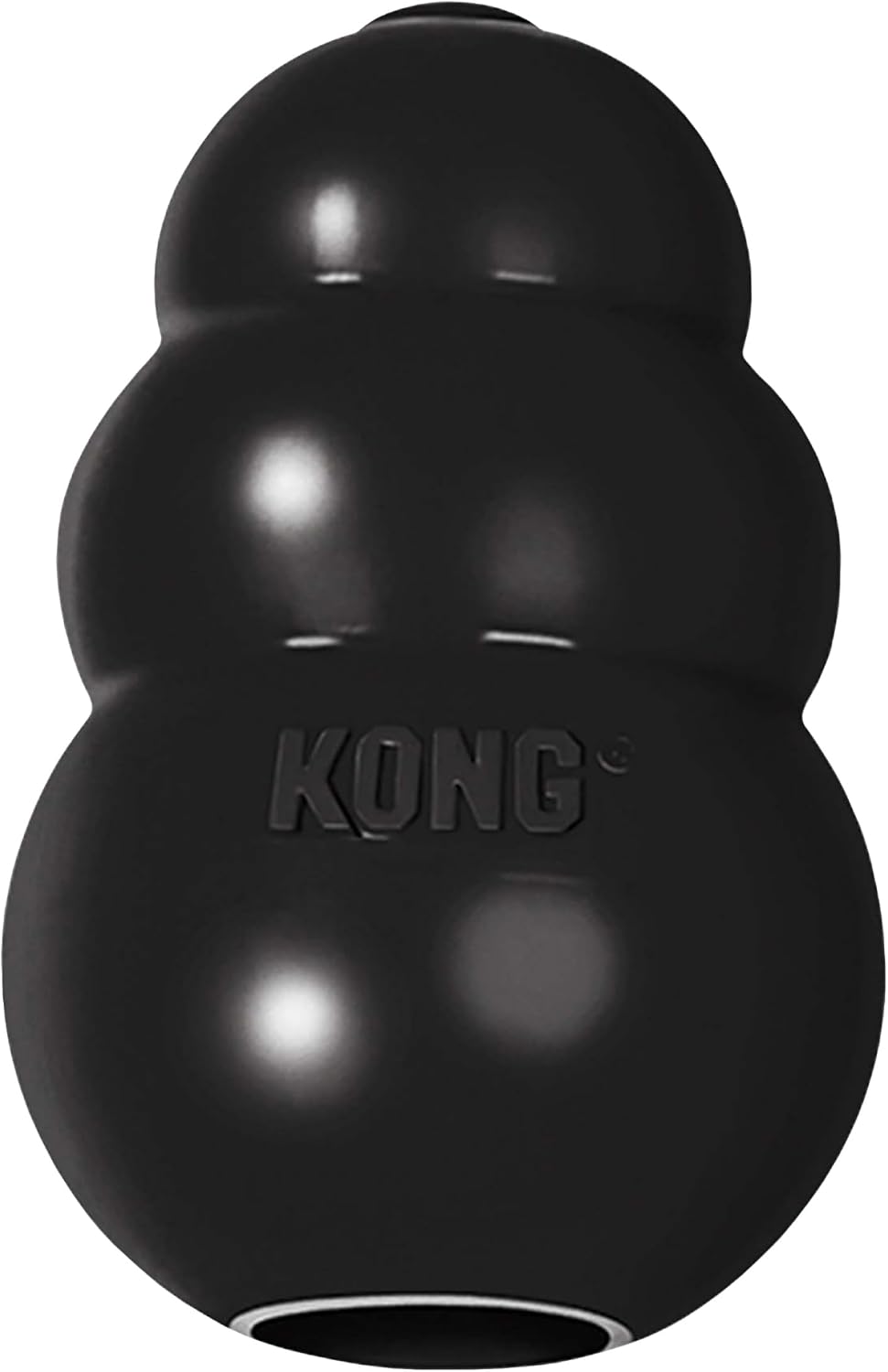
Best Overall: KONG Extreme Dog Toy
This is the toy I recommend to every single puppy owner, and I recommend it to adult power chewers too. It's natural rubber, it's the version built for heavy chewers, and it is the only toy in this group that can be stuffed, frozen, and turned into an hour of quiet work.
That's the part people miss. A chew toy isn't only a chew toy. Freeze something inside it and it becomes enrichment, and enrichment is what actually saves your baseboards. A tired brain chews less. I stuff mine with a mix of kibble and wet food, freeze it overnight, and hand it over when I need a dog to settle instead of redecorate.
The size question matters more here than anywhere else. This toy comes in multiple sizes, and the large version is genuinely large. If you have a Frenchie or a small terrier, a toy sized for a Lab is a choking hazard, not a bargain. Match the toy to the jaw, not to the breed name printed on the box.
Nothing is forever. A determined chewer can eventually compromise the rubber, usually at the opening where the walls are thinnest. Check that spot every few days and retire the toy the moment it tears. If it fails, it fails there first, and that's the spot you need to know about.
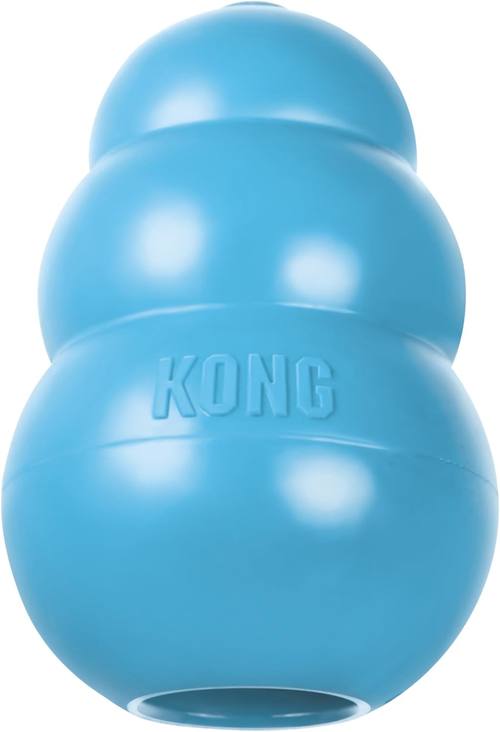
Best for Puppies: KONG Puppy
Same shape, softer rubber, blue instead of black. That softness is the entire point during teething, when a puppy's mouth is sore and hard nylon feels like punishment.
I use this as the first toy I hand a new puppy owner, because it teaches the puppy that chewing on the right thing feels good. Freeze it plain for a sore mouth, or stuff it once the puppy is eating reliably. The softer rubber gives enough to soothe without collapsing under a serious jaw.
Two honest caveats. First, this is not a toy for an adult power chewer. Soft rubber meets a determined adult and loses, quickly. Second, teething relief is real but temporary. Chewing helps, and no toy replaces supervision. Puppies explore with their mouths, and anything left on the floor is a candidate for swallowing.
If your puppy is a big-breed puppy, size up within the puppy line. A Dane puppy at four months is not the same animal as a Chihuahua puppy at four months, even though both are teething.
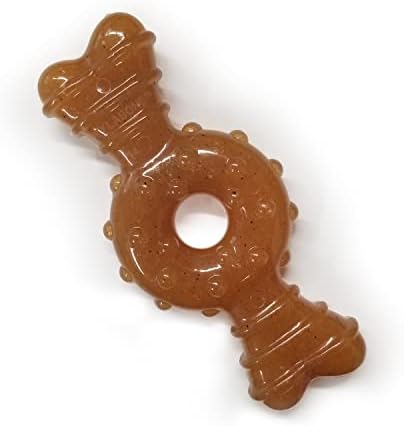
Best Teething Ring: Nylabone Puppy Chew Teething Ring Bone
This is the X-Small, chicken flavored, and it's built for the smallest mouths in the house. The ring shape is the reason I keep recommending it: a puppy can hold it with both paws and work the whole surface, which is exactly what a sore mouth wants to do.
The texture is the second reason. It's a gentler chew than the adult nylon bones, which is what makes it appropriate for a teething puppy rather than a full-grown chewer. The chicken flavor helps with the first introduction, and yes, flavor wears off. That's true of every flavored nylon I've tested. When the flavor fades, most puppies lose interest for a few days.
Which brings me to my least favorite thing about flavored nylon: some dogs ignore it forever after week two. If that happens, don't buy a second one in a different flavor hoping it works. Rotate it out, bring it back in a week, and see if the novelty returns.
Size note: X-Small is genuinely small. This is for toy breeds and young puppies. A Lab puppy would have this gone before you finished reading the label, and a swallowed chew is a vet bill.
Best for Power Chewers: Benebone Wishbone
The Benebone Wishbone in Medium is the boredom chew in this group, and it's the one I reach for with heavy chewers who have already destroyed everything softer. It's a hard chew with real chicken in it, shaped so a dog can pin it down with a paw and get leverage.
Leverage is what makes the wishbone shape work. Dogs that chew flat bones struggle to hold them steady; the wishbone lets them brace it against the floor. For a dog that chews out of boredom rather than hunger, that's the difference between a toy that gets used and a toy that sits in the basket until it's donated.
Now the warning, and I mean this one. Hard chews are not for every mouth. Senior dogs, dogs with worn or fractured teeth, and dogs with a history of dental work should not be handed a hard chew. I've listened to a vet tech explain what a slab fracture actually costs, and it changed how I talk about this category. If your dog is a hard chewer with older teeth, a rubber toy is the safer call.
Also monitor the ends. As the dog works the wishbone down, the tips can wear sharp. Check them, and retire the toy when it gets small enough to swallow.
How I tested
Every toy that gets a recommendation from me has to survive 72 hours of real use, and it has to survive it in a kennel, not in a photo shoot. That means it goes into rotation with dogs who have no training, no manners, and no owner hovering. If it fails, I write down how it failed and it goes on the shelf.
I test on three things. First, durability: can a power chewer compromise it in under an hour? If yes, it's a fail, no matter how nice it looks. Second, fit: is the size right for the target dog's jaw? A toy in the wrong size is a hazard, not a product. Third, whether I'd hand it to a client's puppy unsupervised. That last one is the strictest test I have, and very few toys pass it.
I don't test with a stopwatch and a scoreboard anymore. I used to. What I learned is that destruction isn't linear. A toy can survive a month and then fail in ten minutes when the dog finally finds the seam.
Analysis and test results
Here's the honest breakdown of what these four toys are actually for.
Rubber wins on versatility. The KONG Extreme and the KONG Puppy are the only two toys here that can be stuffed and frozen, which makes them enrichment tools as well as chews. That's worth more than raw durability in most households, because a bored dog is a destructive dog.
Nylon wins on availability. The Nylabone ring is light, easy for a small puppy to hold, and easy to replace. Its weakness is that flavor fades and interest fades with it.
Hard chews win on duration. The Benebone is the toy that lasts longest with the heaviest chewer, and it's also the toy with the clearest safety caveats. Duration is not the same thing as safety, and anyone who tells you otherwise hasn't seen a broken tooth.
Size beats type, every time. I would rather give a small dog a well-sized rubber toy than a badly sized "indestructible" nylon. I've said this to clients for a decade and I'll keep saying it.
And rotation beats buying more. Three toys on rotation outlast ten toys dumped in a basket. If your dog ignores a chew, put it away for a week. Novelty is free.
One more thing, since I promised to note it: what happens when a toy fails. Rubber fails at the opening, and a torn rubber toy can be swallowed in pieces. Nylon fails by getting small, and a small nylon chew disappears down a throat. Hard chews fail by wearing sharp, and sharp edges cut gums. Every one of those failures has the same answer: check the toy, and take it away when it changes shape.
The dog chew toy reference table
This is the table I keep for clients. Match the row to your dog's jaw, not to the breed on the box.
| Toy | Best for | Chew level | Price | Notes |
|---|---|---|---|---|
 Visit on Amazon → Visit on Amazon →KONG Extreme Dog Toy |
Large adult dogs, power chewers | Heavy | $14.95 | Stuff and freeze; inspect the opening weekly |
 Visit on Amazon → Visit on Amazon →KONG Puppy |
Puppies in the teething window | Light to moderate | $7.46 | Soft rubber; not for adult power chewers |
 Visit on Amazon → Visit on Amazon →Nylabone Puppy Chew Teething Ring Bone |
Toy breeds and small puppies | Light | $3.51 | Flavor fades; rotate it back in later |
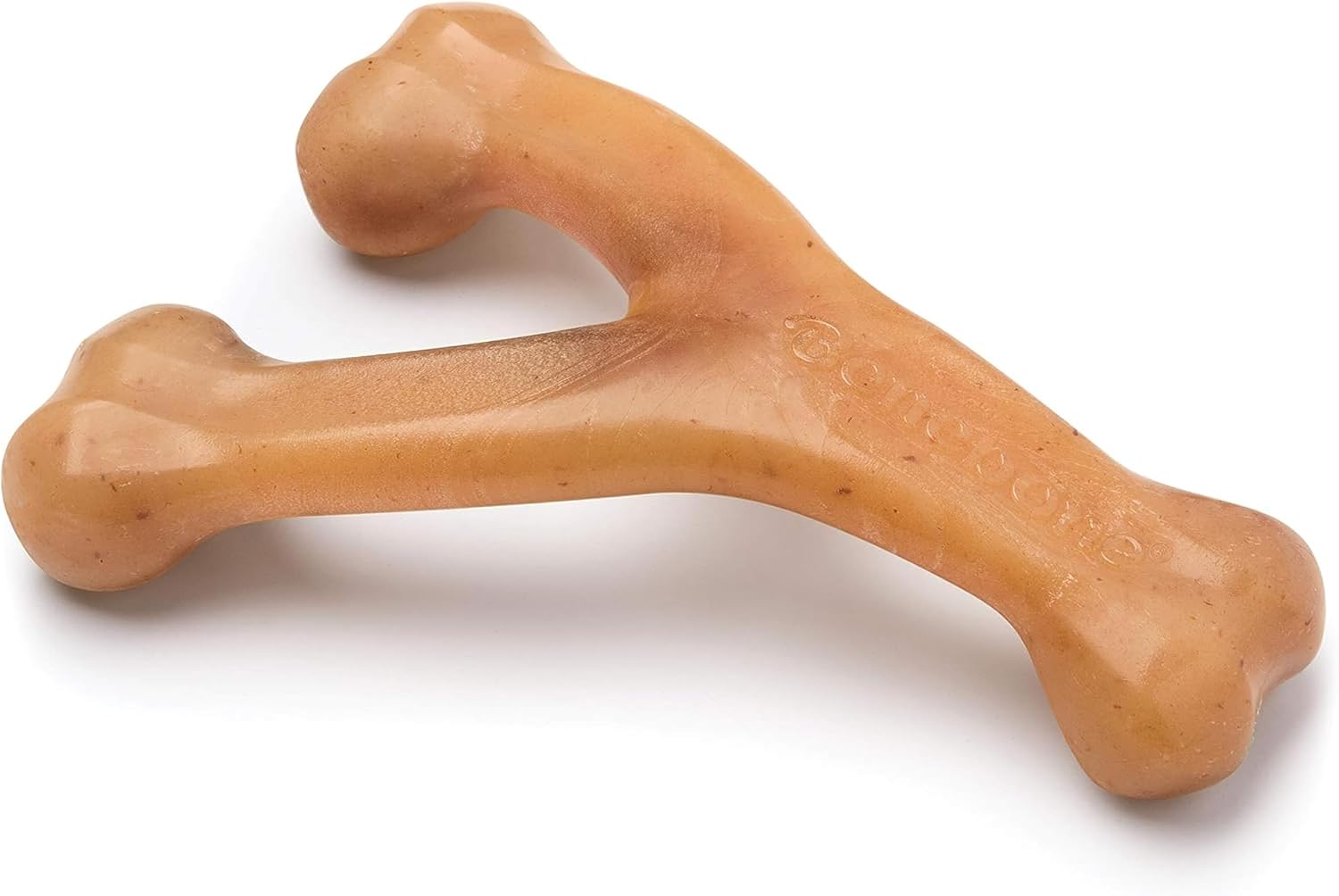 Visit on Amazon → Visit on Amazon →Benebone Wishbone |
Boredom chewing in heavy chewers | Heavy | $12.78 | Not for senior teeth; watch the tips |
Should you buy the KONG Extreme?
Yes, if you have a large dog or a heavy chewer. It's natural rubber, it can be stuffed and frozen, and it turns a chew session into real enrichment. It's the toy I recommend to every puppy owner and most adult power chewers, and it's the one I'd grab first if I could only keep one toy on the shelf.
It isn't magic. The rubber tears eventually, and the size has to match the jaw. But when a dog is working a frozen chew instead of your couch, none of that matters.
Should you buy the KONG Puppy?
Yes, for the teething window, and only for the teething window. The softer rubber soothes a sore mouth in a way hard nylon cannot, and it teaches a puppy where chewing belongs. When the adult teeth come in, move up to the Extreme and put this one away.
Should you buy the Nylabone Puppy Chew Teething Ring?
Yes, for toy breeds and small puppies, in the X-Small size. The ring shape lets a puppy hold it with both paws and work the whole surface, which is what a sore mouth wants. Expect the chicken flavor to fade within a couple of weeks. Rotate it out and bring it back rather than buying a replacement in a new flavor.
Should you buy the Benebone Wishbone?
Yes, if you have a heavy chewer with healthy adult teeth. It's the longest lasting chew in this group, and the wishbone shape gives a dog leverage that flat chews don't. Do not give it to senior dogs or dogs with dental work, and check the tips as the toy wears down.
Buy the toy that fits the jaw in front of you, not the dog on the package. That's the whole guide.