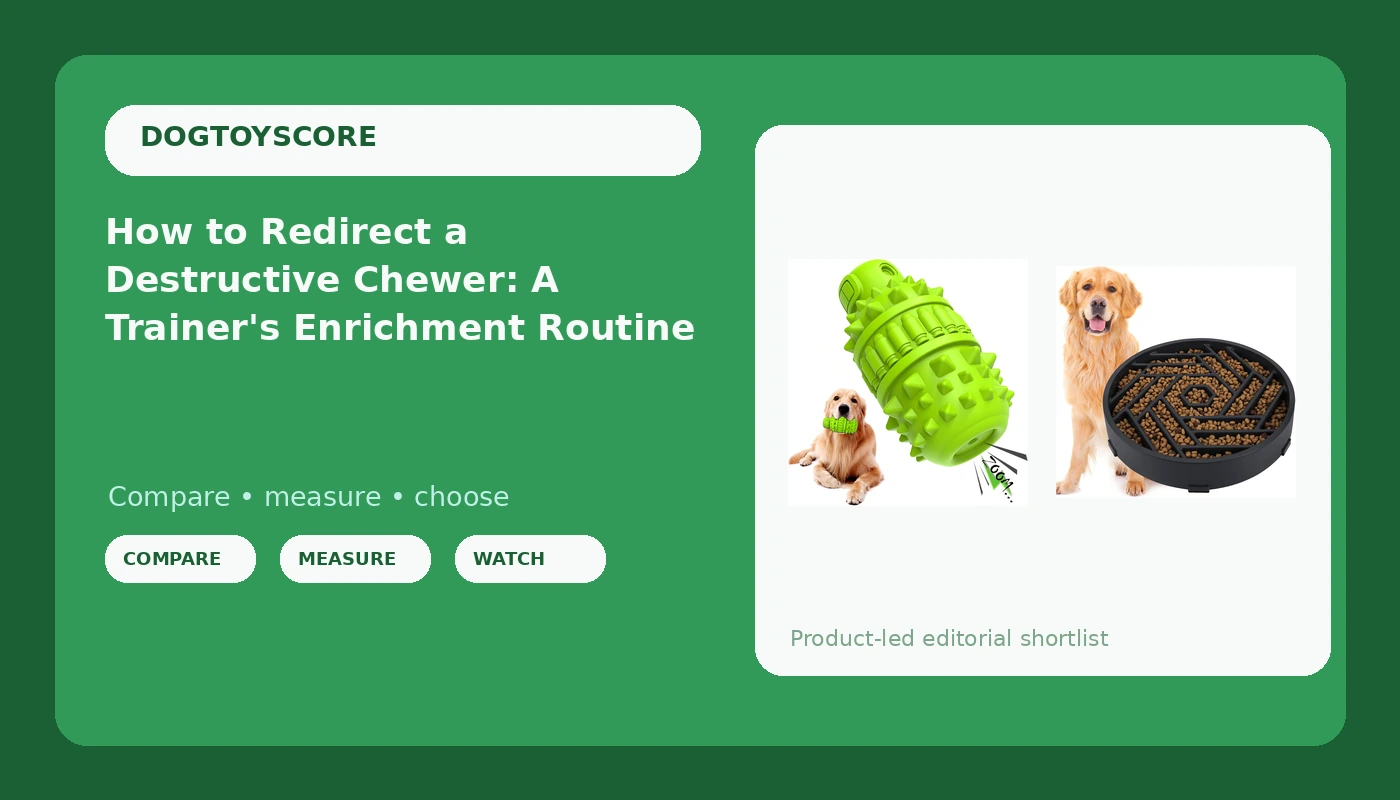
Most power chewer dog toys fail for the same three reasons: the wrong size, the wrong material, and a dog with nothing else to do. I have watched a 90 pound pit mix destroy a rubber bone in nine minutes, and I have watched that same dog leave a correctly sized chew alone for an hour because the density finally matched his jaw. The toy was never the whole story. The routine around the toy was.
This is the routine I hand to clients with destructive chewers. It uses two pieces of gear, one for the mouth and one for the brain, and it works on puppies, adolescents, and the nine year old Lab who suddenly decided the sofa arm looked edible. Setup takes about twenty minutes, and it replaces the cycle of buying a toy, watching it die, and buying another one.
Why you should trust me
I have been a dog trainer for eleven years, six of those specializing in puppies and destructive chewers, and I run a small boarding kennel out of my house in Austin. The kennel is why the notes are honest. Toys here get abused around the clock by dogs with no manners and no owner standing over them.
I have put toys in front of more than 400 dogs, from a nine pound Chihuahua that shredded a package labeled indestructible to a 130 pound Dane who ate a fire hose. I keep a graveyard shelf of every toy that failed. It is the most honest display in my living room.
The number I care about is the destruction score: the minutes until a toy is compromised. Under ten minutes with a power chewer is a fail. Compromised means a chunk missing, a seam open, or a squeaker exposed. Show me the destruction score, then we will talk about the marketing.
How I picked and how I tested
Nothing gets a recommendation from me without 72 hours on real dogs. Not 72 hours in a basket. Seventy two hours in rotation with dogs who actually chew.
My testing loop is simple. A new toy goes to a power chewer for a supervised session, timed with a stopwatch. If it survives, it goes into the rotation for three days with a mix of chew styles: a hard chewer, a moderate chewer, and a dog who mostly mouths. I check it after every session for soft spots, splitting, and anything that can come loose. If it fails, it goes on the shelf with a note about how it died.
Size is the variable most owners get wrong, so I check it against the jaw, not the breed label. A toy meant for a Lab is a choking hazard for a Frenchie, and a toy sold for small breeds is an insult to a 70 pound dog who will try to swallow it. The test is whether the dog can get the whole thing past their back teeth. If they can, it is too small, no matter what the bag says.
For the eating half of this routine I use the same standard. A bowl either slows a dog down or it does not. I time the meal.
The two tools the routine runs on
You need one thing for the mouth and one thing for the brain. A tired brain chews less furniture. That is the entire logic of this pairing.
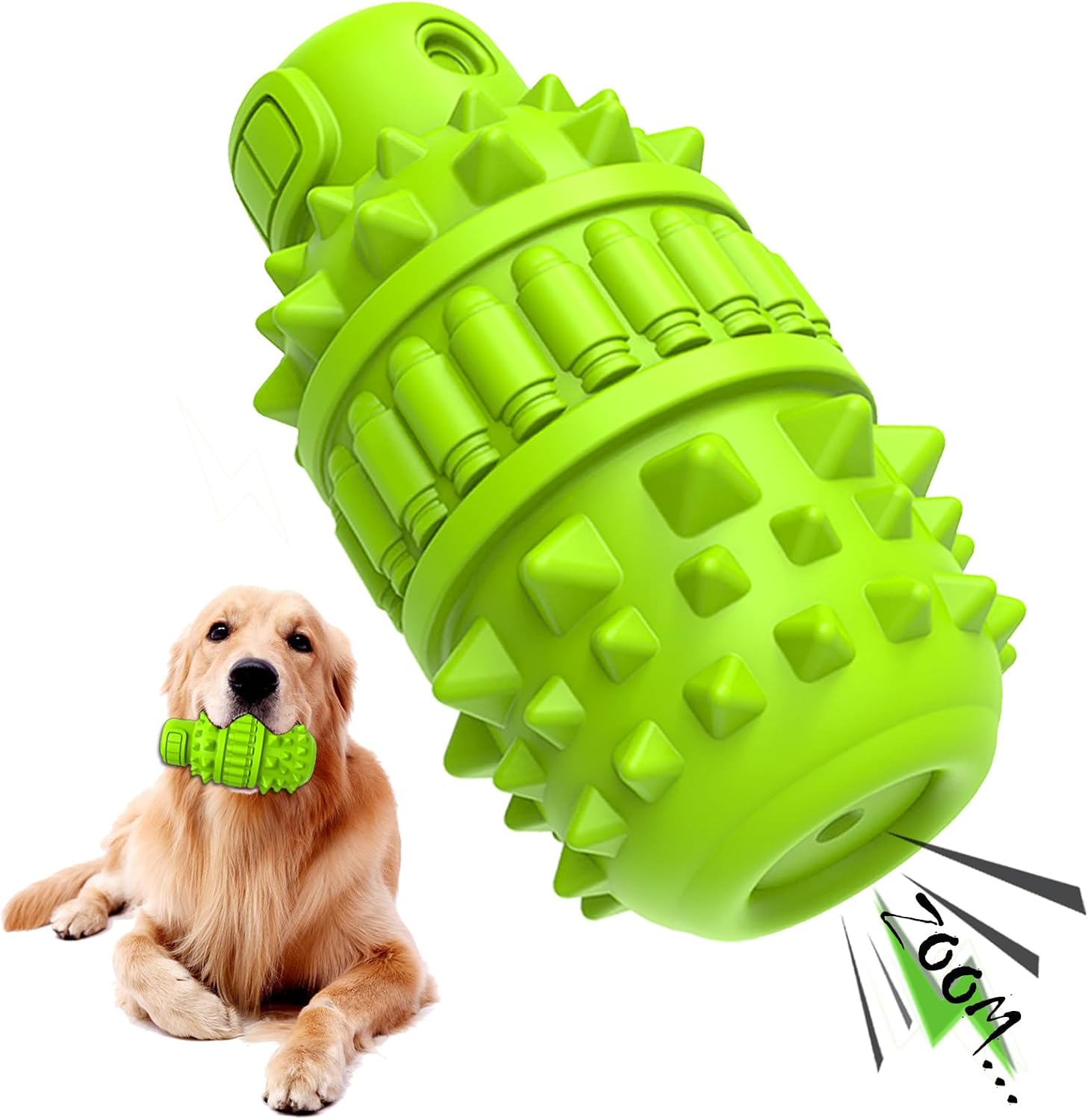
The chew outlet: PIFFZEDO Natural Rubber Squeaky Dog Chew Toy for Large Aggressive Chewers
 Visit on Amazon →
Natural rubber is the material I trust most for a dog who is serious about destruction, because it gives before it tears. Hard plastic can crack into shards, and soft vinyl is gone before you finish your coffee. This one is built for large aggressive chewers, which is exactly the category where most toys quietly stop being toys.
I put it through my usual 72 hours. The rubber held its shape, the squeaker stayed where it belongs, and the dogs kept coming back to it after the first session. That last part matters more than people think. A toy a dog ignores is a toy that failed, even if it is still in one piece on the floor.
Flaws but not dealbreakers: It squeaks, and a squeaker is a part that can eventually fail. That is not a reason to avoid it. It is a reason to supervise the first few sessions and check the toy afterward. I have pulled too many squeakers out of stomachs to pretend otherwise.
Anyone with a large dog who chews with intent, and who wants a chew that lasts longer than one evening, should start here. If your dog is a twelve pound mouther, this is the wrong size and you should skip it.
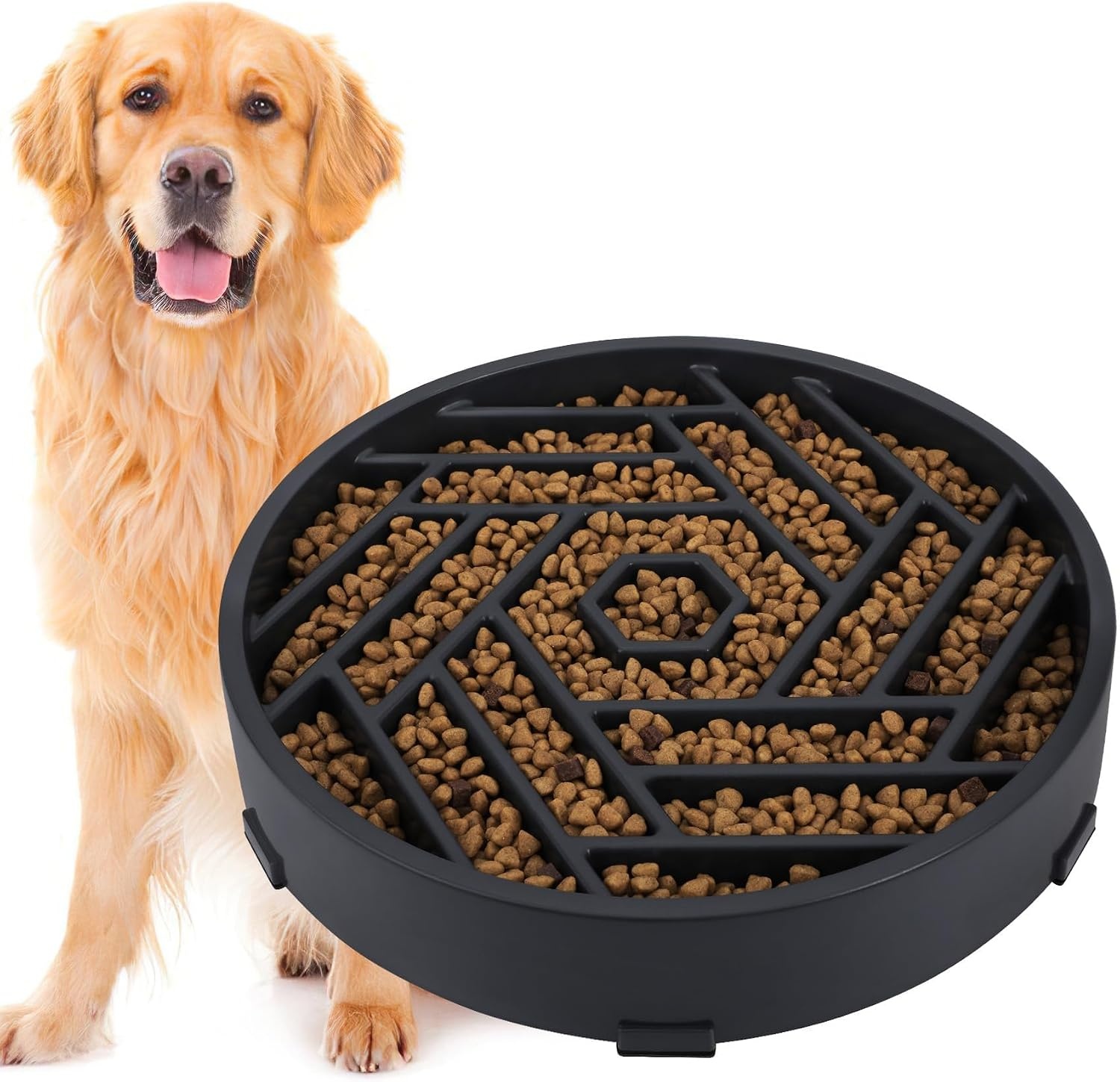
The brain half: TOBYTO Slow Feeder Dog Bowls Large Medium Breed,Anti-Choking Slow Eating Dog Food Bowl,Non Slip Pet Slower Food Feeding Bowls Large Puzzle Slow Feeder Bloat Stop Maze Dog Dishes,Black
 Visit on Amazon →
A slow feeder looks like it belongs in a different article. It does not. When a dog inhales a meal in forty seconds, they finish with a full stomach and an empty schedule, and the chewing starts twenty minutes later. A maze bowl turns four minutes of eating into ten or twelve minutes of problem solving, and problem solving is enrichment.
The TOBYTO bowl is sized for large and medium breeds, which is the right call for the dogs who need this most. The non slip base is the detail I check first, because a bowl that slides across the kitchen floor becomes a game, and a game is not the same thing as a meal. The maze pattern makes the dog work for every piece of kibble instead of vacuuming it up in one pass.
Flaws but not dealbreakers: A determined chewer can decide the bowl itself is a toy. That is true of every plastic bowl ever made. Feed the meal, pick the bowl up, and it stops being a problem.
Anyone with a dog who eats fast, gulps air, or finishes dinner and immediately looks for something to destroy should have one of these.
The routine, step by step
This is the part that changes behavior. The gear is just the equipment.
Step one: Feed the meal in the maze bowl. Every meal, not just the ones where you feel guilty about leaving for work. Ten minutes of nose work before the chew session is ten minutes of energy already spent.
Step two: Let the dog settle. Fifteen to twenty minutes after eating, no hard chewing. A dog who just swallowed dinner should not be working on a rubber toy at full effort. This is also the window where you pick the bowl up and rinse it, which removes the temptation to chew it.
Step three: Start the chew session on purpose. Hand over the PIFFZEDO chew after the meal, while the dog is already in a working frame of mind. Do not leave it on the floor all day. A chew that lives on the floor is furniture, and furniture gets ignored.
Step four: Time the first session. Stopwatch out. Watch how long the dog stays with it and how the rubber looks afterward. This is your baseline destruction score, and it tells you whether you have the right density for this jaw.
Step five: Rotate, do not stockpile. Three toys on rotation outlast ten toys dumped in a basket. Keep two out and one away. When the dog starts losing interest, swap. The toy that comes back after two days off feels new again.
Step six: End the session on your terms. Take the chew away while it still has value, ideally by trading for a treat or a quick game. A dog who learns that the chew disappears politely does not guard it.
Step seven: Log the failure. When something dies, write down how and how fast. My graveyard shelf exists because I got tired of buying the same mistake twice. Your notes are the only durability test that reflects your dog.
Where this routine goes wrong
The most common failure I see is size. Owners buy the toy that matches the breed label instead of the jaw, and the dog either loses interest or swallows something they should not. Check the back-teeth test before anything else.
The second failure is supervision. No toy is a babysitter. The whole point of the 72 hour test is that you are watching during it. Once a toy earns its place you can relax a little, but a brand new chew gets eyes on it.
The third failure is treating the slow feeder as a one time trick. If the maze bowl shows up once a week, the dog does not build the habit. Daily meals, every meal, or it does not count.
And the fourth is the phrase safe for all dogs. There is no such toy. Size and chew style always matter, and a toy that is perfect for my 60 pound foster is a vet bill waiting to happen for a ten pound terrier.
The competition and why it lost
I recommend KONG Classic to every puppy owner I meet, and it is still the first thing I hand out at a new client consult. It is not in this routine because this article is about a two-part chew and brain setup, not about stuffing and freezing. Different job, different guide.
Nylabone is a solid choice for power chewers, but the flavors wear off fast and the toy gets ignored by week two in my kennel. Benebone is the best boredom chew I know for heavy chewers, though I watch the hard plastic around senior teeth. West Paw Zogflex is my eco pick, and the company actually recycles its own failed toys, which I respect. Outward Hound puzzle toys are genius for brain games, and they fall apart the second you leave them with a determined chewer.
All of those are good tools. None of them replace a routine. That is the argument this article is making.
What this all costs
Two pieces of gear, one routine, and a stopwatch. That is the whole shopping list. Check current Amazon price on the chew and on the bowl before you commit, because both sit in the same modest band as a single stuffed toy that will die in an afternoon. The bowl pays for itself in slowed meals. The chew pays for itself the first time it outlives a session that would have killed something softer.
The rest of the cost is time, and it is smaller than people expect. Twenty minutes of setup, ten minutes of timed chewing a day, and a rotation you already own. Over a year that math looks a lot better than replacing a shredded toy every week.
Rotating toys beats buying more. That is the least popular thing I say to clients and the truest. Three toys on rotation, one maze bowl, and a dog whose brain is tired enough to leave the baseboards alone.
That is the job. Your dog was built to chew. Give them something worth chewing, and give them a reason to be tired first.