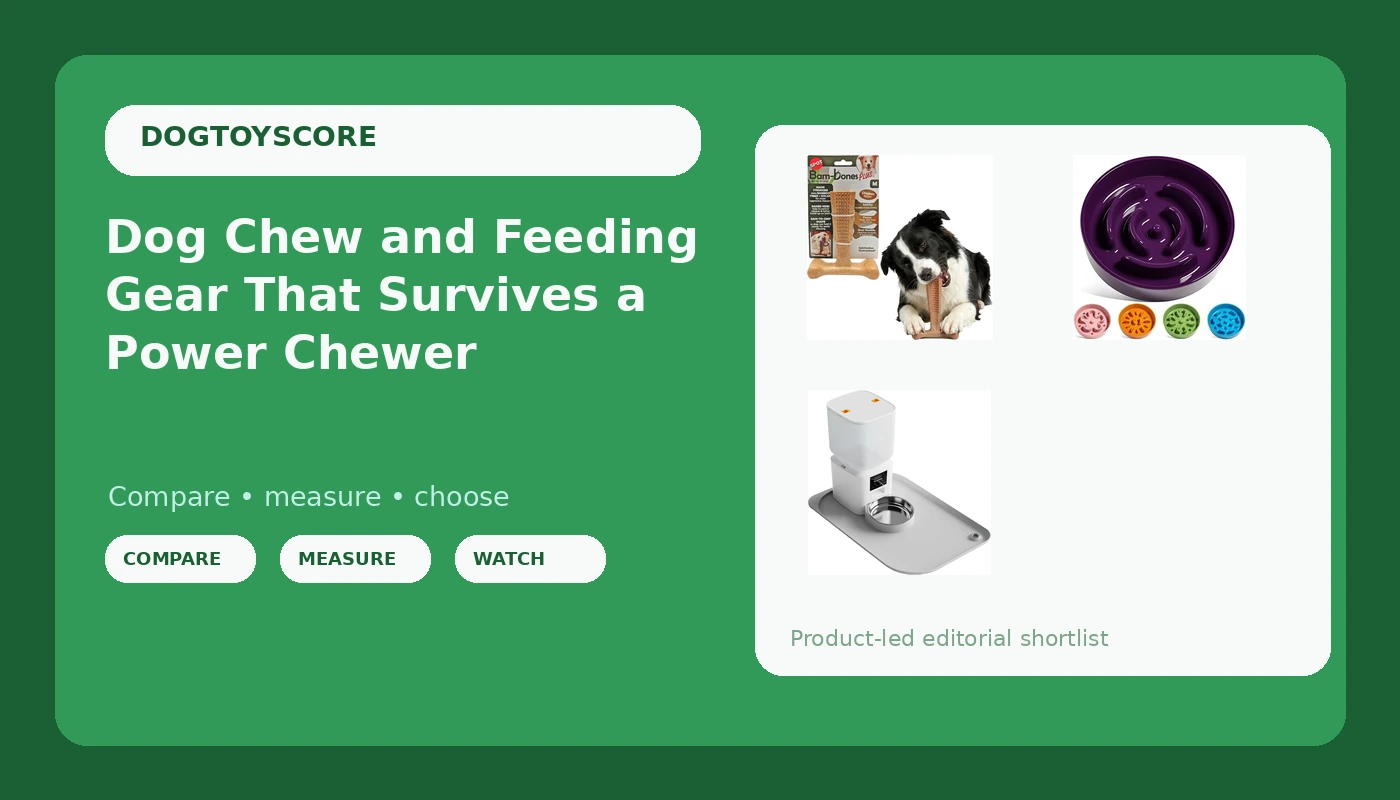
I have run a small boarding kennel out of my house in Austin for years, and that makes my kitchen floor a testing ground. On any given week there is a nine pound Chihuahua who shreds anything soft, a Lab who inhales a bowl of kibble in under a minute, and a dog who treats the water bowl like a splash pad. Multiply that by a rotating cast of boarders and you learn quickly which pieces of dog chew and feeding gear hold up and which ones only look good in a product photo.
This comparison covers three very different pieces of kit that solve three different problems: a chew built for heavy chewers, a slow feeder bowl built for fast eaters, and a mat built to contain the mess the other two create. They are not competitors in the usual sense. They are the three things I would put at a feeding station for an owner whose dog chews hard, eats fast, and sloshes water on the way out.
The short version: the SPOT Bam-Bones Plus T-Bone is the piece I would buy first, because it is the only one of the three that prints an explicit weight range and chew strength on the label, and "6 inch, 30 to 60 pound heavy chewers" is the kind of honesty I wish every toy company had the nerve to put on a package. The other two are support equipment, and they are good support equipment, but they are not interchangeable with each other or with the chew.
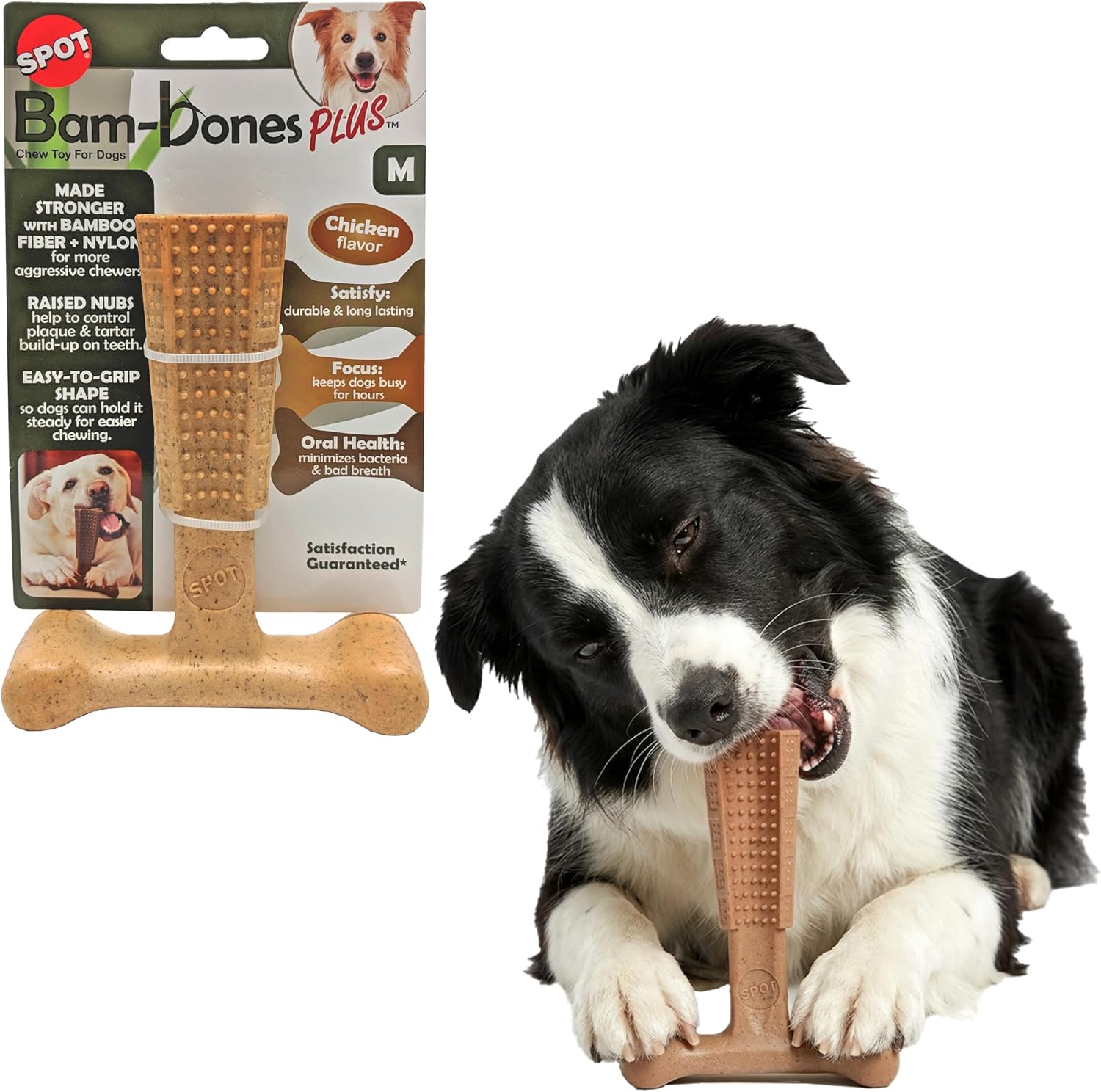
SPOT Bam-Bones Plus T-Bone Dog Chew, Chicken, 6in, 30-60 lb Heavy Chewers
Names a weight range and a chew strength instead of claiming "all dogs," and a 6 inch T shape gives a big jaw something to work
A chew is only as good as your supervision, and a determined power chewer will still shorten its life
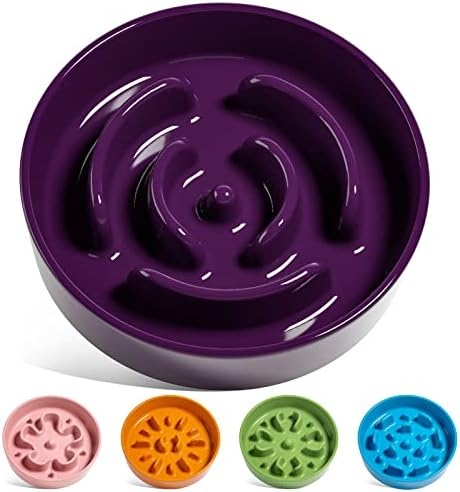
LE TAUCI Ceramic Slow Feeder Dog Bowls Small Breed, 0.6 Cups
Ceramic weight keeps it from skating across the floor, and the puzzle pattern slows a gulper
0.6 cups is a small capacity, and ceramic needs a floor that is not tile or stone
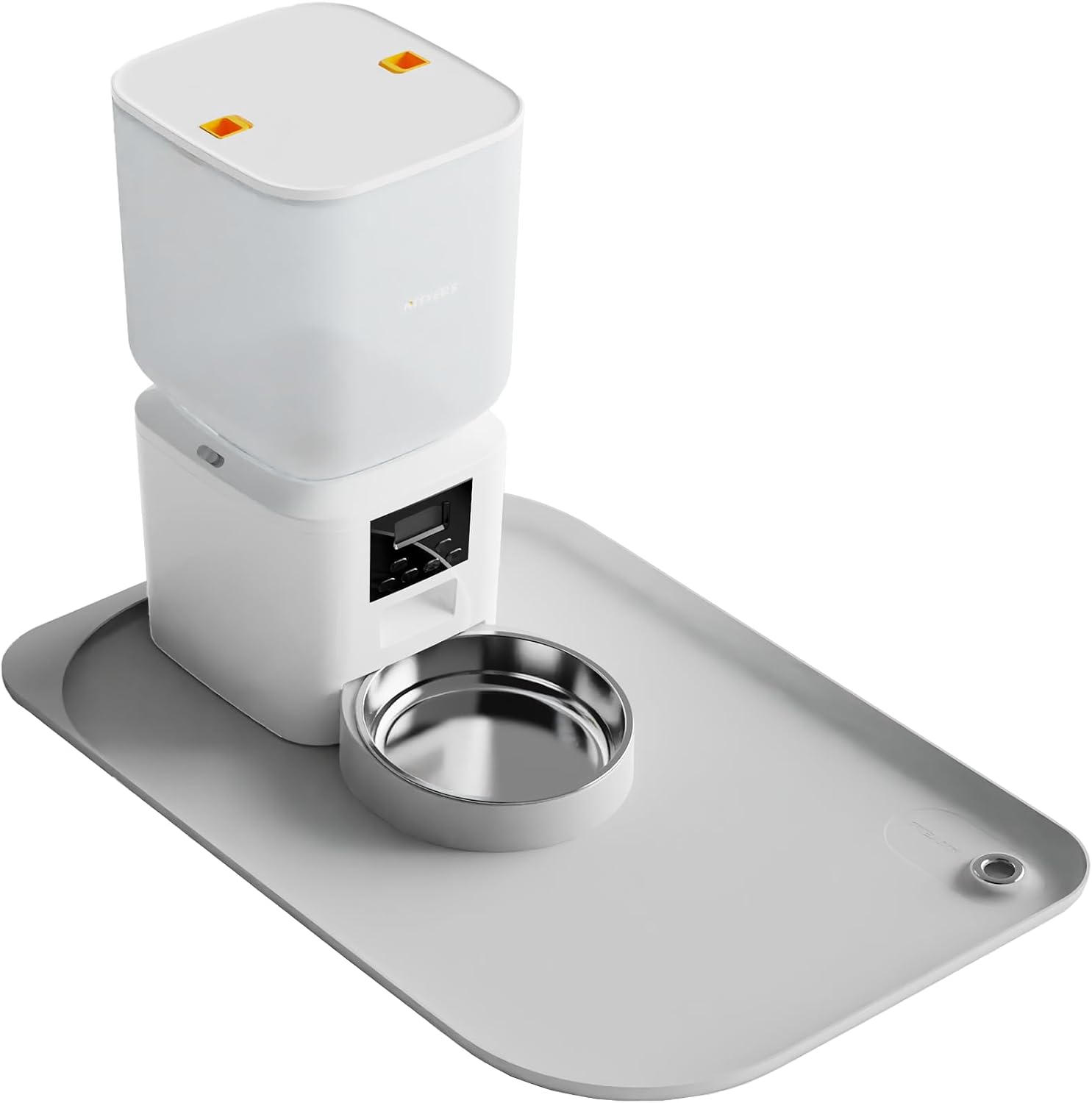
Nityers Dog & Cat Mat for Food and Water, Waterproof with Pocket, Raised Edges
Raised edges and a pocket catch the spills a bowl and a chew both generate
The pocket holds water, which means it holds whatever the dog dragged through the water
Prices and availability were captured from Amazon Creators API and may change.
How I judge chew and feeding gear
Eleven years of training, six of them focused on puppies and destructive chewers, taught me that the label on a package is a dare, not a guarantee. I keep a shelf of failed toys in my living room. It is the most honest display in the house, and it is the reason I do not hand out recommendations quickly.
Three questions decide whether a piece of gear earns a spot in my kennel.
First, can a power chewer compromise it in under an hour? A power chewer is a dog that can take apart a standard toy in under 60 minutes, and most products marketed as indestructible meet their match there. Second, is the size right for the jaw in front of me? Toy size matters more than toy type. A toy meant for a Lab is a choking hazard for a Frenchie, and that is why I ignore breed labels and read weight ranges instead. Third, does it survive real use, meaning a boarding kennel, a messy floor, and a dog with no manners?
Rotating gear beats buying more of it. Three toys on rotation outlast ten toys dumped in a basket, and the same logic applies to bowls and mats. Variety is what keeps a dog engaged, not volume.
The chew: SPOT Bam-Bones Plus T-Bone
The SPOT Bam-Bones Plus T-Bone is the anchor of this trio, and the reason is in the name: chicken flavoring, a 6 inch T shape, and a stated target of 30 to 60 pound heavy chewers. That stated target is the part that matters to me. Most chew products hedge with "for all dogs," which tells you nothing about whether it is appropriate for the dog in your kitchen.
A T bone shape works for a heavy chewer because it gives the jaw something to grip at two ends while the middle takes the pressure. The 6 inch length is a reasonable middle ground for the 30 to 60 pound range it names. A dog at the bottom of that range gets a chew that will take real work, and a dog at the top gets one that is not so small it can be swallowed.
Here is the boundary I hold with every chew: no chew is a substitute for supervision, and no chew is indestructible. The word is a dare. The real test is 72 hours with a determined chewer, and even then the answer changes as the material wears. Check the chew after every session, look for pieces coming loose, and take it away when it starts to break down. A chew that fails quietly is how you end up paying for foreign body surgery, and I have watched a vet tech friend explain that bill to an owner more than once.
If your dog is a gentle chewer, this is more chew than you need. If your dog is a power chewer, this is the kind of product I want in the rotation, used with eyes on it.
The bowl: LE TAUCI Ceramic Slow Feeder
Fast eating is a behavior problem, not a personality trait, and a slow feeder bowl is one of the cheapest behavior fixes available. The LE TAUCI Ceramic Slow Feeder is built for small breed dogs at a 0.6 cup capacity, and the design is a puzzle pattern that forces the dog to work around ridges to reach the food.
The ceramic body is the detail I appreciate most. Lightweight plastic bowls slide across the floor when a dog eats with enthusiasm, and a bowl that moves teaches a dog to chase it. Ceramic has enough mass to stay put. It also cleans well and does not hold onto the smell of last week's kibble, which is a pet peeve of mine with soft bowls.
The trade-offs are straightforward. At 0.6 cups, this is a small dog bowl, full stop. If you are feeding a 70 pound dog, you will be refilling it, and refilling defeats the point of a slow feeder. The purple color is a nice change from the usual stainless and black, though that is decoration, not function. And ceramic breaks when it is dropped. If your feeding station sits on tile or stone, treat this bowl like you would treat a coffee mug, and consider where it lands if a dog noses it off a stand.
One more thing about slow feeders in general: they slow eating, they do not stop it. A dog who gulps will still gulp, just less efficiently. For puppies and fast eaters, that difference is usually enough to matter.
The mat: Nityers Food and Water Mat
The Nityers mat is the least glamorous item here and the one I end up recommending most often, because it solves the problem nobody plans for: the floor. It is a waterproof mat with raised edges and a pocket, made from thicker BPA free silicone, sized for food and water bowls, an automatic feeder, or a water fountain.
Raised edges do two jobs. They keep spilled water from spreading under the baseboards, and they keep kibble from rolling into the corners of the kitchen where you will find it three weeks later. The pocket is the clever part, because it gives the runoff somewhere to collect instead of pooling around the bowl base, where it turns into a slick patch that a puppy will absolutely slide across.
The pocket is also the flaw. Anything that collects water collects whatever the dog carried into the water: drool, food crumbs, and the general debris of a dog who just came in from the yard. Plan on rinsing it out regularly. Silicone is easy to clean, which is why I prefer it to fabric mats, but easy is not the same as automatic.
A silicone mat also does not absorb sound, so a ceramic bowl set on it will still clink when a dog pushes it around. That is a small thing, and it is the kind of small thing that matters at 5 a.m.
How the three work together
Think of this as a feeding station rather than a set of rivals. The mat goes down first, because it defines the zone and protects the floor. The slow feeder sits on the mat, which is exactly what the mat was made for, and the raised edges mean a dog who pushes the bowl around still keeps the mess inside the boundary. The chew lives nearby, because the best time to give a heavy chewer something to destroy is right after a meal, when the brain is already settling and the mouth is already busy.
That combination addresses three separate failure modes in one spot: destructive chewing, inhaled meals, and a wet floor. Buying them together is cheaper than buying a replacement floor, which is the honest pitch for the mat.
If you can only start with one, start with the chew. Chewing is the behavior that damages the dog, the furniture, and your budget in that order. A slow feeder and a mat make your life easier. A chew that suits your dog's jaw makes your dog safer.
Where each one loses
The SPOT chew loses points for the same reason every chew does: it wears out, and the wear is invisible until it is not. A 30 to 60 pound heavy chewer is a specific audience, and if your dog falls outside it, look elsewhere rather than sizing up out of optimism.
The LE TAUCI bowl loses on capacity. 0.6 cups is a small breed bowl, and using it for a larger dog means constant refills and a dog who learns to expect a second serving. It also loses on durability if it lives on a hard floor and gets knocked around.
The Nityers mat loses on maintenance. The pocket that catches the water also catches the grime, and a mat that never gets rinsed becomes a smell you cannot locate. It also will not fix a dog who carries a water bowl across the room. Nothing fixes that except picking the bowl up.
Sizing, safety, and what I will not promise
I will not tell you any product here is safe for all dogs, because that claim does not exist. Size and chew style always matter. Match the chew to the jaw in front of you, and match the bowl to the meal size you actually feed, not the meal size you wish your dog ate.
No chew gets a recommendation without supervision, and no toy testing is complete without knowing what happens when it fails. The failure plan for a chew is simple: take it away at the first sign of loose material, and know where your nearest emergency vet is. The failure plan for ceramic is simpler: do not put it where it can fall.
For puppies specifically, teething is temporary. The chew marks on your baseboards are forever. A chew that survives the teething window will save you more furniture than any single training session, but no toy replaces supervision and a tired brain.
What I would buy first
If you own a 30 to 60 pound dog who destroys everything, buy the SPOT Bam-Bones Plus T-Bone first and watch it closely for the first week. If you own a small breed dog who inhales dinner in 40 seconds, buy the LE TAUCI slow feeder and accept that you will refill it. If your kitchen floor is already showing water damage, buy the Nityers mat and rinse the pocket more often than you think you need to.
Buy them in that order. None of the three is a cure for a bored dog, but together they handle the chewing, the gulping, and the puddles, which is most of what a feeding station is actually for.