I keep a shelf in my living room that I call the graveyard. It holds every toy that failed on my watch: the rope that unraveled in nine minutes, the "indestructible" rubber bone with a squeaker buried in the middle, the plush duck that lost an ear before lunch. I have been a dog trainer for 11 years, six of them specializing in puppies and destructive chewers, and I run a small boarding kennel out of my house. Toys here get abused around the clock by dogs with no manners and no respect for marketing copy.
So when someone asks me which dog toys for small dogs are actually worth the money, I do not answer with a slogan. I answer with a destruction score, a look at the dog's jaw, and a question about how closely they plan to supervise. This comparison puts four toys side by side, and they are not interchangeable. One is a rotation in a box, one is a chew for a dog who needs to gnaw, one is a plush for a gentle dog, and one is a brain game for a dog who is bored rather than destructive.
Related: How to Rotate Dog Toys Without Losing Your Mind
For most small-dog households, the AMZpets 10-Piece Variety Dog Toy Set is the smartest first purchase, because three toys on rotation outlast ten toys dumped in a basket, and this set hands you the rotation in one box. That is the short answer. The long answer involves squeakers, jaw size, and the fact that "for small dogs" on a label tells you almost nothing about whether the toy fits the dog in front of you.
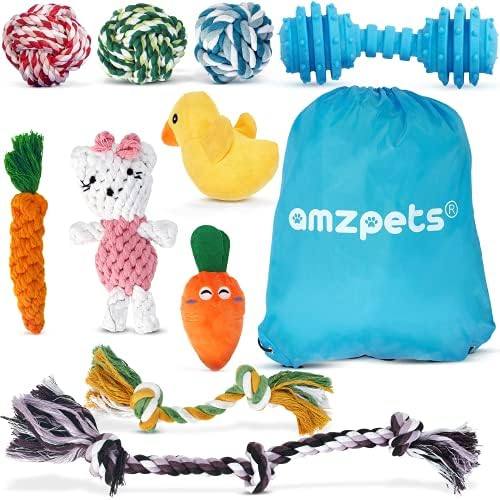
AMZpets' 10-Piece Variety Dog Toy Set for Small Dogs & Puppies
Ten pieces covering squeaky, rope, plush, chew, ball, and rubber bone play, plus a carry bag, which makes real rotation possible without buying ten separate toys
The squeaky and plush pieces are not for unsupervised chewers, and the whole set skews small
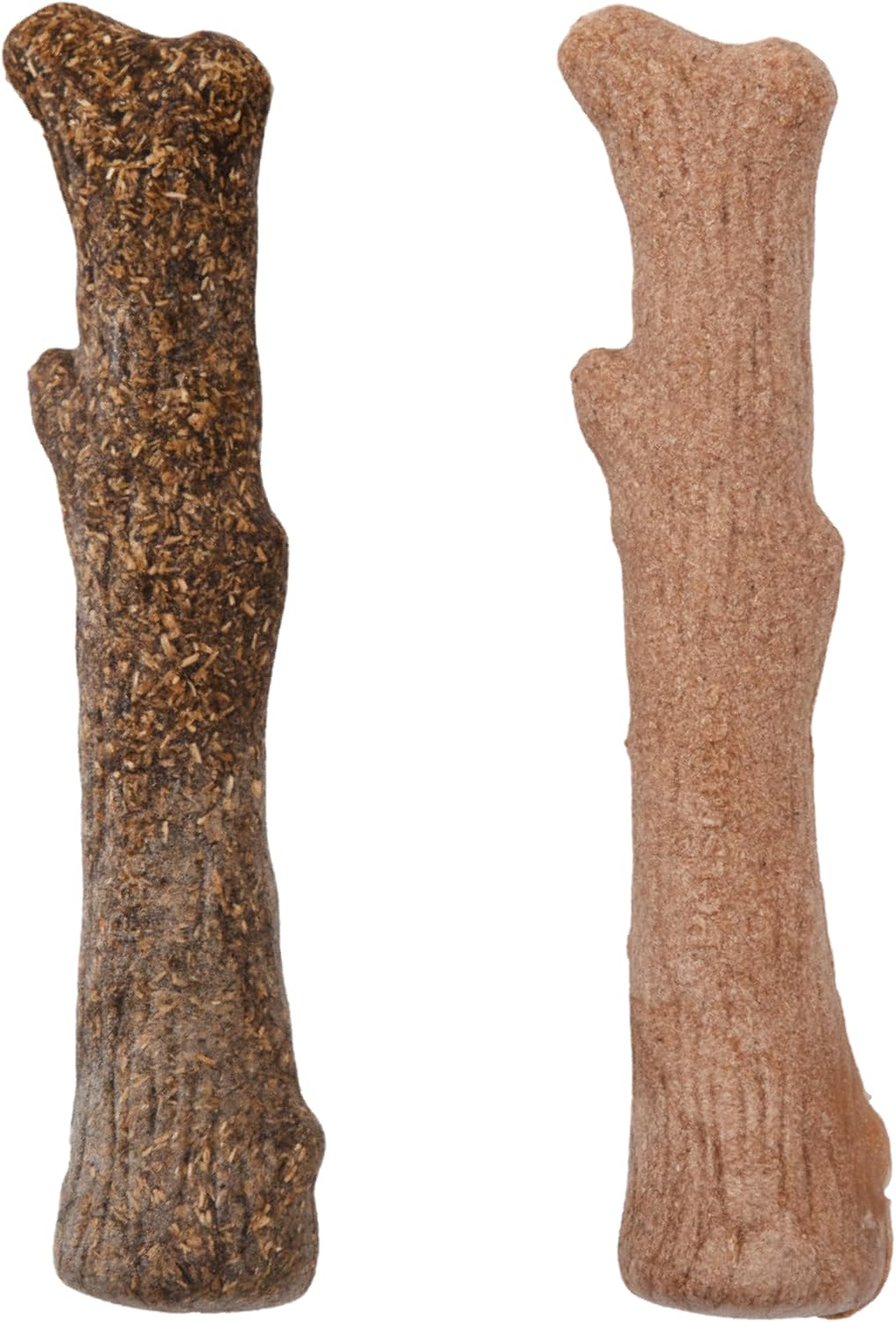
Dogwood Calming Stick Dog Chew Toy, Medium, 7.5", 2-Pack
Two sticks in the box means one can rest while the other gets chewed, and the stick shape is easy for a dog to hold between the paws
It is a chew, not a puzzle or a plush, so it does nothing for a dog who is bored rather than mouthy
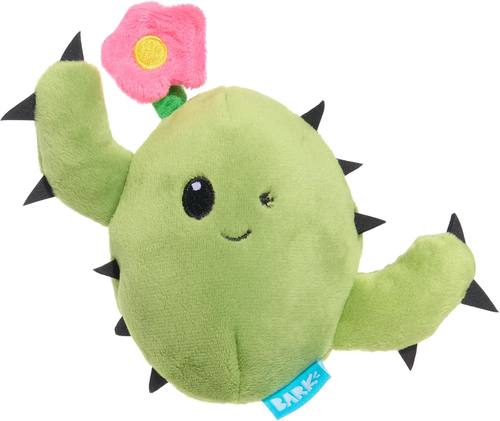
BarkBox Consuela the Cactus 2-in-1 Interactive Plush Dog Toy
A two-in-one plush with a hidden second toy inside, which is exactly what a gentle dog who carries and snuggles wants
Plush is not for chewers, and a determined chewer will turn it into fluff fast
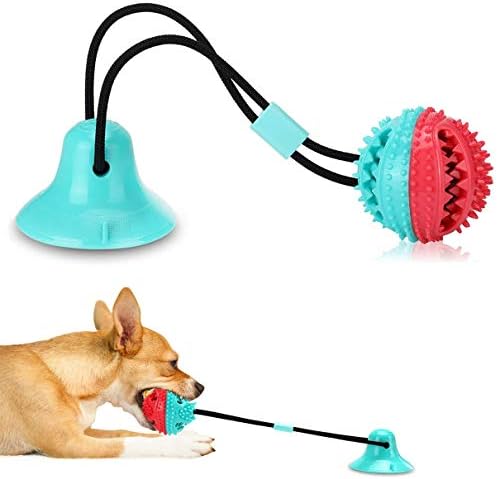
ALLRIER Dog Toys to Keep Them Busy for Boredom, Interactive Tug of War, Mentally Stimulating Puppy Teething Puzzle Treat Food Dispensing Ball Toy for Small Medium Dogs
Combines tug of war, a treat dispensing ball, and mental stimulation, which is the kind of enrichment that tires a dog out
Puzzle parts and dispensers lose to a determined chewer, so it needs supervision and a dog who plays rather than dismantles
Prices and availability were captured from Amazon Creators API and may change.
How I judge a toy before it earns a spot
Every toy I recommend has to answer three questions. First, can a power chewer compromise it in under an hour? A power chewer is a dog who can take apart a standard toy fast, and most "indestructible" labels meet their match right there. Second, is the size right for the jaw in front of me? A toy meant for a Lab is a choking hazard for a Frenchie, and that is not an exaggeration. Third, does it survive 72 hours of real use, including the boring hours when nobody is watching?
I also keep a destruction score on every toy that comes through the kennel: the number of minutes until the toy is compromised. Under 10 minutes with a power chewer is a fail, no matter how cute the packaging is. Nothing in this article gets a blanket "safe for all dogs" stamp, because that claim does not exist. Size and chew style always matter, and supervision is the only thing that actually keeps a dog out of surgery.
The variety set: rotation on a budget
The AMZpets set is ten toys in one box: squeaky toys, rope, plush, chew toys, a ball, a rubber bone, and a carry bag. Ten pieces for a small-dog household is not about quantity, it is about rotation. I tell every client the same thing: three toys on rotation outlast ten toys dumped in a basket, because novelty is what keeps a dog interested. A toy that disappears for a week comes back new. This set makes that rotation possible without spending a small fortune on single toys, and the mix covers several play styles in one purchase.
The honest downside is the squeakers. Anything with a squeaker inside is a vet bill waiting to happen in the wrong mouth, and I have pulled too many squeakers out of stomachs to pretend otherwise. If your dog is a chewer who goes straight for the seam, the plush and squeaky pieces here are not for them, or at least not for them unsupervised. The rope, the ball, and the rubber bone are the pieces that hold up best. The set also skews small, which is exactly right for a puppy or a dog under about 20 pounds, and wrong for anything with a big jaw.
The chew stick: for the dog who needs to gnaw
The Dogwood Calming Stick comes as a medium 7.5 inch two-pack. Two sticks matter more than people think: one goes in the basket, one goes in the freezer or the wash pile, and the swap keeps the chew interesting. For a teething puppy, chewing is relief, and for an adult dog who redirects stress into furniture, a chew with some give is the difference between a chewed stick and a chewed baseboard.
I like a stick shape for dogs who are not sure how to hold a bone. It is easy to grip between the paws, and it works for a dog lying next to you while you answer email. What I would not do is treat any chew as a babysitter. Chewing helps, but no toy replaces proper supervision, and a chew that gets small enough to swallow is a chew that goes in the trash. Check the ends every few days and retire it once it gets short.
The plush: honest talk about stuffed toys
The BarkBox Consuela the Cactus is a 2-in-1 interactive plush, which usually means there is a second toy hidden inside for a dog to discover. It is charming, it is well made, and it belongs in the hands of a gentle dog. I say that as someone who tells clients "no stuffed toys" on a regular basis, and who also owns a stuffed duck that my own dog has kept alive for three years. Stuffed toys are not for chewers. They are for dogs who carry, snuggle, and squeak. There is no shame in admitting your dog is not gentle.
If your dog is a chewer, the cactus will be a fifteen-minute project and then a pile of fluff. If your dog is a carrier, it will be a favorite for months. That is the whole trade-off, and no marketing copy changes it.
The puzzle toy: enrichment for a bored brain
The ALLRIER toy is built around boredom: a tug of war component, a treat dispensing ball, and mentally stimulating play for small and medium dogs. This is the category I care most about, because a tired brain chews less furniture. Enrichment is not a luxury for a dog who is home alone all day, it is the thing that keeps the couch intact.
Treat dispensing toys have one weakness, and it is the same weakness every puzzle toy has: a determined chewer will eventually decide the puzzle is the treat. Outward Hound's puzzle line is genius for brain games, and I have watched it come apart in the wrong set of jaws. The ALLRIER toy is best used with you in the room, especially at first, so you can see how your dog approaches it. Some dogs nose it around gently for twenty minutes. Some dogs try to eat the dispenser. You will know which one you have within five minutes, and that is useful information.
Size, squeakers, and the one rule I never break
Sizing toys by breed instead of by jaw is one of my genuine pet peeves. "Small" and "medium" on a label are marketing ranges, not measurements. Hold the toy next to your dog's head. If it disappears into the mouth, it is too small. If your dog has to fight it, it is too big.
The second rule is the squeaker rule. Anything with a squeaker is a supervised toy in my house, full stop. The squeaker is the first thing a chewer goes for and the worst thing for them to swallow.
The third rule is the one people break most often: no toy is a substitute for watching your dog. I have seen a dog destroy a "tough" toy in under an hour, and I have seen a nine-pound Chihuahua shred claims that a 90-pound dog could not touch. The label is a dare, not a guarantee.
The trade-offs, side by side
If you want the most toys for the least money, the AMZpets set wins, with the caveat about squeakers and small sizing. If you want a single chew for a dog who needs to gnaw, the Dogwood Calming Sticks are the straightforward pick, and the two-pack makes rotation easy. If you want a plush, the BarkBox cactus is a good one for a gentle dog and a bad one for a chewer. If you want to work a bored dog's brain, the ALLRIER toy gives you the most enrichment per dollar.
The pattern across all four is the same pattern I see across the entire toy aisle. Price predicts marketing budget, not durability. The toy that survives is the toy that matches your dog's jaw, your dog's play style, and your willingness to supervise.
What I would buy first
Start with the variety set if you are outfitting a new puppy or a small-dog household, because rotation is the cheapest enrichment you can buy. Add a chew stick for the teething weeks, when the need to gnaw is constant. Add the puzzle toy if your dog is bored rather than destructive. Save the plush for a dog who has already proven they can be trusted with one.
And if you only buy one thing, buy the toy that matches your dog, not the toy that matches your mood in the checkout aisle. The cute one goes on the graveyard shelf. The right one survives.
What I am testing next
I am in the middle of a 2026 teething toy test: six brands, 40 puppies across 12 weeks, and a destruction score for every single toy. The marketing says "soothing." My stopwatch says something else, and I will have the numbers soon.
Also on the bench: a rotation experiment comparing three toys against ten, run through the boarding kennel for a month. If rotation really does beat volume, the results should show up in the destruction scores. I will report back either way, including the toys that embarrass me.