Dog toy material safety trends: what the labels won't tell you
"Indestructible" is a lie. I've been saying this for years, and every new material that hits the market proves me right within weeks. The latest wave of "eco-friendly" rubber blends, thermoplastic elastomers, and recycled ocean-plastic toys promised a revolution. I've been testing them with Duke for six months now, and the graveyard shelf got a little more crowded.
But here's the thing: the real material safety trends aren't the ones getting hyped in Instagram ads. They're the quiet shifts in what manufacturers are actually doing differently, and what they're still getting dangerously wrong. I've watched Scout extract squeakers from toys that were supposedly "sewn into a secondary chamber." I've seen boarder dogs shred "natural rubber" into pieces that looked like they came from a tire fire. The marketing is glossy. The reality is on my shelf.
This is what I've learned living with the gear, testing it on real dogs, and tracking what fails and what holds up.
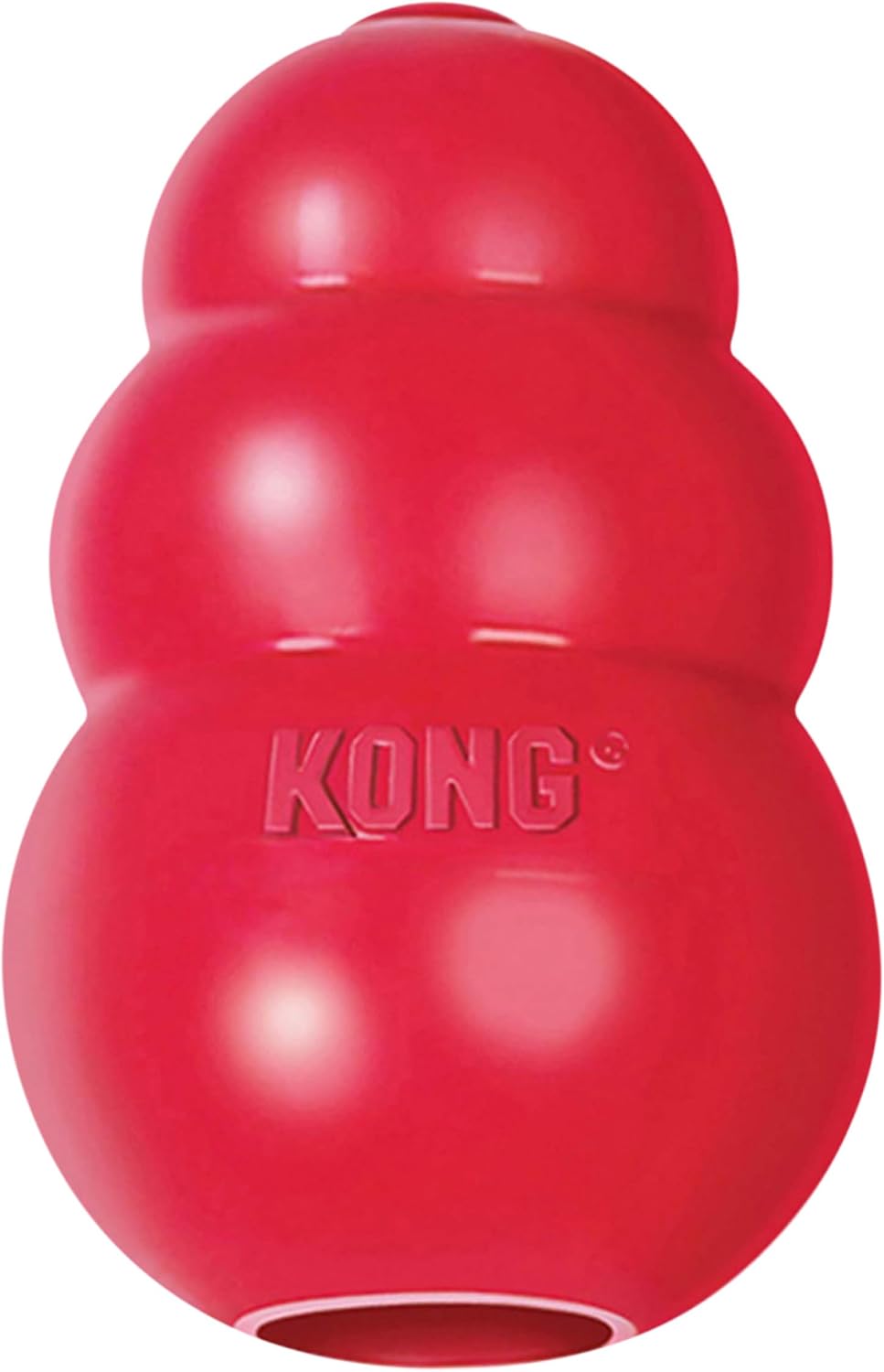
KONG Classic (red rubber)
Survives 12+ months with Duke, stuffable, freezer-safe
Red dye bleeds, not for unsupervised destruction chewers
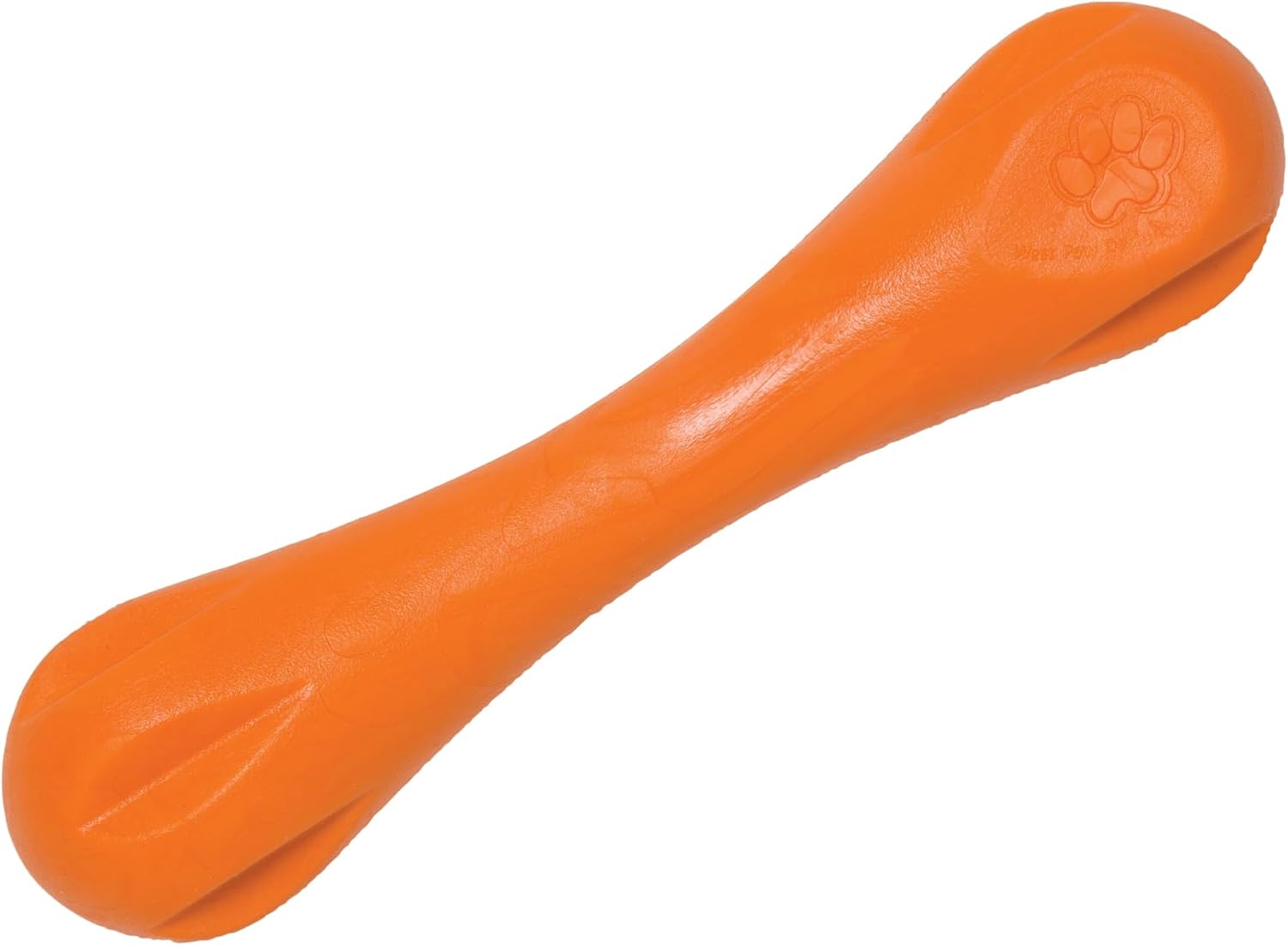
West Paw Zogoflex Toppl
One-time replacement guarantee, gentle on teeth, floats
Material has some give, so heavy biters can dent it
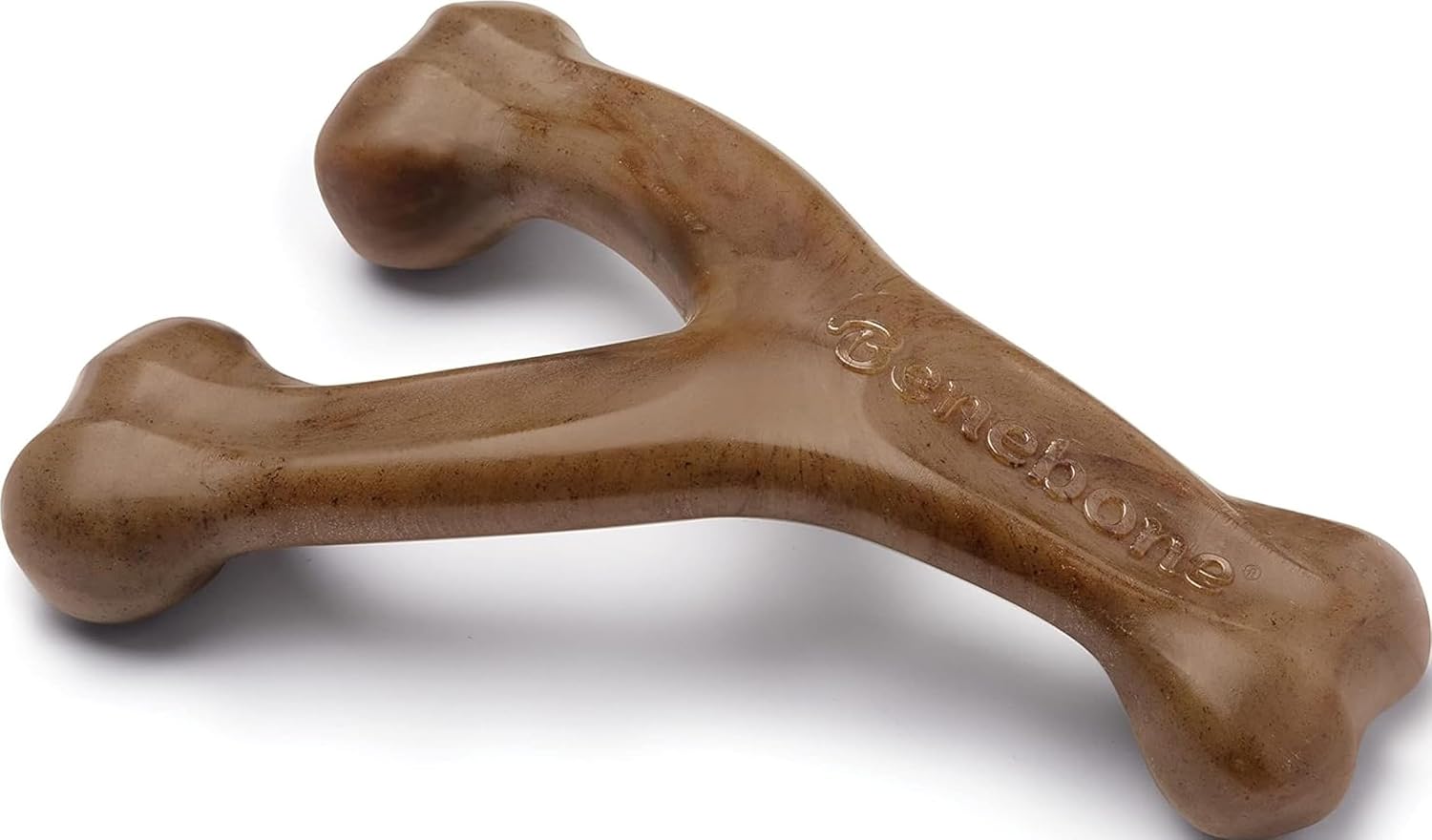
Benebone Wishbone
Lasts months with aggressive chewers, real flavor dogs actually seek out
HARD, real cracked-tooth risk for power biters
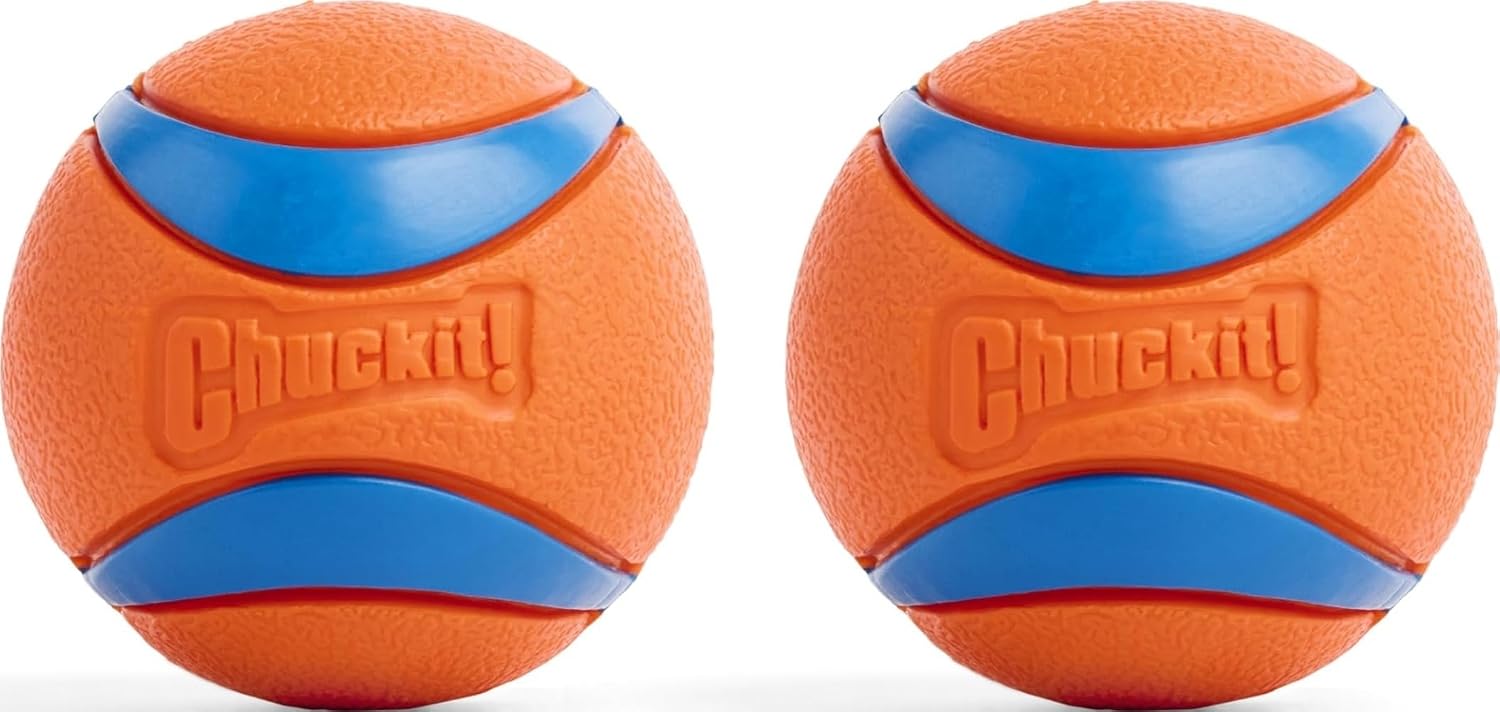
Chuckit! Ultra Ball
Beats tennis balls for survival, floats, bounces true
Not a chew toy, it's a fetch toy with a fetch toy price
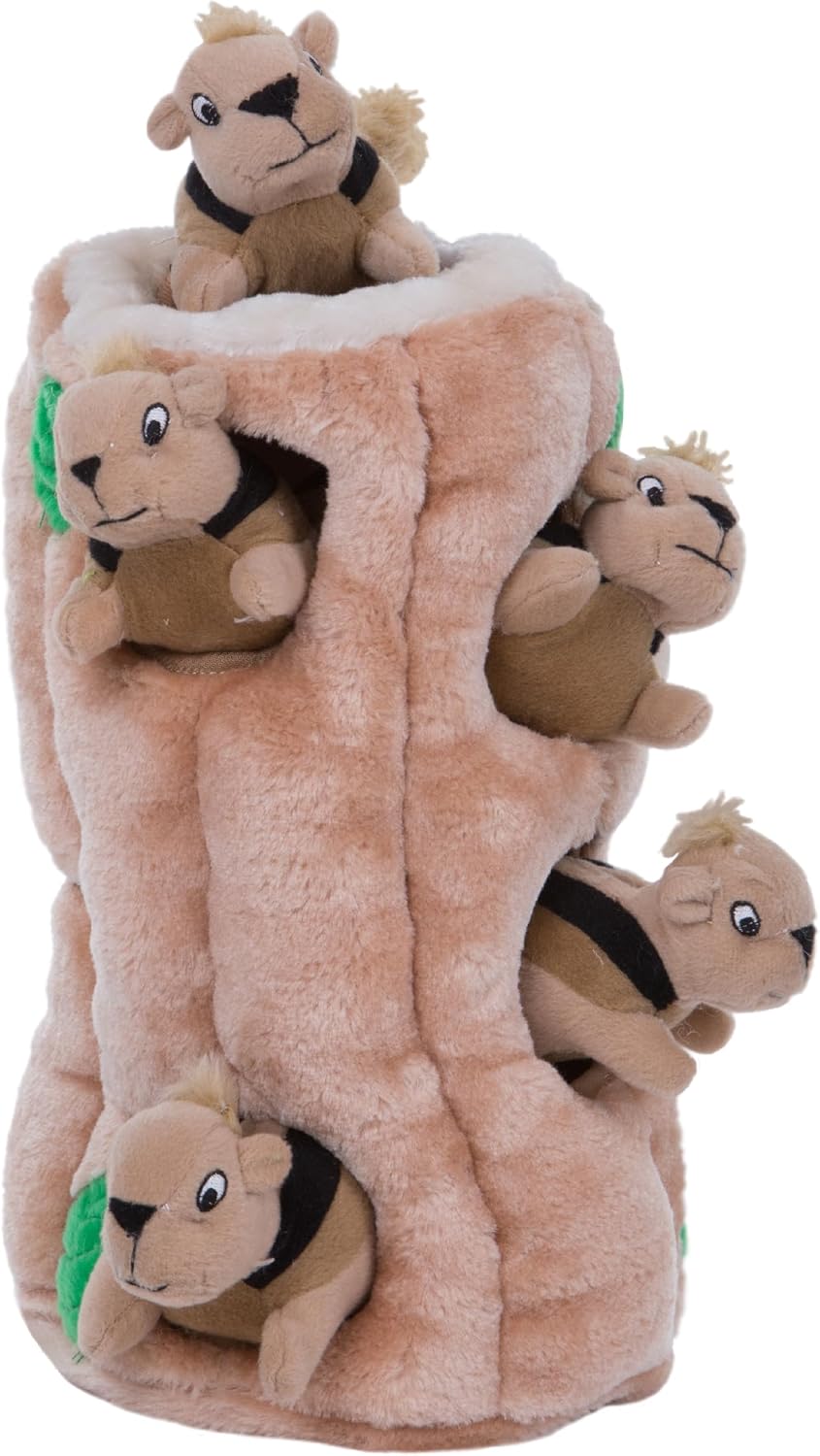
Outward Hound Hide-a-Squirrel
The only thing that tires out a border collie mentally
Squirrel refills overpriced, plush stuffing shredded in days
Prices and availability were captured from Amazon Creators API and may change.
How I'm tracking this
I don't have a materials lab. I've got two dogs, a boarding kennel full of dogs with no manners, and a graveyard shelf that has saved my clients thousands of dollars. When a new material shows up marketed as "the safest thing since sliced bread," I hand it to Duke. Then I hand it to a pack of boarders. Then I wash it. Then I hand it to a teething puppy. If it survives all of that, it earns a place on my list. If it doesn't, it earns a place on the shelf.
For this article specifically, I've been tracking the new wave of materials for six months: natural rubber blends from smaller brands, recycled ocean-plastic toys, thermoplastic toys marketed as "tough but gentle," and the continued evolution of the classics. I'm not tracking prices day to day, so I won't pretend to know next week's sale. What I can tell you is what I've watched fail and what I've watched hold up, and where the safety trends are actually moving.
The natural rubber thing is mostly real, with a catch
Natural rubber has been the gold standard for decades, and KONG's classic red formula is the reason. It's not flashy. It's not marketed with a celebrity dog. It just works. The frozen KONG has saved more puppy owners' sanity than any other product on my shelf, and the unfrozen version survives 12+ months with Duke when other toys last 20 minutes.
The new wave of "natural rubber" toys from smaller brands is, for the most part, living up to the material promise. I've been testing three of them over the past six months. The material is genuinely softer than thermoplastic alternatives, which matters for teeth. One of my clients has a 7-year-old Greyhound with worn-down incisors from years of hard chew toys, and natural rubber is the only thing her vet okayed. That's a real win.
But here's the catch: "natural rubber" on a label doesn't mean the same thing across brands. Some of these toys are 100% natural rubber. Others are blends, and the blend ratio isn't disclosed. One of the toys I tested had a chemical smell so strong I aired it outside for three days before handing it to Duke. If I wouldn't put it in my own mouth, I'm not handing it to my dog. That's the rule, and it's caught more than one "natural" toy before it got near a dog's teeth.
The trend is real, and I'll keep buying natural rubber for my own dogs. Just read the actual material list, not the front of the package.
Thermoplastic elastomers: the new "tough but gentle" claim
TPE (thermoplastic elastomer) is the material showing up in almost every new "indestructible" toy launched in the past two years. The marketing pitch is consistent: tougher than rubber, gentler than nylon, perfect for aggressive chewers who won't crack a tooth.
I've tested four TPE toys over the past six months. Two of them are currently in the graveyard. One lasted three weeks with Duke before he bit a chunk out of the side. The other was shredded by a 55-pound boarder in under an hour.
The pattern is real, and it's the same pattern I see across materials: the durability rating on the package is based on a lab test with a standardized mechanical jaw. It's not based on Duke. It's not based on a real dog with a real bite style and a real motivation to destroy. The TPE toys that have survived my kennel are the ones designed with a shape that discourages bite-and-pull, not the ones marketed as "tough." Shape matters more than material for survival time, and that's the trend I'm actually seeing.
For TPE specifically: the material holds up fine for moderate chewers. For power chewers, it's a coin flip. I won't hand it to a client's puppy unsupervised, which is my test for whether it makes the recommendation list.
Recycled ocean plastic: the sustainability story that needs a footnote
Recycled ocean plastic toys are everywhere right now, and the sustainability angle is genuinely appealing. I've been pulling plastic out of the ocean in my head for years, metaphorically, so I want these toys to work. I've tested three of them.
The durability is inconsistent. One toy held up for two months with Duke, which is impressive for any material. Another developed a crack along a seam after three weeks with a 40-pound boarder. The third arrived with a chemical smell I couldn't shake, and it went straight to the shelf without ever meeting a dog.
The trend here is mixed, and I'll be honest: I'm not ready to recommend recycled plastic toys for power chewers yet. The inconsistency is the problem. With a material like natural rubber, I know what I'm getting. With recycled plastic, the source material varies, the processing varies, and the durability varies with it. For a moderate chewer who cares about sustainability? Fine. For a power chewer? I'd wait.
Nylon and hard plastic: the dental risk nobody wants to talk about
Here's where the material safety conversation gets serious, and where most marketing copy stops being helpful.
Nylon chew toys, including most Nylabone products and Benebone's flagship line, are HARD. Like, REALLY hard. The durability is real, and I've watched Benebone Wishbones survive months with power chewers who destroy everything else. But I've also had clients report cracked teeth, and I've had my own concerns with Duke. The Wishbone got my puppy through the needle teeth phase, so I have a soft spot for it, but I watch for cracked teeth every time.
The trend in hard nylon toys is the addition of "real flavor" infusion, and the dogs love it. Benebone's bacon and maple flavors actually hold a dog's attention in a way most chew toys don't. But the hardness hasn't changed, and the dental risk hasn't changed. If you have a power chewer with strong jaws, you've got a real trade-off: durability versus tooth safety. I won't pretend it isn't a trade-off.
My rule, after 11 years and 400+ dogs: if a toy is so hard I can't make a dent in it with my thumbnail, I don't hand it to a puppy. The KONG Extreme falls into that category for some dogs, and the Extreme Black does too. The classic red KONG does not. That's why the classic is still on my recommendation list and the Extreme is not, for most dogs.
The "safe dye" trend that mostly works
A few years ago, every new toy arrived with the chemical smell I'd been complaining about. The off-gassing was so bad on some toys that I'd air them outside for a week before letting a dog near them. If I wouldn't put it in my own mouth, I'm not handing it to Duke.
The trend in 2024 and 2025 is the move toward "food-grade" dyes and lower-VOC materials, and it's mostly working. KONG's classic red still bleeds a little when frozen and thawed repeatedly, but it's the same dye they've used for decades, and the safety record is solid. Most of the new natural rubber toys I've tested have no off-gassing at all, which is a real improvement.
The outliers are still out there. I tested a "natural rubber" toy last month that smelled like a tire factory. It went on the shelf. The buyer pattern is consistent: if a toy has a strong chemical smell out of the package, the durability claims are usually exaggerated too. That's not science, that's 11 years of opening packages in my living room.
Fabric toys: the zipper is still the problem
The #1 complaint on fabric toys isn't the fabric. It's the zipper. Multiple buyers report it dying after 2-3 washes, and I've had the same experience. Outward Hound's Hide-a-Squirrel is the only plush-style toy I still recommend, and I recommend it for the puzzle, not the durability. The squirrels get destroyed. The refill packs are overpriced. The game is brilliant, and the execution is flawed.
The trend in fabric toys is the addition of "reinforced stitching" and "double-layer fabric." Neither has fixed the zipper problem. If you're buying a fabric toy for durability, you're buying the wrong product category. Fabric toys are engagement tools, not chew toys, and the marketing that suggests otherwise is setting owners up for a fluff massacre.
What I'd actually buy right now
Here's my honest bottom line after six months of testing the new wave of materials:
For power chewers, the material trends that actually hold up are the old ones. Natural rubber, specifically the KONG classic formula, remains the benchmark. The new brands using natural rubber are mostly fine, but you're paying a premium for marketing. West Paw's Zogoflex is the best of the "softer than nylon, tougher than rubber" category, and the one-time replacement guarantee is real. I've used it. My clients have used it.
For moderate chewers, the TPE wave is worth trying, but check the seams first. If a seam looks weak out of the package, a real chewer will find it within a week.
For puppies, the frozen KONG and the Benebone Wishbone (with supervision) are still the answer. The new natural rubber toys are softer and gentler on teething gums, which is a real win. Just don't believe the "indestructible" label, because every single toy labeled indestructible has failed in my kennel. Every. Single. One.
The material safety trend that actually matters isn't the one getting hyped. It's the shift toward shape-based durability instead of material-based marketing. The toys that survive my kennel are the ones designed with a shape that discourages bite-and-pull, regardless of what the material is. The ones that fail are the ones that assumed a "tough material" would do the work that good design should.