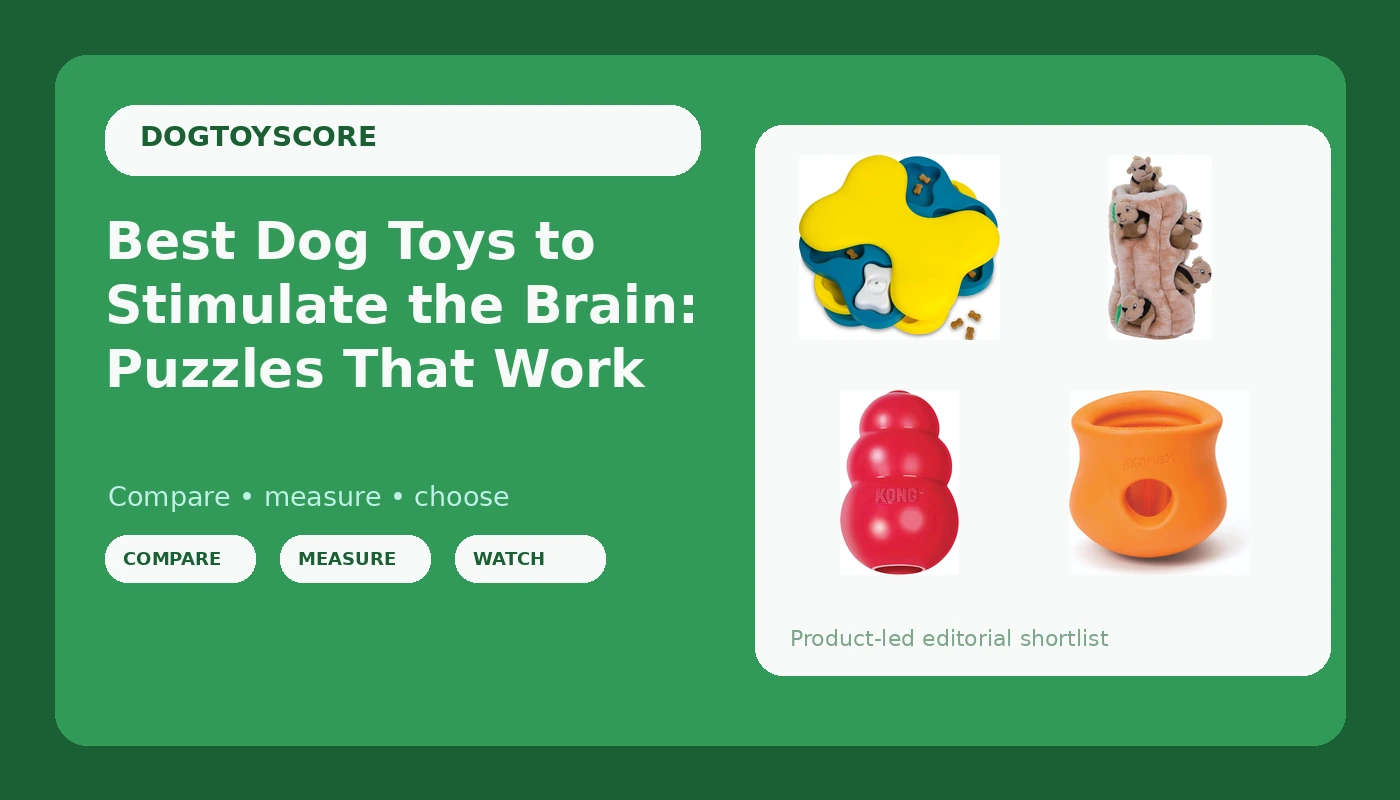
Puzzle toys can turn treats, kibble, and play into a problem-solving activity. The right design depends on how your dog engages: rotating compartments, plush retrieval, food stuffing, or sliding covers all create different challenges.
Related: How to Choose Toys for a Senior Dog →
Quick answer
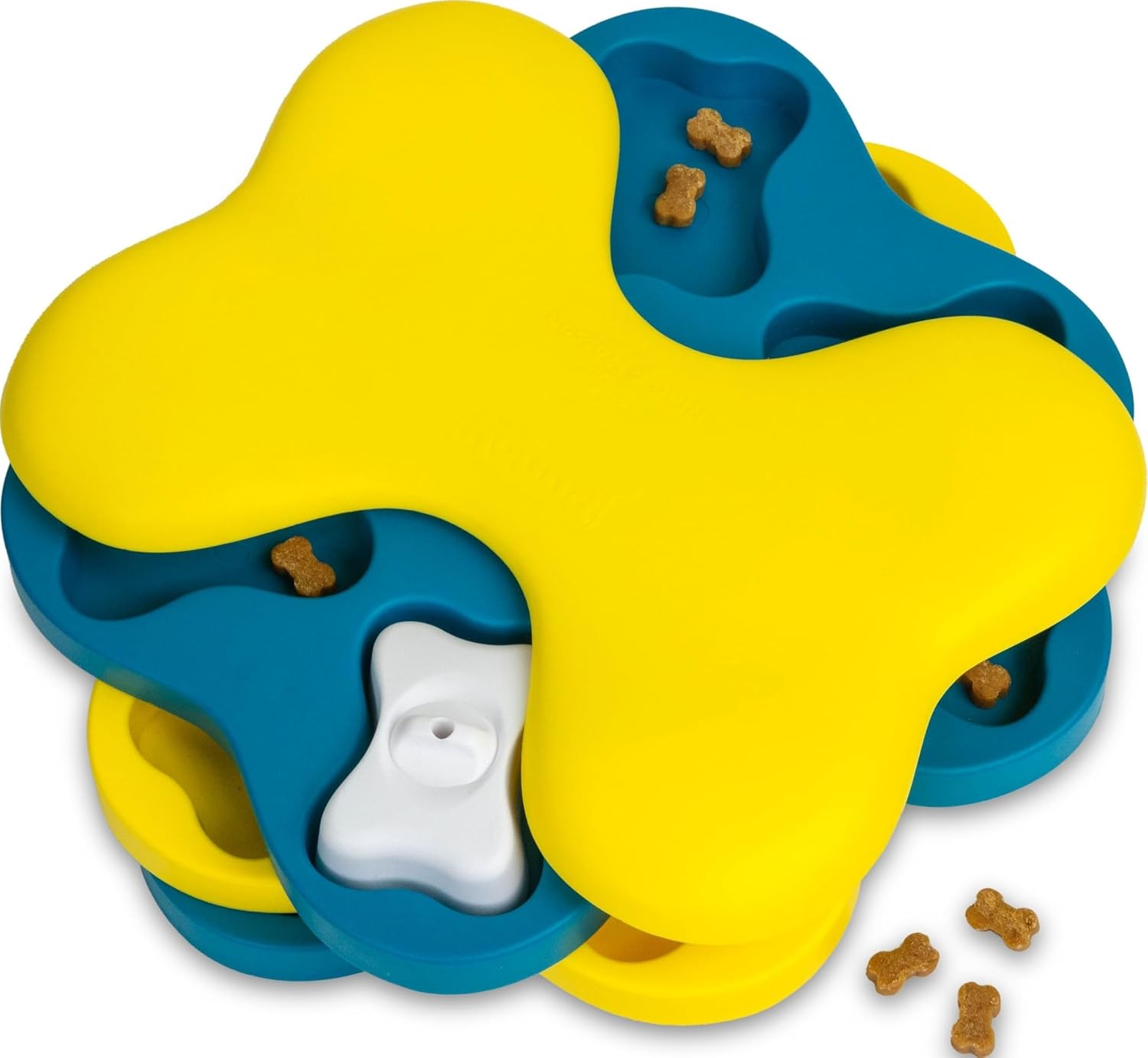
The Nina Ottosson Dog Tornado is the strongest all-round puzzle in this group because its rotating tiers and covered compartments create a more structured treat-finding task. The other four options serve different needs, from plush retrieval to stuffable rubber toys.
Compare the five puzzle toys
Visit on Amazon →
Rotating tiers and covered treat compartments create a structured puzzle.
Hard plastic may not suit dogs that chew toys instead of solving them.
Visit on Amazon →
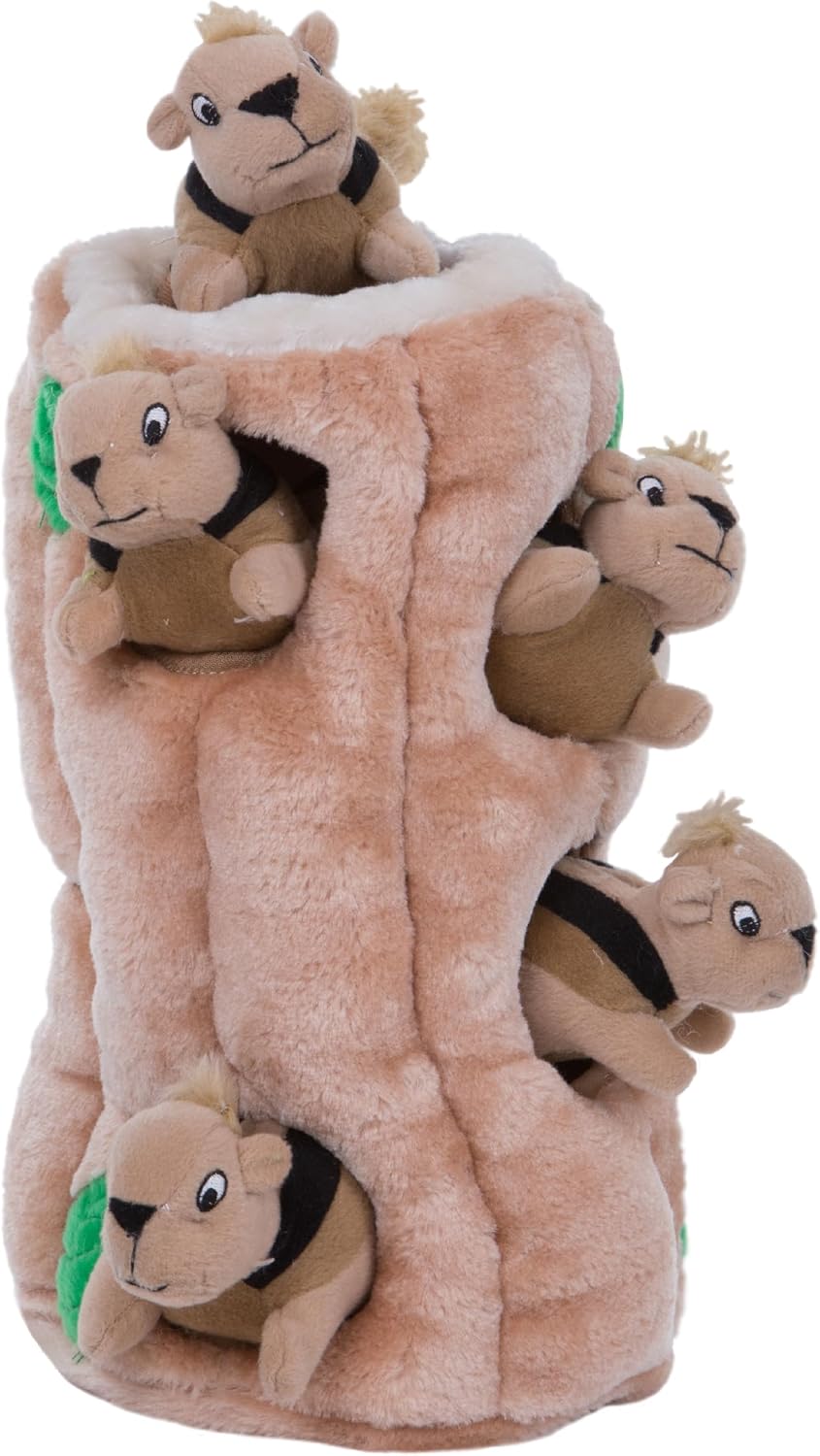
Plush hide-and-seek design supports retrieval and prey-style play.
Plush squirrels and squeakers are not intended for destructive chewing.
Visit on Amazon →
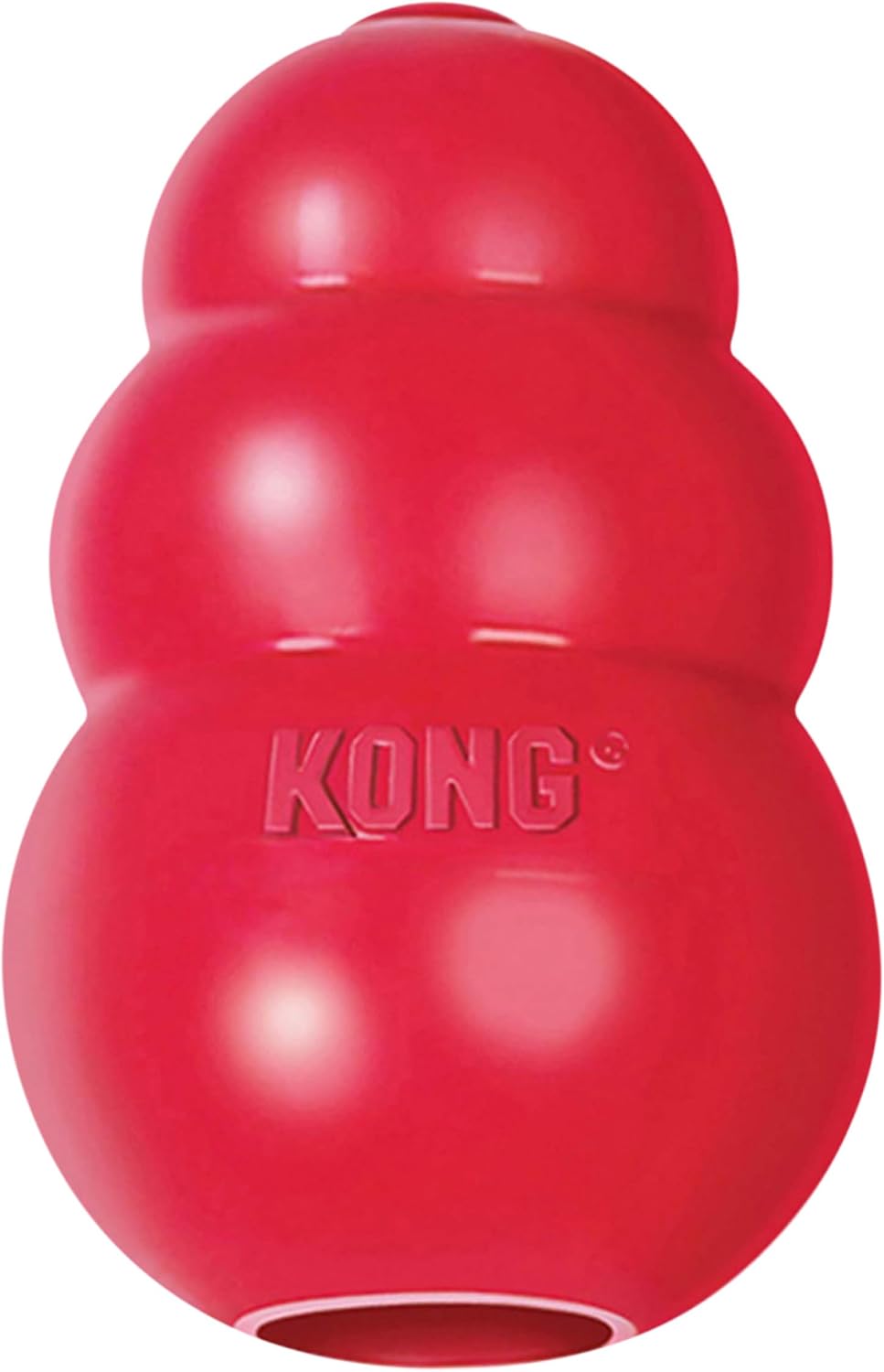
Stuffable natural-rubber design can combine food enrichment, chewing, and fetch.
Enrichment depends on suitable filling and the correct toy size.
Visit on Amazon →
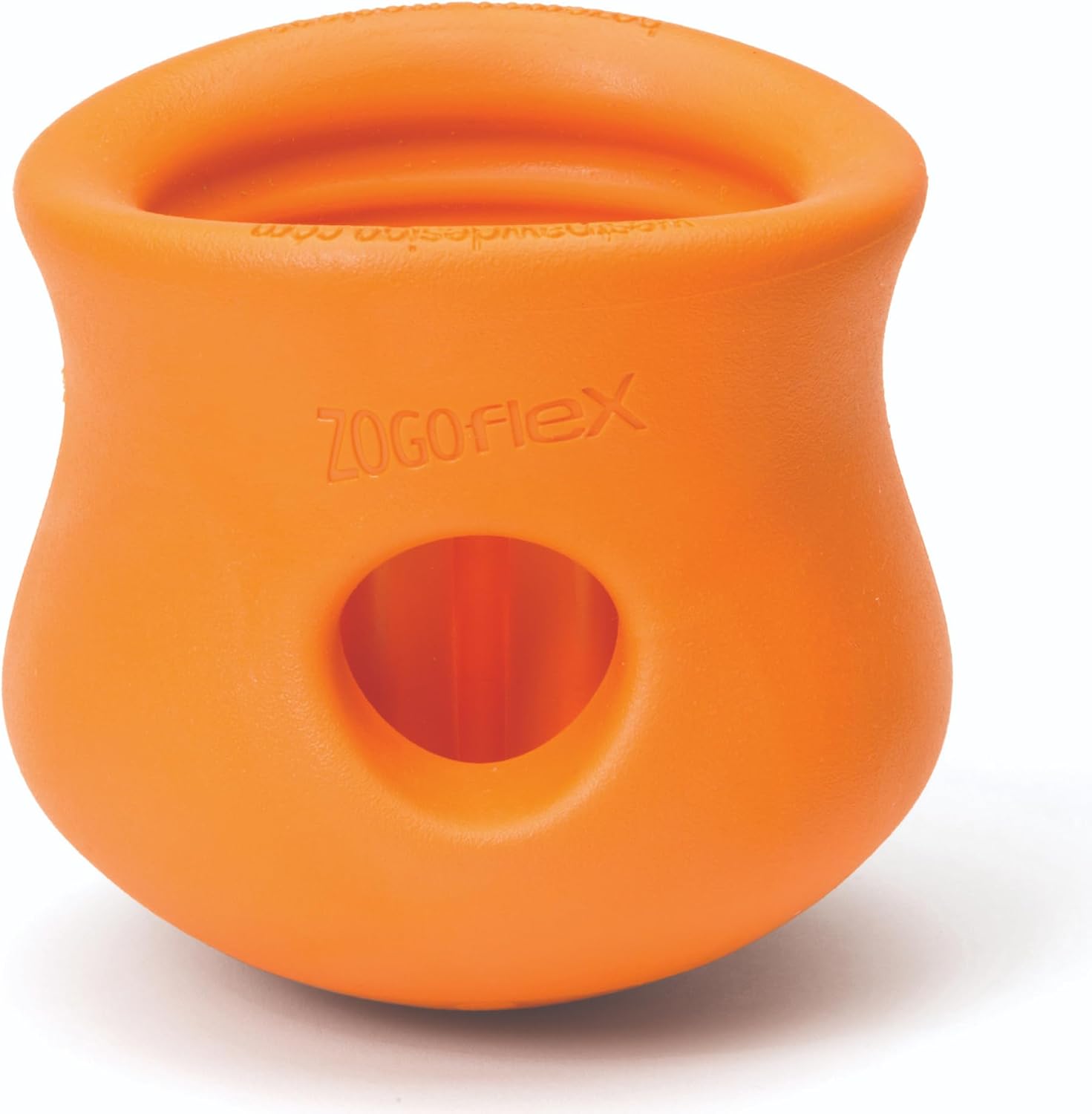
Wide opening makes filling and cleaning easier than narrow stuffable toys.
The open design may release loose treats quickly for experienced dogs.
Visit on Amazon →
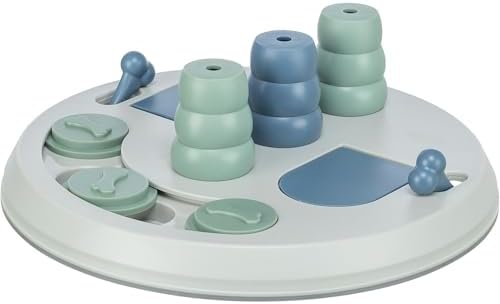
Multiple lids and sliding elements add variety to treat-finding play.
Small removable or moving parts require active supervision.
Prices and availability were captured from Amazon Creators API and may change.
Prices and availability may change. Product names, images, ASINs, and retailer links are matched to the verified product pool.
How these toys differ
These products fall into three broad play styles:
- Compartment puzzles: the Dog Tornado and Flip Board ask a dog to move pieces to reach treats.
- Retrieval puzzles: Hide-a-Squirrel asks a dog to pull plush toys from a larger container.
- Stuffable toys: the KONG Classic and West Paw Toppl hold food inside a rubber body.
A dog that enjoys using its nose and paws may prefer compartments. A dog with strong retrieval instincts may engage more readily with the plush format. Food-motivated dogs often benefit from stuffable rubber designs.
Outward Hound Nina Ottosson Dog Tornado
The Dog Tornado uses stacked rotating sections with covered treat compartments. The handler can place small treats in several locations, allowing the dog to rotate the tiers and uncover rewards.
Its hard structure makes it a supervised puzzle rather than a chew toy. Remove it after the activity if your dog starts biting the edges or trying to dismantle components.
Outward Hound Hide-a-Squirrel
Hide-a-Squirrel combines a plush tree-trunk shape with removable squirrel toys. It is closer to a retrieval game than a food-compartment puzzle, which can make it appealing to dogs that enjoy pulling objects from containers.
Because the removable pieces are plush and contain squeakers, inspect them frequently for torn seams, loose stuffing, or damaged squeakers.
KONG Classic Stuffable Dog Toy
The KONG Classic is a natural-rubber chew and fetch toy with a hollow center that can hold suitable dog food or treats. Filling choice changes the challenge: loose pieces fall out more easily, while denser fillings take longer to remove.
Select the manufacturer-recommended size and rubber type for your dog's weight, age, and chewing behavior. Replace the toy if the rubber tears or pieces become loose.
West Paw Toppl
The Toppl is a cup-shaped stuffable toy with a wide opening. That opening simplifies filling and makes the interior easier to inspect and clean.
The same accessibility can reduce difficulty when the filling is loose. A dog that empties it quickly may need a more challenging filling method, provided that method follows the manufacturer's care and feeding guidance.
Trixie Activity Flip Board
The Flip Board presents several mechanisms in one flat puzzle, including lids and sliding covers. Variety can help dogs practice different movements instead of repeating one action across the whole toy.
It also contains more moving parts than a one-piece rubber toy. Use it only under supervision, and put it away if your dog attempts to chew, lift, or break the components.
Choosing the right difficulty
Start easier than you think. Let the dog see where food is placed, leave some compartments partly open, and reward calm investigation. Increase difficulty only after the dog understands the basic movement.
Watch for frustration signals such as frantic biting, repeated barking at the toy, or abandoning the activity. A puzzle should encourage exploration, not force the dog into destructive behavior.
Safety and supervision
No puzzle toy is indestructible, and none should replace exercise or interaction. Follow the manufacturer's sizing and care instructions, supervise initial sessions, and inspect the toy before and after use.
Stop using a toy if you find:
- Torn fabric or exposed stuffing.
- Loose squeakers or detached plastic parts.
- Cracks, sharp edges, or missing rubber pieces.
- A size small enough to become a swallowing hazard.
- Damage that changes how compartments or lids close.
Cleaning and rotation
Remove leftover food after each session. Wash every toy according to its manufacturer instructions and allow it to dry fully before storage. Do not assume that every plastic, rubber, or plush part is dishwasher- or machine-safe.
Rotating two or three puzzles can help preserve novelty. Change the toy, the filling, or the compartment setup rather than leaving the same fully loaded puzzle available all day.
Final recommendation
Choose the Outward Hound Nina Ottosson Dog Tornado for a structured compartment puzzle. Choose Hide-a-Squirrel for plush retrieval, the KONG Classic or West Paw Toppl for food-stuffing enrichment, and the Trixie Activity Flip Board when you want several puzzle mechanisms in one supervised activity.