The first toy a client ever handed me came back in pieces in under fifteen minutes, and that dog was a nine-year-old Lab mix with three teeth missing. That was the day I stopped trusting the word indestructible. These days I run a small boarding kennel out of my house in Austin, which means every toy I bring through the door gets abused around the clock by dogs with no manners and no interest in my opinion. This comparison of dog chew toys for aggressive chewers is the version I wish someone had handed me when I started: four products, what each one is actually for, and the exact situations where each one is the wrong call.
If you want the short answer, the WEST PAW Zogoflex Hurley is the pick for most power chewers, because it is the only product here built as a reusable, dishwasher-safe toy you can rinse off and hand back to the same dog tomorrow. The Nylabone Power Chew three-pack is the better value for a moderate chewer, the bully sticks are the right answer for a dog that needs to chew something edible and be done with it, and the Jeefome set is the budget gamble you buy with your eyes open.
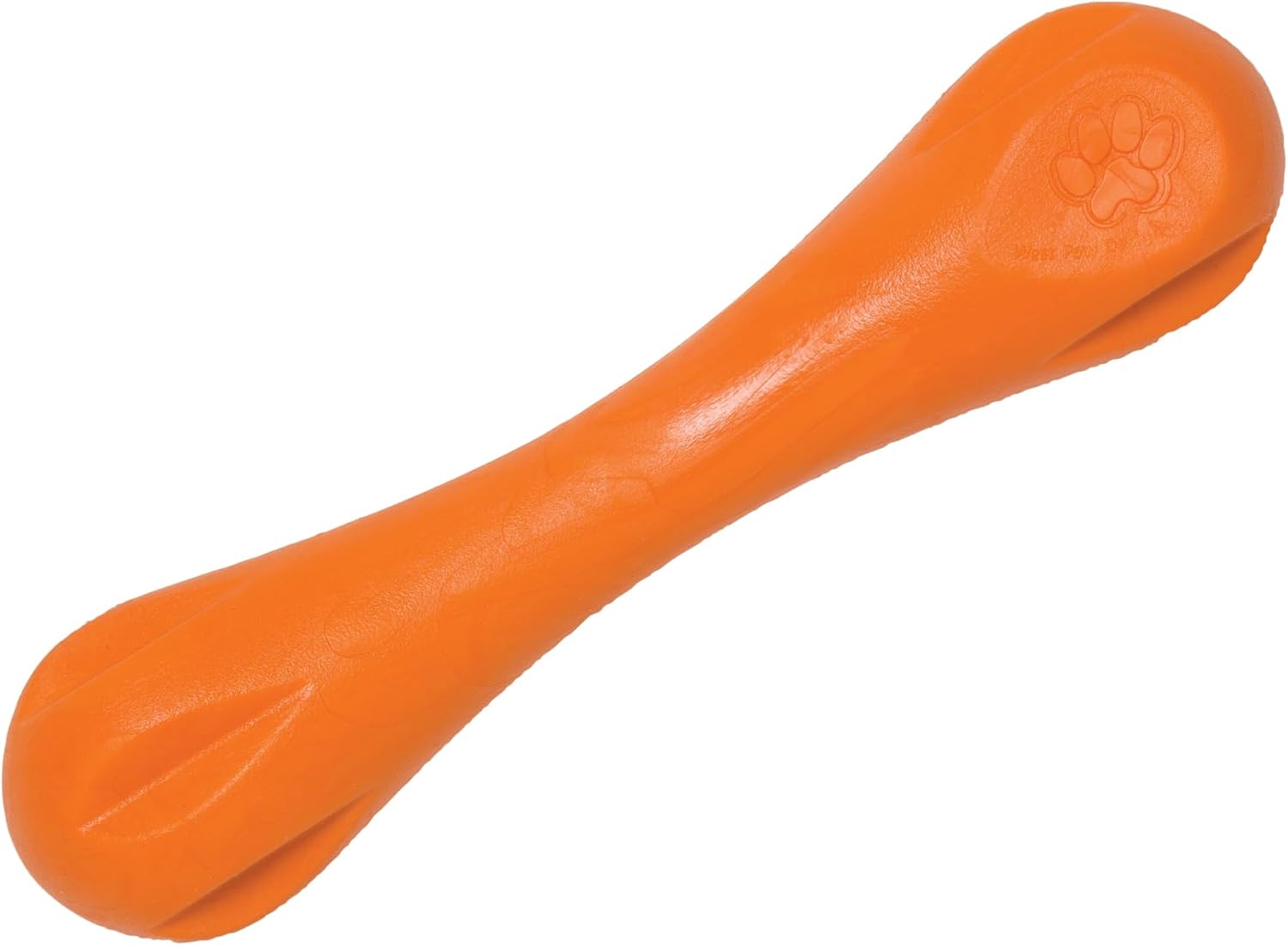
WEST PAW Zogoflex Hurley Dog Bone Chew Toy, Floatable Pet Toys for Aggressive Chewers, Catch, Fetch, Bright-Colored Bones for Dogs, Recyclable, Dishwasher-Safe, Non-Toxic, Large, Tangerine
Reusable rubber bone that floats, survives the dishwasher, and comes in a size built for a real jaw
The highest up-front cost of the four, and the large size is wrong for small mouths
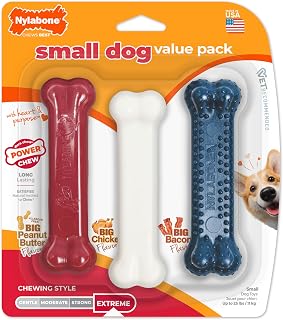
Nylabone Power Chew Original Bone Dog Chew Toys, Small, 3 Count
Three bones in one order, which makes rotation easy and cheap
Small size only, and hard nylon is the wrong texture for a heavy chewer with worn teeth
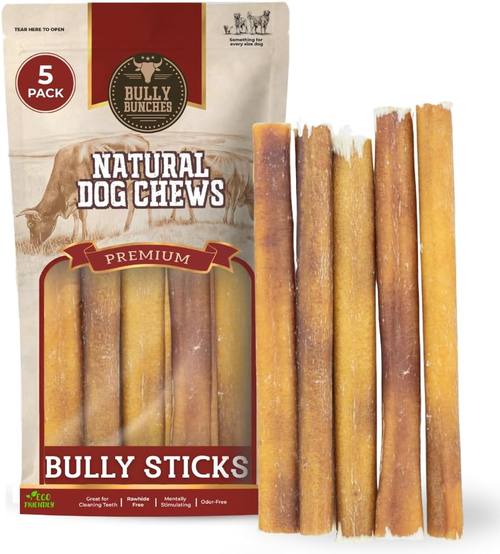
Bully Bunches Premium (6" Standard, 5 Pack) Odor-Free Bully Sticks for Small to Medium Dogs & Puppies, Consistently Sized, Long Lasting Chews for Oral Care, All Natural, 100% Beef Dog Treats
Odor-free is the real win, and consistent sizing means no surprise short stick in the pack
It is an edible chew, not a toy, so it is gone when it is gone and needs supervision
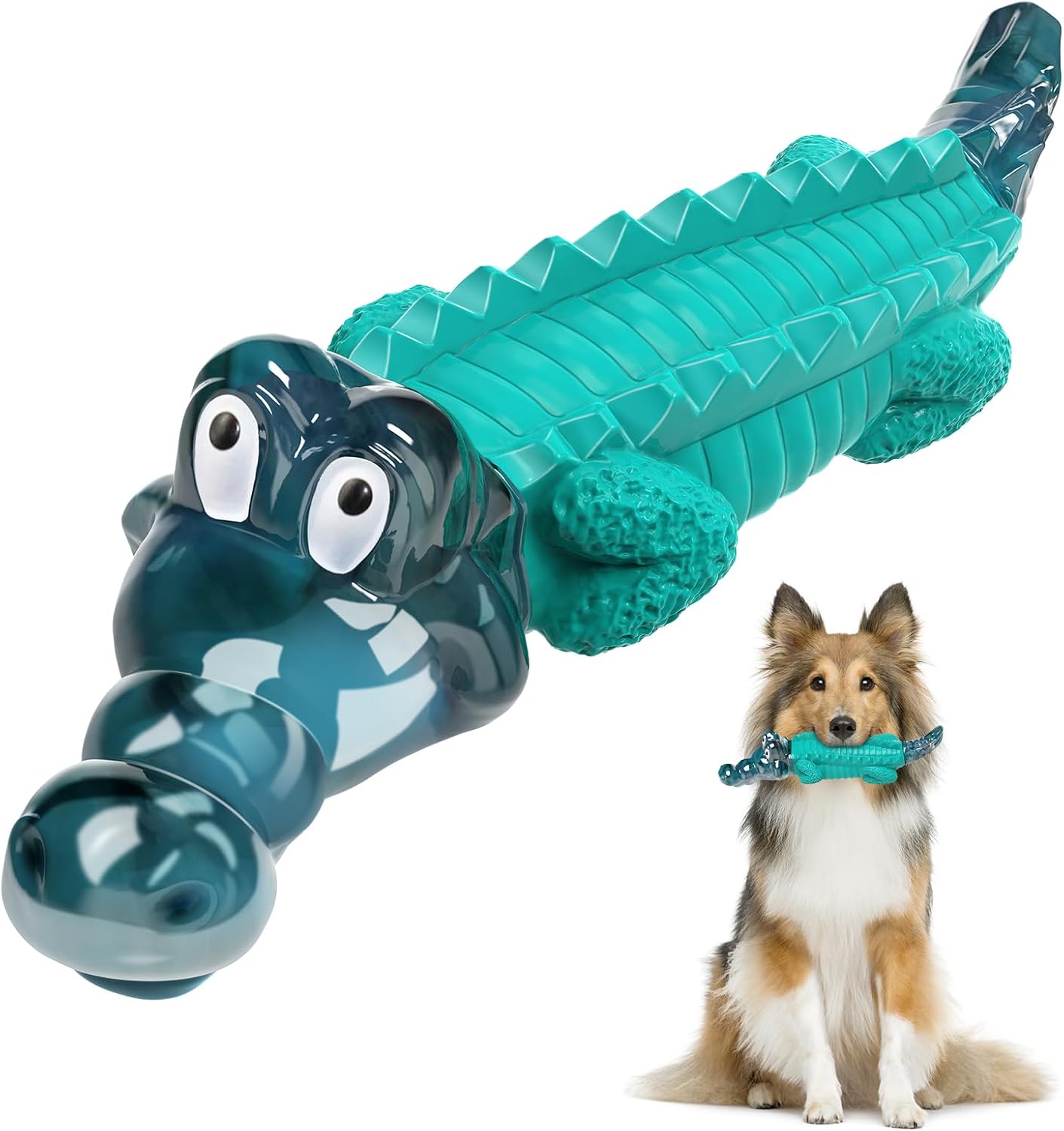
Jeefome Dog Toys for Aggressive Chewers
The cheapest way to find out whether your dog even wants a durable chew
The entire pitch is a marketing claim, and the name of a product is not a destruction score
Prices and availability were captured from Amazon Creators API and may change.
How I judge a chew toy before a dog touches it
I use one number, and it is not a star rating. It is the destruction score: how many minutes it takes a determined dog to compromise the toy, meaning a crack, a tear, a chunk missing, or a piece small enough to swallow. Under ten minutes with a power chewer is a fail. Between ten minutes and an hour is a toy you can supervise. Anything that holds past an hour of focused chewing is worth the money, and anything that survives a full 72 hours in my kennel rotation gets recommended to clients.
Three other things matter as much as durability.
The first is size, and this is where most buyers get it wrong. A toy is sized for a jaw, not for a breed. A bone that a Lab can work on comfortably is a choking hazard in a Frenchie's mouth, and a bone small enough for a Chihuahua disappears down a Dane's throat. Breed labels on packaging are marketing. Measure your dog's mouth instead.
The second is texture. Hard nylon and dense rubber do different jobs. A hard bone gives a power chewer resistance and lasts, but on a senior dog or a dog with worn enamel it can do real damage over months of daily work. Softer rubber is gentler on teeth and less satisfying for a dog that wants to crunch.
The third is what happens when the toy fails. This is the part nobody wants to read. I have watched a vet tech add up the cost of a foreign body surgery for a dog that ate a squeaker, and it was more than every toy in this article combined, several times over. If you cannot answer "what does this look like when it breaks," you are not done shopping. There is no chew toy on the market that is right for every dog, and any product that claims otherwise is telling you something about its marketing department.
The reusable rubber option: WEST PAW Zogoflex Hurley
If I had to hand one product from this list to a client with a serious chewer, this is the one. The Zogoflex Hurley is a solid rubber bone with a shape that works for both chewing and fetch, and the feature list is unusually honest for this category: floatable, dishwasher-safe, recyclable, non-toxic. Floatable matters more than people expect, because it turns a chew toy into a water toy, and a tired dog is a dog that chews less furniture. Dishwasher-safe matters because a toy that lives in a kennel gets gross, and a toy you cannot clean is a toy you stop using.
The West Paw angle I keep coming back to is that the company actually takes its own failed toys back and recycles them. That is not a marketing line I have to take on faith, because it is the only reason I still have a shelf of dead toys instead of a trash bag. For an owner who is tired of throwing hunks of plastic into a landfill every few months, this is the eco pick in the category, and it earns the label.
What it loses on: cost, and size. This is the most expensive product of the four up front, though it is also the only one that is not a consumable. And the large size is genuinely large. If your dog is under about twenty pounds, this is not the bone for them, no matter how tough they think they are. Pair it with the right dog and it is the best value here. Pair it with a toy breed and you have bought an expensive paperweight.
The classic: Nylabone Power Chew Original Bone, Small, 3 Count
Nylabone is the name most owners already know, and for good reason. Nylon bones are the standard recommendation for power chewers because they give a dog something hard to work against, and a three-pack means you can rotate instead of replacing. Rotation is the single cheapest durability trick there is. Three bones in rotation outlast ten bones dumped in a basket, because novelty is what drives chewing. A dog that is bored with a bone stops chewing it and starts chewing your baseboards.
The small size is the catch here. This three-pack is sized for small dogs and puppies, and that is not a suggestion. Handing a small nylon bone to a large dog is how you end up in an emergency clinic, and I have made that call for clients more than once. If you have a small dog or a puppy in the middle of teething, this pack is a sensible buy.
The other thing I tell people about nylon: the flavor coating wears off faster than the bone does. That is a known complaint with these, and it matches what I see, because the toy that gets ignored in week two is usually ignored because it stopped smelling interesting. A quick rinse and a rotation back into the mix brings it back. And keep an eye on senior dogs. Hard nylon and older teeth are a bad combination, and a dog that already has worn enamel should not be working on a hard bone every day.
The edible chew: Bully Bunches Premium Odor-Free Bully Sticks
Bully sticks are not toys, and treating them like toys is how people end up disappointed. They are food. A 6-inch stick is a single chew session for most small to medium dogs, and when it is gone, it is gone. What you get in exchange is the thing dogs lose their minds over, plus a chew that works the jaw and helps with the gunk that builds up along the gumline.
Odor-free is the feature that actually changes my behavior. Traditional bully sticks smell like a barn fire in a wet sock, and that smell is why I stopped buying them for years. An odor-free stick is one I will hand out in the house instead of on the back porch, which means the dog gets more chewing time and I get fewer complaints from my own family.
Consistent sizing is the other quiet win. When a five-pack varies wildly in thickness, the dog burns through the thin ones in minutes and the thick one lasts an hour, which makes planning pointless. A pack that is consistently sized lets you predict your evening.
What it loses on: duration, supervision, and the fact that it is not a durable toy. A determined chewer can get through one of these fast, and a dog that tries to swallow the last two inches whole is a dog that needs the last two inches taken away. This is a chew for a small to medium dog or a puppy, supervised, on a surface you do not mind cleaning.
The budget gamble: Jeefome Dog Toys for Aggressive Chewers
Here is the honest read. The entire pitch on this product is the phrase "for aggressive chewers," and a product name is not a destruction score. I have a shelf of toys that made the same promise and failed in under ten minutes, and I keep that shelf because it is the most honest thing in my living room.
That does not make this a bad buy. It makes it an unknown, and there is a legitimate reason to buy an unknown: it is the cheapest way on this list to find out whether your dog even wants a durable chew toy in the first place. Some dogs shred. Some dogs carry a toy around like a security blanket and never put a tooth through it. If you have not figured out which dog you have, spending the least amount of money to learn that is smart shopping.
If you buy it, buy it as a test, not as a solution. Hand it over while you are in the room. Watch what happens in the first ten minutes, then the first hour. If it survives an afternoon, great, you got a bargain. If it comes apart, you learned something about your dog for the price of a coffee, and you still have three better options on this page.
Size and chew style, not breed
If you take one thing from this comparison, take this: match the toy to the jaw, not the breed label. A large Zogoflex bone in a small dog's mouth is a toy they cannot get a grip on, which means they will ignore it and go back to the coffee table. A small Nylabone in a large dog's mouth is a swallowed object waiting to happen. And a bully stick in front of a dog that gulps instead of chews is a supervision problem, not a product problem.
Chew style matters just as much. A crusher wants resistance and will destroy soft rubber in minutes, so hard nylon and dense rubber are the only things that last. A picker works at edges and seams, which is why stitched toys fail so fast for them. A gulper is the dog you supervise with anything edible. Figure out which one you live with and half of this decision makes itself.
What I would buy, in one line each
- For a real power chewer with a medium or large jaw: the WEST PAW Zogoflex Hurley, because it is reusable, cleanable, and sized to be worked on.
- For a small dog or a teething puppy: the Nylabone Power Chew three-pack, because rotation is the cheapest durability you can buy.
- For a dog that needs to chew something and be finished: the Bully Bunches sticks, supervised, on a towel.
- For a dog whose chewing style you are still figuring out: the Jeefome set, bought as a test.
What I am testing next
I am six weeks into a twelve-week teething study, forty puppies across six brands, stopwatch in hand, because the marketing on teething toys says "soothing" and my timer says something else entirely. The early pattern is that nothing labeled for teething survives a puppy with real jaw strength, and that the toys that do survive are the ones sold for adults. I will have a destruction score for every one of them, and a list of the ones I would hand to a client's puppy unsupervised, which is a much shorter list than you would hope.